Explore the best places
Results for castelo in Portugal


Castelo e Muralhas de Tavira
- heritage
Largo Abu-Otmane
8800-312, Tavira
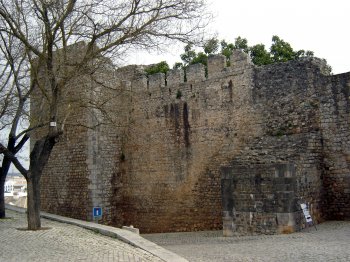
The bases of the defensive system were built between the 8th and 13th centuries, during Muslim rule. The primitive Moorish fortification later underwent improvement works after the Christian Reconquest, ordered by King Dom Dinis. Currently, you can still see some parts of the wall, the Arco da Misericórdia and a part of the Alcáçova that maintains its medieval characteristics. Inside the walls, the beautiful garden stands out.
Castelo e Muralhas de Trancoso
- heritage
Avenida Engenheiro Frederico Ulrich
6420-071, Trancoso
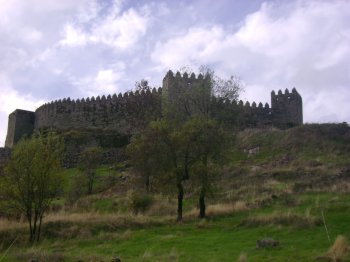
It is unknown if the early history of this castle, dating from the Roman times, visigóticos and Islamists. Despite having suffered several destructions due to wars, the historic core maintains its monumentality, in particular due to its defensive curtains. The primitive Castle, the Citadel, a walled remain with five towers and donjon, the pyramidal frustum and the walls surrounding the village with several doors. Are the doors D'El Rei, docked between two turrets.
Castro do Castelo Velho
- heritage
Hortinhas
7250-069, Hortinhas
Fortified village, with plant irregular, having been used and modified at different times, particularly in the Chalcolithic, Bronze age, iron age and Islamic Era. Presents housing structures limited by defensive structures with traces of walls, towers and access doors.
Casa dos Castelo Branco
- heritage
Largo do Terreiro, 24
6200-553, Covilhã
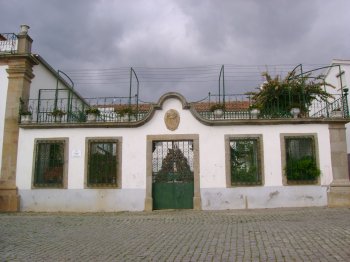
Manor House dating from the 17TH century, consisting of a longitudinal plan composed by the House, Chapel and some dependencies. Focus on the family coat of arms and to the quality of some interior ceilings.
Capela de Nossa Senhora do Castelo
- heritage
Vila Velha de Ródão
6030-164, Vila Velha de Ródão
Chapel with a T-shaped floor plan, due to the construction of two sacristies, maintaining a Mudejar tile front inside.
Capela de São Miguel do Castelo
- heritage
Alto do Cabeço de Monsanto
6060-091, Idanha-a-Nova
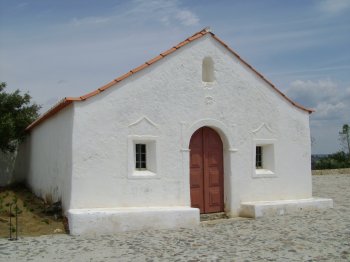
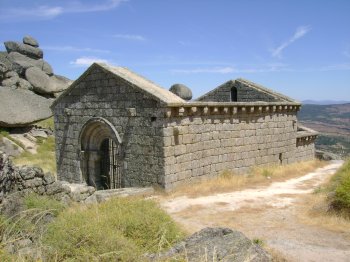
Romanesque church built in the 12th century, present a longitudinal plan with a nave and a chancel narrower and lower, with differentiated gable roofs. In the interior, especially the triumphal arch back perfect and, abroad, for double Bell Bell Tower.
Antigo Castelo de Colares
- heritage
Colares
2705, Colares
Today only traces in ruins, which are not easily detetáveis, given its integration into the urban fabric of the town. In the 16th century was built here the Chiesa Madre (mother church), with five buttresses; has Watch Tower dating back to 1798.
Cruzeiro de Castelo Viegas
- heritage
Rua do Cruzeiro
3040-713, Coimbra
Cruise ship built in 1649, the presenting features of late Renaissance and Baroque architecture. In the 18th century were built the crucifix and the pillar on which it stands.
Fonte em Castelo de Vide
- heritage
EN246-1
7320, São João Baptista
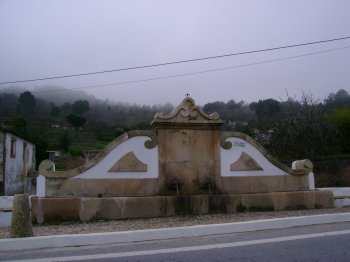
Font with large backrest and with two cocks.
Cruzeiro de Penalva do Castelo
- heritage
Rua Principal
3550-071, Penalva do Castelo
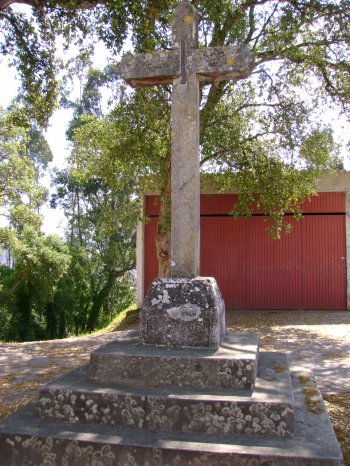
Cruise of granite that is based on a platform of two quadrangular steps. Consists of a pedestal, a column with forend rectangular cross-section and crowned by a cross.