Explore the best places
Results for Forte in Portugal


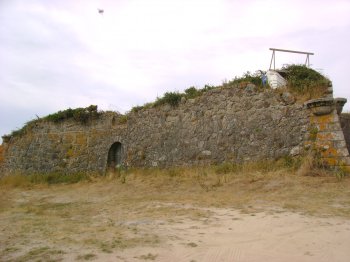
Forte de Paçô
- heritage
Avenida do Forte
4900-280, Viana do Castelo
A fortress located on the beach, just a few metres away from the sea. Rebuilt in the 17th century ath the time of the Restoration Wars, it played an important role during Napoleon's invasions. It was part of the defence line in the Lima river banks and by the Atlantic Ocean.
Forte de São Clemente
- heritage
Largo de Brito Pais
7645-234, Vila Nova de Milfontes
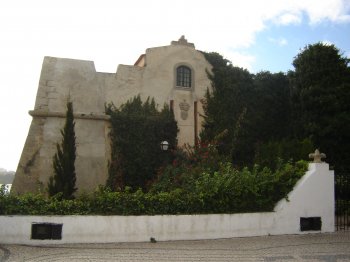
From this fortress, built at the end of the 16th century, one can view almost the entire Vila Nova de Milfontes. Originally built with a polygonal plan, with canon areas and two triangular bastions, it was damaged in seevarl ways in 1638. During the reign of D. João IV it underwent changes and its military capacity grew bigger. A model of the military mannerist architecture, it was later turned into a residence and a medieval turret with battlements was added to it. Currently, the trench and the walls are surrounded by vegetation and flowers.
Forte de São Francisco
- heritage
Rua Terreiro da Cavalaria - Alto da Pedisqueira
5400-435, Chaves
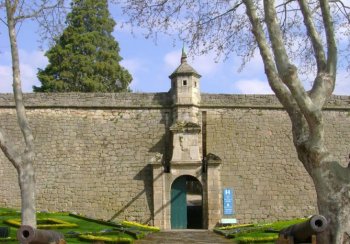
Former convent surrounded by walls, transformed into a fortification in 1658. Late-Baroque and Mannerist fortress, composed of regular star plant, with four pentagonal bastions highlighted at the corners by a rectangle. Its plant is similar to the neighbor fortress of São Neutel, both built during the wars of the restoration. Currently, it is a hotel, a restaurant and a bar.
Forte de São José
- heritage
Rampa do Forte de São José
9400, Porto Santo
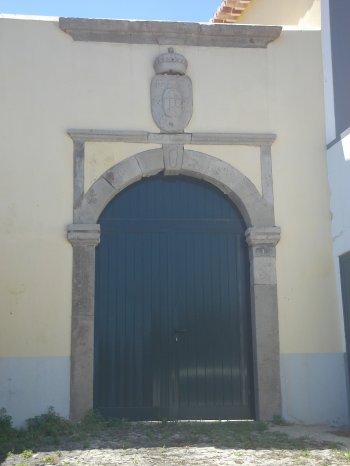
A fortress equipped with a line of eight small iron canons that once were used to defend the island.
Forte de São Tiago
- heritage
Travessa do Forte, 8
9060-123, Funchal
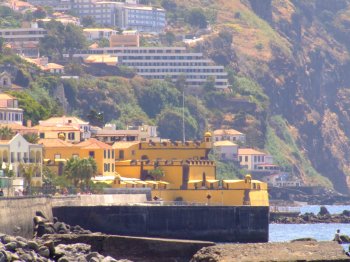
Fortress built in the XVII century to protect the city against pirates’ attacks, being enlarged in the XVIII century. It was used with military ends until 1992, year in which it was given to the Regional Government, which turned it into a cultural space, so that now is the Contemporary Art Museum.
Forte de São Vicente
- heritage
Rua do Forte de São Vicente
2560, Torres Vedras
Medieval fortress rebuilt in the 19th century, during the French invasions. It was part of the Linhas Torres, being one of its most important fortifications. It is made up of three asymmetrical bulwarks, whose walls are open to cannons, divided by deep moats, which are distributed in a Y shape. At the highest point of the fortress are the ruins of a primitive chapel.
Forte do Cavalo
- heritage
Estrada do Porto de Abrigo
2970-628, Sesimbra
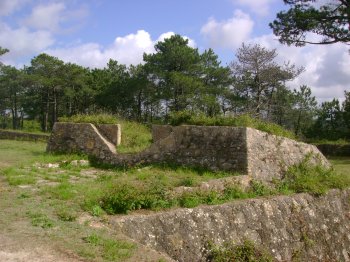
Also named Fortress of Saint Teodósio, as a tribute to a prince, it has an irregular poligonal plan. The precinct is separated from the road by a high, irregular wall. One can still see, on one side, a part of the primimitive wall with a portal.Inside, it has a cylinder shaped tower with a balcony.
Forte do Garvão
- heritage
Rua do Castelo
7670-137, Garvão
Also known as Cerro do Castelo, is a fortified village where many oculadas plates were found in gold and silver. This points to worship of a deity with prophylactic powers in diseases of the eye.