Explore the best places
Results for MAKEMUR.com how much to bail someone out immediately Daugavpils in Portugal


Igreja Matriz de Campo Maior
- heritage
Largo Doutor Regalla, 11-B
7370-027, Campo Maior
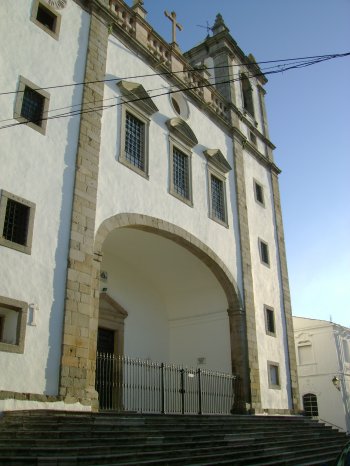
Built between 1570 and 1646, it has a tripartite main façade with embedded pilasters. The central part features a wide round arch forming a narthex, surmounted by three windows with three pediments. On the sides, two strong bell towers covered by domes are visible. Inside, with three naves, the silver liturgical objects and vestments woven and embroidered with gold from the 16th century stand out. It is also known as the Church of Our Lady of Expectation.
Igreja de Santa Clara
- heritage
Avenida Gago Coutinho e Sacadura Cabral
2000-129, Santarém
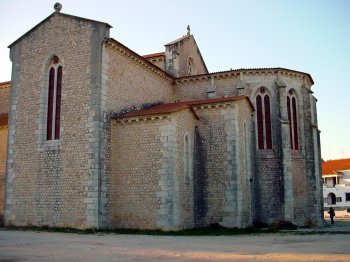
Built in the 13th century at the behest of King Afonso III, it is one of the largest and most emblematic monuments of mendicant Gothic architecture in Santarém. During the 17th century, it underwent several renovations that modified its form. Currently, the eight rows of tall Gothic columns adorned with frescoes and carved capitals stand out, with lighting provided by a rose window and several windows and slits. Inside, the Gothic tomb of the founding king's illegitimate daughter is a prominent feature.
Palácio Azurara / Museu - Escola de Artes Decorativas da Fundação Ricardo Espírito Santo
- heritage
Largo das Portas do Sol, 2
1100-411, Lisboa
In this building works, presently, the Museu de Artes Decorativas (Decorative Arts Museum). Also known as the Fundação Ricardo do Espírito Santo Silva (Ricardo do Espírito Santo Silva Foundation), this museum was created in 1953. Here is a magnificent collection of furniture and Portuguese decorative arts from the XVII and XVIII centuries. It is a characteristic exemplar of portuguese XVII century architecture, with posterior interventions, from which the north façade stands out.
Igreja da Sé
- heritage
Praça da Sé
5300-265, Bragança
Even though it was initially destined to become a nuns convent, it ended up as the collge of the priests of the Companhia de Jesus at the time it was finished. In 1766 the Diocesano Seminar was established here and made enlargement works. Of this monument the most elaborated window, of 1749, a large window of 1685 and the tower, of 1930, stand out. Inside, a special note to the three domes with crosswork arches and the corbels, on the ceiling, the high altar, the choir, the cloister and the sacristy, for the painted panels on the ceiling.

Igreja da Trindade
- heritage
Rua da Trindade, 115
4000-220, Porto
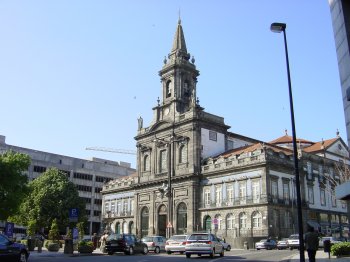
Planned by the architect Carlos Amarante, this church was built along the XIX century, by initiative of the Ordem da Trindade, at the Largo do Laranjal. The façade is classical and the walls are filled with neo classical retables. It stands out, in the principal chapel, a big panel representing the Baptism of Christ, by the painter José de Brito. The religious order also has several painting works, such as the Resende’s portraits and several copies of Italian painters, such as Rafael, Ticiano and Caravaggio.
Penedo da Forca
- heritage
Bairro das Eiras
3460-452, São Miguel do Outeiro
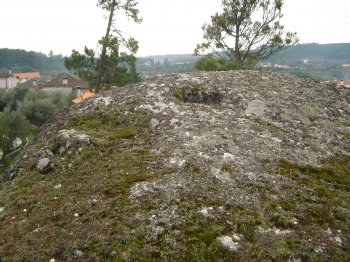
Large Boulder for compliance with penalty issued by the Court which is still known today Penedo da Gallows which was where they used to hang the condemned. There is a stone erected on top of a rock where there are traces of it exist still other stone. This Rock is a high point of the village sighted throughout the village, so that the death row stay visible, serving as example for wrongdoers. Is in degraded state, with some of the constituent stones of the place of execution out of place.
Pulo do Lobo
- beach
- country
Pulo do Lobo
7830, Serpa
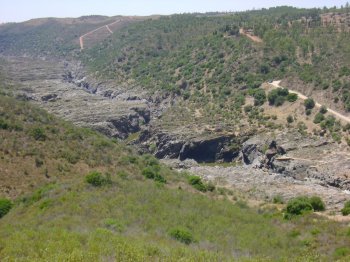
The Guadiana area, north of Mértola, where the river narrows, and locals say you could cross from one bank to the other "in one leap." Wolves are also said to have frequently used this crossing. The "rapids," caused by the riverbanks compressing from 25 to 3 meters, are a key feature. Natural waterfalls are also common, the largest of which stands out at over 15 meters high. Access to the area is via a dirt road.
Puttanesca
- food & drink
Rua da Escola, 463
2415-449, Leiria
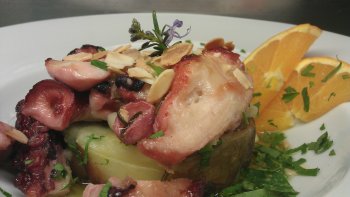
Puttanesca restaurant is an exquisite space with a decoration combining the rustic with the modern, where are posters and photographs of bullfights and films of the years 40, that create an environment of love taurine. The menu offers fusion dishes of Mediterranean and Spanish cuisine. The combination of these flavors is made with skill by the owner and chef Nuno Santos. Hands out tapas, dishes in the wood-burning oven and delicious desserts. The wine cellar is adequate to the gastronomic offer, with a very acceptable pricing policy.
Ascensor da Nazaré
- heritage
Rua do Elevador
2450-065, Sítio
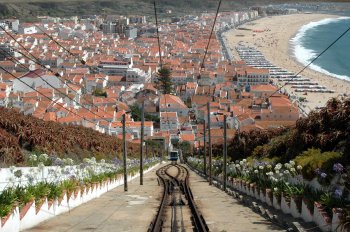
The funicular railway connects the lower part of Nazaré to Sítio, covering a total of 318 meters. It was inaugurated in 1889, as the difficulty of access to Sítio always hampered the development of the area and the settlement of its inhabitants. In 1963, after a major accident, it was out of service for several years, returning to service in 1968. In the 21st century, the carriages were renovated for greater comfort and safety for the more than one million users who use this means of transport annually.
Stupa Tashi Gomang
- heritage
EN253 - Centro de Retiros Herdade Corte Pereiro
7580-706, Alcácer do Sal
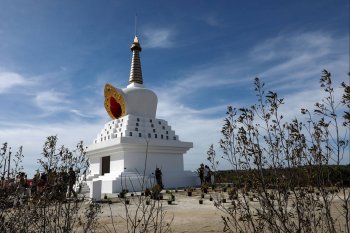
The Stupa Tashi Gomang, a temple belonging to the Guhya Mantrika Buddhist community, is located in the Santa Susana Retreat Center in Alcácer do Sal. It is one of the largest Buddhist temples in the Western world, standing 16 meters tall with an internal temple measuring 36 square meters, prepared for rituals, ceremonies, and lectures. Among the materials used in its construction, Alentejo marble stands out. The decoration, particularly the statues, originates from Tibet and Nepal.