Explore the best places
Results for PROBLEMGO.COM get my daughter out of jail ASAP pay hidden wiki visit without any trouble in Portugal


Serra de Mairos
- country
Serra de Mairos
5400, Mairos
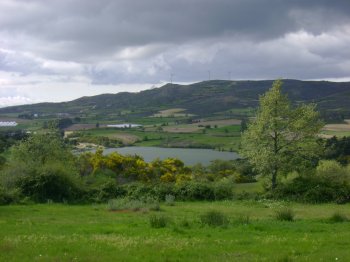
This hill, located on the border of Chaves, between the Mente and the Tamegão rivers, reaches its peak on the Cota de Mairos. In the village of Mairos the Buraco Feio (Ugly Holle) caves and the Câmara do Diabo (Devil's Chamber) are worth a visit.
Praia da Mareta
- beach
Sagres
8650, Sagres
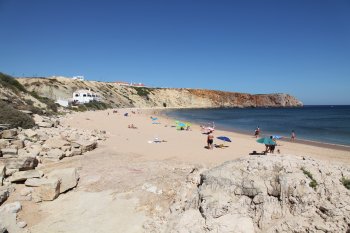
A beach with extensive sand and clear waters, sheltered by Cabo de Sagres. It's a popular destination for families vacationing in this region of the Algarve, boasting stunning sea views. Behind the beach is the center of Sagres Town, which is well worth a visit.
Club Música 80's
- food & drink
- leisure
Rua da Restauração, 39
4050-503, Porto
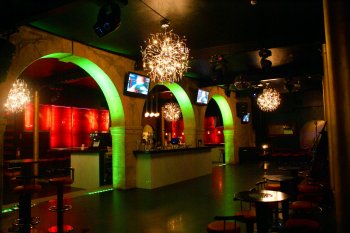
This space is, as its name implies, a place of entertainment where you can remember the big sonorities of the years 80. Decorated in shades of red and black, and with intimate, gilded columns and mirrors show without a doubt that there's a certain luxury, but Baroque unvarnished. It is the ideal place for pleasant conversations interspersed with moments of dance to the sound of the best music.
Casa de Cima de Vila
- hotels
Rua de Santa Bárbara, 11
4860-278, Pedraça
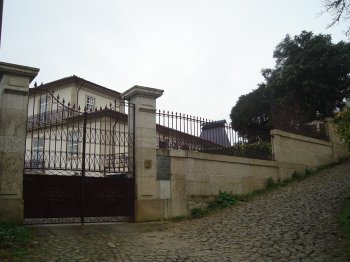
The House off of Village is situated on a farm in Pedraça, Cabeceiras de Basto. The space offers apartments and double rooms, decorated with refinement and equipped with modernity, without losing the aspect of rusticity that characterizes it. The gardens allow for quiet walks with breathtaking views, the swimming pool invites you to a lengthy swim and tennis court to a departure excited!
Camping Alentejo
- hotels
EN18
7100-300, Évora Monte
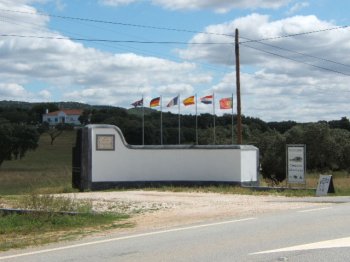
Camping Alentejo is located in one of the most beautiful and rich regions of Portugal, in a rural area of 25 hectares, where there is a family farm. This Park allows you to enjoy the Alentejo without limits. As waypoint or stay, you can enjoy the white-washed houses, Golden coloured fields of green and Brown and the unmistakable aroma of the plain.
Rochedo
- food & drink
Rua de Vale D'Álvaro, 17
5300-274, Bragança
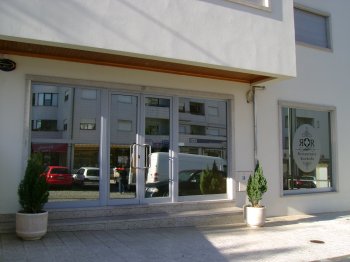
Is a house without pretentiousness but who is proud of their cooking and medium\/high clientele that opens the doors to her daily. If you don't like to wait (the dishes are all made at the moment) it is best to call the placing the order. There is no shortage of proposals. Hunting has a special place on the menu through the Jackrabbit rice and Partridge with chestnuts in pan with plums.
Taberna 39
- food & drink
Rua 25 de Abril, 39
8400-202, Ferragudo
The 39 Tavern is a wine bar and tapas in the Algarve, working only with domestic products. The interior resembles a traditional Tavern, with kites, exposed wooden tables wines Centennial, alongside a more modern area where sporadically are works by local artists. The snacks also can be tasted on the Esplanade, situated on a paved Street and without traffic.

Ermida de Nossa Senhora do Repouso / Capela do Repouso
- heritage
Rua do Repouso
8000, Faro
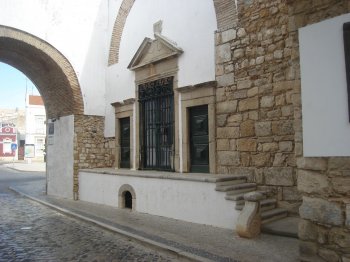
The main façade stands over a landing where one arrives from a stairway, under which there is passing water. One should notice the three stonework portals with a straight rod in architrave, the taller middle one, with an interrupted triangular gable, a cruxifix and forged iron gratings. Inside, one should pay close attention to the sculptured panel and to the side walls with blue painted wood.
Palácio dos Condes da Anadia
- heritage
Largo Conde de Anadia
3530-129, Mangualde
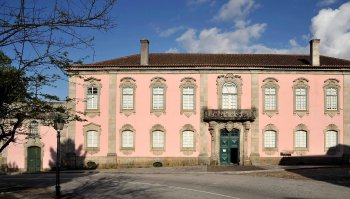
17th century palace, built by Miguel Pais Amaral. It features a façade cut by wide pilasters and two rows of windows with lintels decorated with "Rocaille" style motifs. It has an emblazoned door and, above, a balcony with stone balusters that serve as protection for the main floor door. The south façade has a double veranda with round arches and an original staircase. Also noteworthy is the chapel invoking Saint Bernard.
Igreja da Ordem Terceira de São Francisco
- heritage
Largo de São Francisco, 50
8000-142, Faro
The construction of the primitive church was initiated at th end of the 17th century. Considred insufficient for all the faithful that came by, it was enlarged from the middle of the 18th century until the first decades of the 19th century, at which time the façade was finished. The tiles on the walls of the main chapel and the vault, reconstructed after the earthquake of 1755, are of the 18th century. One should pay close attention to the interior with rococo sculptures.