Explore the best places
Results for enter now fast MAKEMUR.COM pay a judge to shorten my time in prison in Portugal


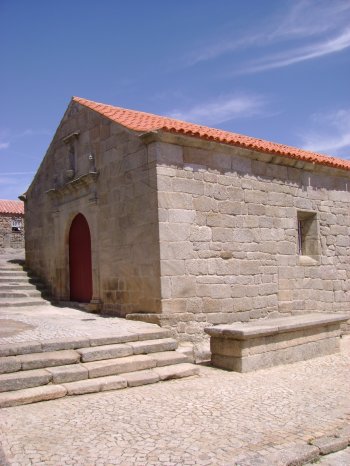
Igreja Matriz de Sortelha / Igreja de Nossa Senhora das Neves e Torre Sineira
- heritage
Largo da Igreja
6320-536, Sabugal
It is believed that the primitive building was built in the 14th century, working at the time as a watchtower. It was later remodeled in 1573, suffering more reconstructions in the following centuries. It consists of a longitudinal plan composed, with a single nave and a square chancel, with coverage in fake wooden barrel vault on the ship and in "alfarge" style in the chancel. Despite medieval origin, the Church denotes a large Renaissance influence.
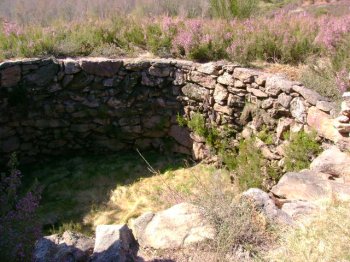
Fojo do Lobo do Avelar
- heritage
Montalegre
5470, Montalegre
The Fojo do Lobo of Avelar is one of the great points of interest in Montalegre, making part of the trail of the Ourigo. This is a hunting trap for wolves, consisting of two stone walls that converge into a hole empedrado about 2 feet tall, in which animals would fall after beset by popular. Covered in vegetation, also recalls the times when the Wolf was feared in Sierra.
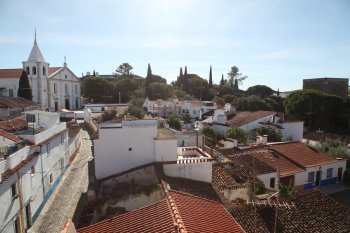
Igreja de São Miguel
- heritage
Largo de São Miguel, 6
1100-117, Lisboa
This church is notable building for its opulence and grandeur. Its foundation goes back to the first nationally times. In 1673, began its reconstruction that finished only in 1720. Its façade grows in height, with the two bell towers. The inside is one nave only, with wood ceiling. Worthy of notice are the 16 canvas, cased with gold wood carving and the main chapel.
Núcleo Urbano de Vila Viçosa
- heritage
Vila Viçosa
7160-253, Vila Viçosa
After the reconquest, at the end of the 13th century, there was a military reorganization, of which this set of medieval nuclei with the respective walls is part. This village knew two urban extensions, the second being, in the 16th century, the one that brought an increase in construction. It was at this time that, for example, the Ducal Palace was built. Fortunately, this expansion was taken care of, having Terreiro do Paço as a starting point.
Relógio de Sol da Rua da Pontinha
- heritage
Rua da Pontinha
3460-355, Nandufe
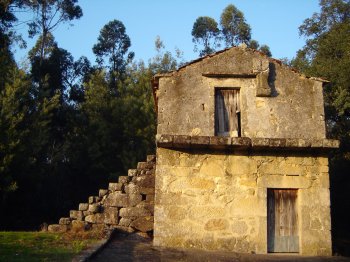
It is still possible to make, in the city of some houses, a fine specimen of these archaic objects that mediate the time. Sometimes they are authentic wonders torn in granite where a small bar, parallel to the axis of the Earth and exposed to the Sun and natural light casts a shadow on a numbered scale. This Sundial lies in an ancient stone house perched on a hill, next to agricultural land and forestry.
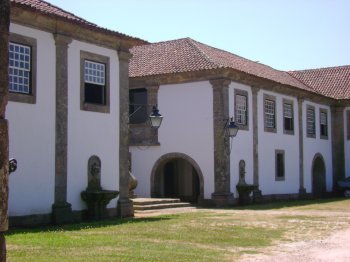
Paço de Lanheses
- heritage
Largo Capitão Gaspar de Castro
4900-185, Viana do Castelo
Late-Baroque Manor House, dating from the time pombalina, composed of two dissimilar bodies, of two floors, with chapel located near the larger body. Casa do Paço was founded in the 15th or 16th century, while the chapel was probably built in the first half of the 18th century. In 1997, this Palace opened to the public as the unit of Turismo de Habitação.
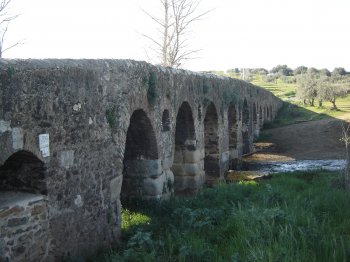
Ponte Romana sobre a Ribeira de Odivelas
- heritage
EN1004-1
7940, Vila Ruiva
A Roman bridge composed of 26 arches spaced by round eyebolts. Although the bridge dates back to Roman times, it is believed to have undergone reconstructions by the Visigoths and Arabs. The oldest ones trace its origins to the Moorish King Iscar, one of the Arab chieftains defeated by King Afonso Henriques at the Battle of Ourique. It is a Cuban landmark as it is the town's only National Monument.
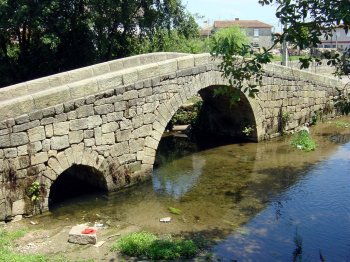
Ponte de São Lázaro
- heritage
Rua de São Vicente
4445, Alfena
Ancient stone bridge with two arches, located on the old road which linked the port to Guimarães, over the river Leça. Presents the two unequal arches, a wider central and other minor and designed to drain water during times of greatest influx. Believed to have Roman origins, despite the current structure dating from the late Middle Ages.
Monumento Natural dos Lagosteiros
- country
Praia dos Lagosteiros - Cabo Espichel
2970-191, Sesimbra
Classified as a Natural Monument since 1997, integrated into the Arrábida Natural Park, beneath the cliffs of Cape Espichel. The site consists of trails of bipedal dinosaur footprints, approximately 130 million years old, arranged in different orientations, created at a time when the region's terrain was flat, marshy, and swampy, which later transformed into limestone, preserving the footprint trails.
Praia Fluvial de Mota
- beach
Praia Fluvial de Mota
4920, Mota
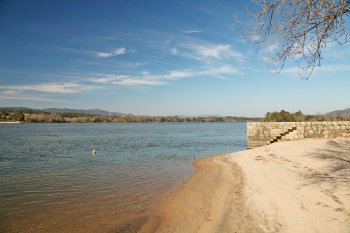
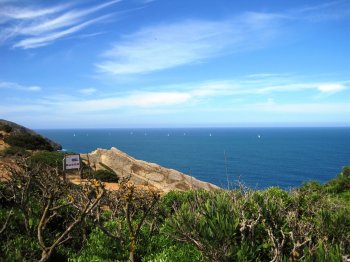
Small river beach located in a corner of the Minho River, in the parish of Gondarém, with white sand and easy parking. It has no infrastructure but, on the other hand, it offers magnificent views over the Minho River and Spain. It invites you to moments of tranquility and sunbathing on the sand, at the same time as it offers a fantastic landscaped environment, where typical riparian forest vegetation extends to the riverbank.