Explore the best places
Results for MAKEMUR.COM Paying cash to get my husband out of holding cell Liepaja in Portugal


Rio de Onor
- country
- heritage
Rio de Onor
5300, Rio de Onor
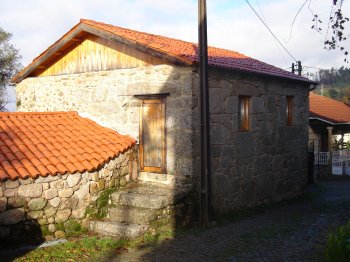
Portuguese-Spanish village inserted in the protected area of the Montesinho Natural Park. It stands out for preserving ancestral customs, such as the community regime of property and land use, and for the unique dialect of its inhabitants. The houses, built in schist and with porch balconies, are beautiful examples of regional architecture. The village is "divided" into Rio de Onor de Baixo and Rio de Onor de Cima, which coexist between Portugal and Spain.
Coliseu Porto Ageas
- art
Rua Passos Manuel, 137
4000-385, Porto
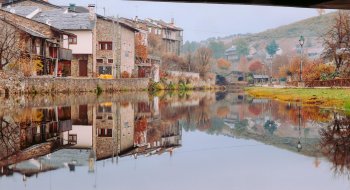
Opened in December, 19th, 1941, the Coliseu is the biggest playhouse in the north region of the country, with 3000 seats. It has been welcoming great show names, from Bob Dylan, Caetano Veloso, Amália Rodrigues, to the big orchestras, such as the Munich Band, Paris Band and to the great opera singers such as José Carreras and Monserrat. It presents several cultural events, from which we point out the musical and dancing shows.
Grande Real Villa Itália Hotel & Spa
- hotels
Rua Frei Nicolau de Oliveira, 100
2750-319, Cascais
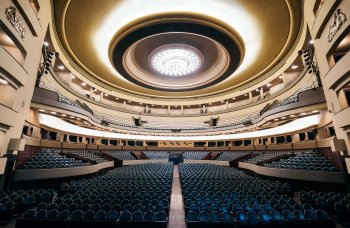
High quality Hotel located near the mouth of hell, in Cascais. The complex arose from the conversion of the old residences of King Humberto II of Italy and of the family Pinto Basto. The decor was thought to detail, with elements in stone marble and Venetian mosaic, recreating a classic environment. The design was also strategically thought out, allowing you to contemplate the ocean from nearly all rooms, restaurants, terraces and swimming pools.
Parque do Rio Cávado
- country
- leisure
Montalegre
5470, Montalegre
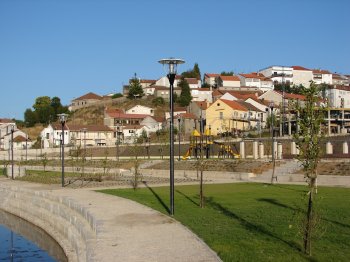
The restoration of the banks of the Cávado River has been carried out in sections, resulting in modern and very pleasant leisure areas. On an upper platform, there is the central square, a children's playground, a space for extreme sports (such as climbing, skateboarding, and rollerblading), a multisport facility, a multipurpose square, a stage for performances, and a bar. The Riverside Strip features a water mirror, prepared with a removable weir along the mill race wall and a granite embankment.
Castelo e Muralhas de Tavira
- heritage
Largo Abu-Otmane
8800-312, Tavira
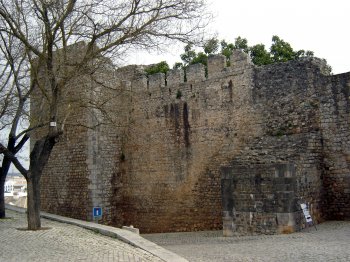
The bases of the defensive system were built between the 8th and 13th centuries, during Muslim rule. The primitive Moorish fortification later underwent improvement works after the Christian Reconquest, ordered by King Dom Dinis. Currently, you can still see some parts of the wall, the Arco da Misericórdia and a part of the Alcáçova that maintains its medieval characteristics. Inside the walls, the beautiful garden stands out.
Museu de Lisboa - Palácio Pimenta
- heritage
Campo Grande, 245
1700-091, Lisboa
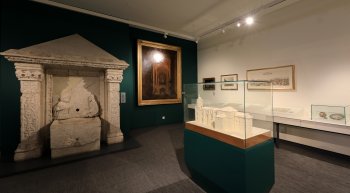
Placed at the Palácio Pimenta, a manor dated from the early XVIII century; in this space you may see archaeological pieces, paintings, drawings, engravings and lapidary that illustrate the city of Lisbon, since the prehistoric period till nowadays. Among the works in exhibition the “O Fado”, by José Malhoa and a oil-painting of Dirk Stoop stand out. The earthquake of 1755 is here shown with images of devastation and reconstruction projects.
Igreja de Nossa Senhora da Conceição
- heritage
Rua de Nossa Senhora
7160-245, Vila Viçosa
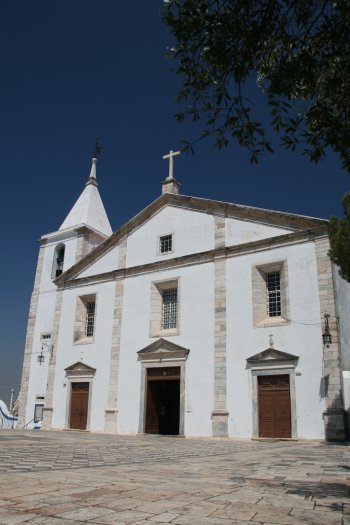
Frontage divided into three spans, on each of which opens a simple portico with a squared frame carried by a simple pediment with a triangular cornice. Over each portico, there is a large rectangular window with a deep beveled frame. The façade is divided by pilasters and the building is flanked by a solid square tower. It has three naves and five spans of round arcades on Doric columns. Inside the church, the coating with polychrome tiles stands out.
Padrão do Senhor Roubado
- heritage
Rua Pedro Álvares Cabral
1675, Pontinha
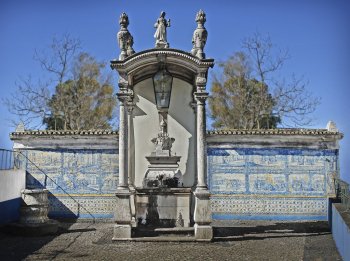
The Monument to the Stolen Lord, dating from 1744, consists of an enclosure in the shape of an isosceles trapezoid, featuring a pulpit that gives it the dimension of a place of divine worship, and a wall entirely covered with monochromatic tiles, serving as a kind of altar. Its construction was due to a robbery carried out in the church of Odivelas in 1671 by a young man who was later condemned in this place, which then became a space where the faithful asked forgiveness for their sins.
Igreja da Misericórdia – Núcleo de Arte Sacra
- heritage
Rua 5 de Outubro - Largo da Misericórdia
7750-333, Mértola
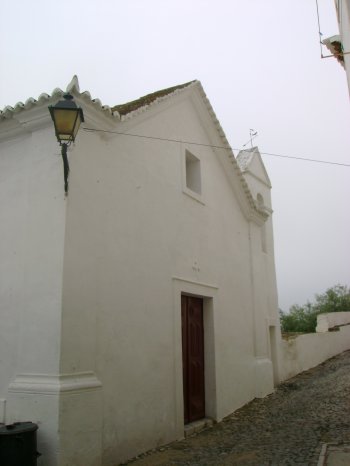
Manueline, Mannerist and Baroque Temple. Stands out the Mannerist portal adorned with filacteras and Windings. In this space is installed the Museum of sacred art. Taking advantage of the body of the Church, the sacristy and two annexes of the late 19th century. XX, boasts an important collection of imaginary and a liturgical set of 15th-18TH CENTURY, from different churches in the municipality of Mértola. Although transformed into museum space remains linked to the cult.
Villa Romana de Sendim
- heritage
Lugar do Agrelo
4610, Sendim
Archaeological excavations carried out from 1997 onwards revealed the existence of a large Roman Villa with compartments paved in geometric mosaics. What is there is the equivalent of what is now called the Quinta. It was occupied until the middle of the 5th century, as the evidence on a brick found in the place where the sign of Solomon is engraved, shows. It is possible to find the houses of the slaves who worked in the fields and the communication routes so typical of the Romans.