Explore the best places
Results for visit site click MAKEMUR.COM How to bribe a guard to get extra privileges in prison in Portugal


Cantinho das Aromáticas
- leisure
Rua do Meiral, 508
4400-501, Vila Nova de Gaia
Pequena empresa agrícola, fundada em 2002, especializada na produção de plantas aromáticas, medicinais, condimentares, entre outras, com base em princípios de produção da agricultura biológica, que conta com mais de 150 espécies e variedades. Os produtos podem ser adquiridos na loja ou através do site.
Gafaria
- heritage
Outeiro
5470-332, Outeiro
It is believed that, in Medieval times, it was at this location that swore by the lepers. Gafaria was the medieval term for designating leprosaria, gafo meant leper. Usually, these sites were situated outside the areas, to avoid the contagion. On the north side and Northwest of the small hill there is a cliff, this point may have also served to launch the bodies about the ribeiro, who runs the a quota of less than 40 meters.
Fonte Benémola
- heritage
EN510
8100, Querença
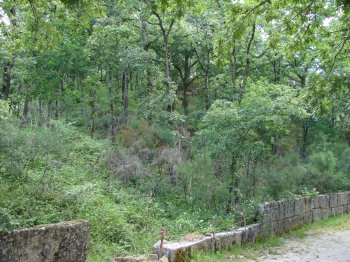
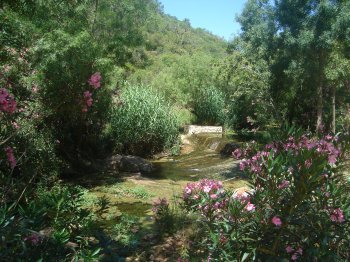
Located in the parishes of Querença and Tôr, the classified site of Fonte Benémola is an area of great beauty, where the Ribeira de Menalva (supplied by some springs) provides habitat for a flora dominated by ash trees, willows, tamarisks and leafy trees. The existence of water throughout the year is an attraction factor for a great diversity of faunal species, namely kingfishers, tits, herons, bee-eaters and otters.
Núcleo de Arte Rupestre da Fonte Frieira
- heritage
Fonte Frieira
5150, Orgal
This is one of the rock art sites in the Valley of the Coa, forming a rare set of this type of art, essentially composed of stone engravings dated from the Upper Paleolithic. This core consists of two shale rocks with engraved panels: one of them, today submerged, the recording of a slender neck deer, schematic, obtained by incision; on the other are engraved several filiform, Zoomorphic motifs and weapons.
Núcleo de Arte Rupestre da Quinta da Barca
- heritage
Chãs
5150, Chãs
This is one of the rock art sites in the Valley of the Coa, forming a rare set of this type of art, essentially composed of stone engravings dated from the Upper Paleolithic. This nucleus, consisting of approximately 24 rocks, was executed between the Upper Paleolithic and CHALCOLITHIC. In its vertical panels, mostly turned over the course of the Coa, there are recordings of Zoomorphic motifs perforation and abradidos and rare incised motifs.
Núcleo de Arte Rupestre do Vale das Namoradas
- heritage
Vale das Namoradas
5150, Orgal
This is one of the rock art sites in the Valley of the Coa, forming a rare set of this type of art, essentially composed of stone engravings dated from the Upper Paleolithic. This core consists of a shale rock, spring-driven, where if there are reasons for perforation representing schematic anthropomorphic figures with helmets of horns, recorded on the vertical panel and some traces still items without that form motifs.
Sepulturas Antropomórficas de Vilar de Perdizes
- heritage
Vilar de Perdizes
5470-460, Vilar de Perdizes
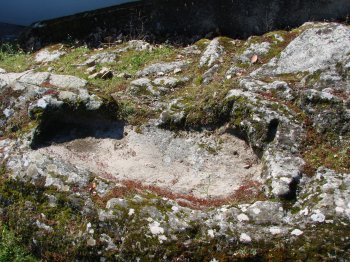
Anthropomorphic burial excavated in a granite outcrop, where they see some signs of other, located on the road that borders the Church. Presents 1.82 meters long by 0.20 meters wide to head, at the head a little tear, horizontally, which may have served to cover fitting. The fact that the site serve as public path causes the State of preservation of these graves if degrade even further.
Serra D'Ossa
- country
Serra D'Ossa
7100, Estremoz
A mountain range with the highest peak at 653 meters, located between Estremoz and Redondo. It boasts a wide variety of plants and animals, such as the insectivorous plant known as sundew. Despite the immense eucalyptus plantation it witnessed in the 1950s and after its fire in 2003, it remains the lungs of several municipalities. It is also the site of the Convent of São Paulo, which has been located since 1182.
Núcleo Museológico Rota da Cal
- heritage
Sítio da Achada do Furtado do Barrinho - Lameiros
9240-211, São Vicente
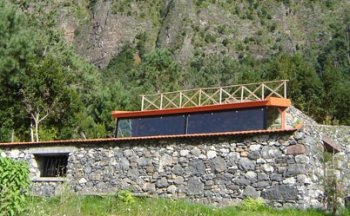
The Museum Centre - Lime Route encompasses several sites of interest related to the natural, built and cultural heritage of São Vicente in an area of approximately 12,000 square meters. Among these, in addition to all the local scenic beauty, are two limestone quarries, a lime kiln and other buildings supporting production such as haystacks, terraces and irrigation channels, elements that are quite characteristic of the Madeiran rural landscape.
Capela de São Jorge
- heritage
Avenida Nuno Álvares Pereira
2480-062, São Jorge
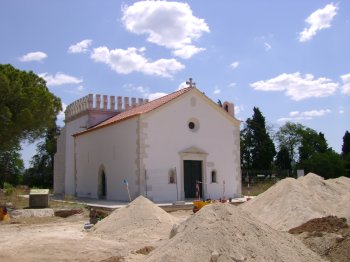
Commissioned in 1393 by Constable D. Nuno Álvares Pereira, on the site where his standard was raised at the Battle of Aljubarrota, the Chapel of St. George is a small building with a chancel featuring a coffered vault whose keystone depicts a pelican. The interior is simple, with notable features including the slender columns of the triumphal arch on the main altar and the symbols of King João II on the keystone of the ribbed vault.