Explore the best places
Results for launch site now PROBLEMGO.COM pay bond online get out today in Portugal


Núcleo de Arte Rupestre da Ribeira de Piscos e Quinta dos Poios
- heritage
Muxagata
5150, Muxagata
This is one of the rock art sites in the Valley of the Coa, forming a rare set of this type of art, essentially composed of stone engravings dated from the Upper Paleolithic. This core consists of about 20 rocks in shale, that can be dated from the Upper Paleolithic to the Neocalcolítico. Develops along the left bank of the river and some along the Coa river itself. Are recorded several dozen anthropomorphic, Zoomorphic motifs and some signs, mostly filiform.
Gruta da Furninha
- country
Estrada Marginal Sul, 184
2520-557, Peniche
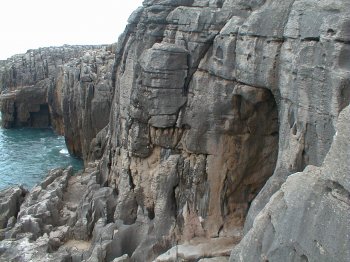
Also known as Cova Dominique, it is located on a cliff between Cabo Carvoeiro and Peniche Fort. It is a natural cavity located approximately 15 meters above sea level. It was occupied during the Middle Paleolithic and late Chalcolithic periods, making it the most important prehistoric site in the municipality. It served as both a shelter and a necropolis, providing a vast archaeological collection, which can be seen in several museums, including the Peniche Municipal Museum.
Praia Fluvial de Aldeia Ruiva
- beach
Praia Fluvial de Aldeia Ruiva
6150, Proença-a-Nova
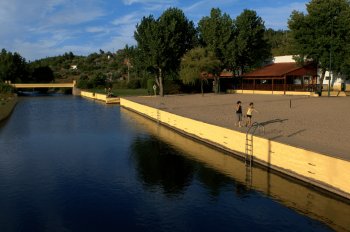
Aldeia Ruiva River Beach is a landmark in this region, especially in the summer. The natural beauty of the site is there for all to see. The entire space was designed to serve its users. It features a landscaped area and a sandy area, with plenty of shade and places to relax, as well as a playground, picnic area, and rural campsite. It also has a bar, changing rooms, and parking. This beach has been classified as accessible and received the "Accessible Beach, Beach for All" award.
Vila Cova à Coelheira
- country
- heritage
Vila Cova à Coelheira
3650, Vila Cova à Coelheira
The pillory, an 18th century house with coats of arms, a unique house known as "Sinagogue" that reflects the importance of the Jewish colony that onc eexisted here, stand out in this village. A special note to the belvdere, the water mill and the river beach as well. The domens of Queiriga and Pendilhe and the Necropolis of Almoxene are located nearby.
Memmo Alfama Hotel
- hotels
Travessa das Merceeiras, 27
1100-348, Lisboa
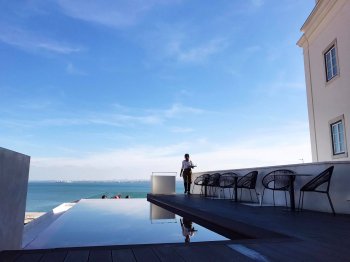
Memmo Alfama Hotel, situated next to the Cathedral and the castle of São Jorge is the first boutique hotel of this renowned historic district. Situated in the heart of the Alfama district, overlooking the Tagus River, this boutique hotel stands out for its authenticity. Consists of 42 rooms, has a pool and wine bar.
Quinta do Pinhô
- hotels
Rua do Assento
4835-257, Guimarães
The Rural Tourism accommodation Pinhô farm is a unique place where nature stands out as the main character. The ideal place to relax, socialize and relax and harmony with the vegetation, animals and water mines. Quinta do Pinhô also has a restaurant where you can find a world of flavors.
Bar Top
- food & drink
Rua do Cerro, 1
7230-007, Barrancos
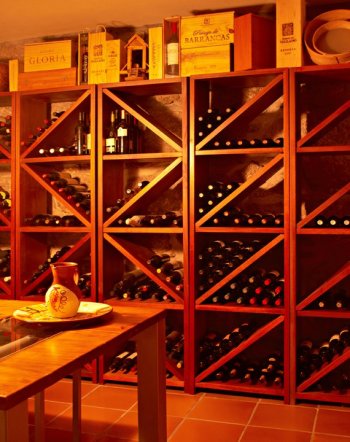
Typical and rustic Bar with two rooms, where the décor stand out farm implements. One of the rooms has a fireplace (for heating in the winter) and the space has a summer terrace. Offers Internet to customers. Very frequented usually and primarily during the holidays of Barrancos (from 28 to 31 August).
Museu Municipal de Benavente
- heritage
Rua Luís de Camões, 8
2130-062, Benavente
Traditional crafts such as shoemaking, saddlery, barber, farrier, blacksmith, carpenter, caulker, cooper are represented here, and objects from the various activities carried out in the region since the end of the 19th century are on display, such as agricultural implements, household utensils, costumes, embroidery , photographs, furniture, basketwork, toys and ceramics.
Museu de Mértola - Circuito de Visitas da Alcáçova
- heritage
Alcáçova do Castelo de Mértola
7750-324, Mértola
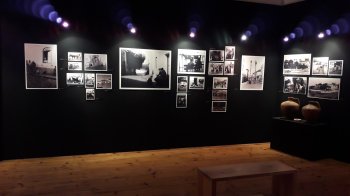
The ancient Citadel, as well as important sections of the wall that surrounded the population, are still preserved. Archaeological work carried out in the Citadel of the Castle uncovered a Moorish quarter of centuries XII\/XIII, and various Roman structures of the 4th century. The Arab ceramic pieces found are exposed in the core of the Museum of Mértola.
Igreja de Santa Iria
- heritage
Rua José Augusto da Silveira, 26
2000, Santarém
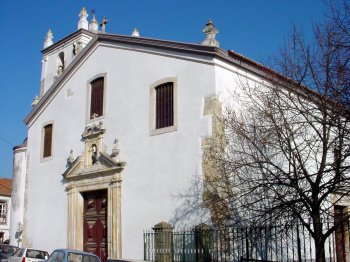
This is a mediaeval temple which underwent several reforms on the 16th and 17th centuries. The portico is dated from 1688. The golden carved altar shelters the famous wooden sculpture from Mont’iraz Christ dated from the 13th century. It stands out the glazed tiles coverage from the 17th century.