Explore the best places
Results for check portal now PROBLEMGO.com how to get my brother out of jail today for money in Portugal


Igreja de Santa Marinha
- heritage
Moreira de Rei
6420-506, Trancoso
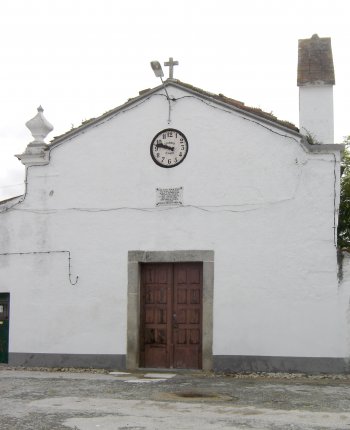
This is a Romanic church constructed on the same place where it used to be a former mediaeval necropolis. It presents a longitudinal plan composed by two juxtaposed rectangles, where it stands out on the main façade, and the doorway in round arch and the lateral doors in lancet arch. The mediaeval temple was built between the 12th and the 13th centuries.

Igreja da Misericórdia de Mora
- heritage
Terreiro da Misericórdia, 4
7490-250, Mora
Pentacentenária Church consists of nave, chancel, vestry and Bell Tower. The façade is painted white and takes one shot in yellow and has three small glasses. The nave and chancel are narrower and is filled with mural of the late 18th century. Stands out the steeple Bell cast in bronze with an inscription on the Santa Águeda.
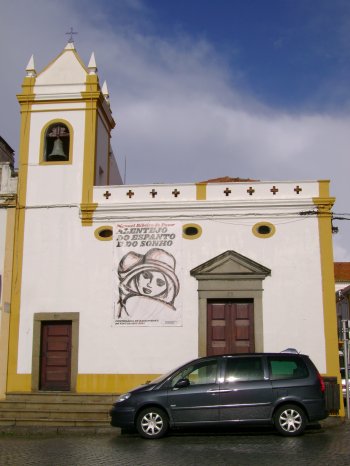
Igreja das Chagas do Salvador / Igreja de Nossa Senhora dos Remédios
- heritage
Rua Dom Afonso Henriques
7780-183, Castro Verde
This church was built on top of another church, whose founding is legendary and attributed to D. Afonso Henriques. In the 18th century, the façade was rebuilt, displaying an interesting Baroque style. Inside, a marbled stucco main altarpiece with a gilded throne and some 18th-century tiles inspired by Dutch models stand out.
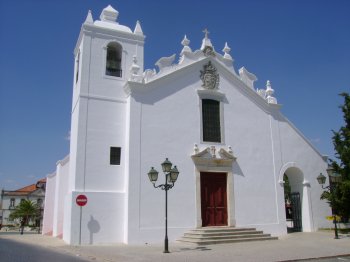
Paço dos Távoras
- heritage
Praça do Município
5370-288, Mirandela
A 17th-century palace with three sections: a two-story central section and two single-story side sections. The stonework on the doors and windows is particularly noteworthy. Inside, a tile panel dating from 1956 depicts the city's coat of arms stands out. Currently, it houses the Mirandela Town Hall.
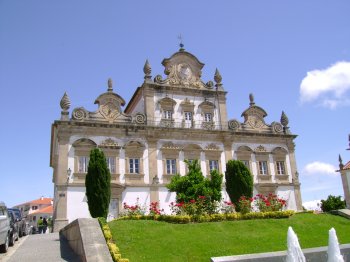
Ermida de São Luís / Igreja Matriz de Ourique
- heritage
Rua António Vitorino de Matos, 1
7670-363, Ourique
Small pilgrimage hermitage with beautiful Pombaline tile panels. Rebuilt in the 18th century at the behest of King João V. The elegance of its main façade stands out, with rococo mortar work. Inside, the Baroque is already fully established in the large gilded and polychrome structures that spill over from the altarpieces.
Adega Típica Vinho e Noz
- food & drink
Rua Ramalho Ortigão, 12
7005-592, Évora
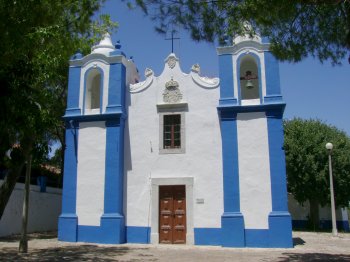
This rustic space has an unusually lit room, fit for enjoying a meal in a peaceful atmosphere. Some of the menu's suggestions are: "migas", fried lamb chops, several black pork meats, black pork meat with black clams and the lamb "ensopado". Among the desserts, the honey and nyt cake stands out.
Pimenta & Chocolate
- food & drink
Rua de Cedofeita, 652
4050-176, Porto
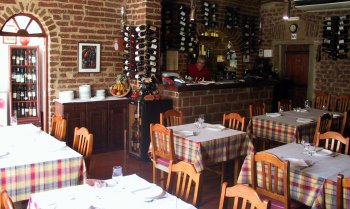
Cosy and romantic restaurant with piped music, where stands out the careful decoration, as the curious floor in glass bottles underneath. Large tables are the dishes with inspiration in traditional Portuguese cuisine with touches of author. Are a species of artworks the dishes presented with chocolate designs. All love are conspicuous by the touch of chocolate and pepper.

Pia do Urso
- country
- heritage
Pia do Urso
2495, Moita do Martinho
A small urban cluster where houses with characteristics similar to traditional Algarve architecture stand out amidst dense vegetation. Here you can also find some old wells and lagoons. However, its biggest tourist attraction is the country's first sensory ecopark, designed especially for the blind.
Capela de Santo Antão
- heritage
ER311
5460-413, Dornelas
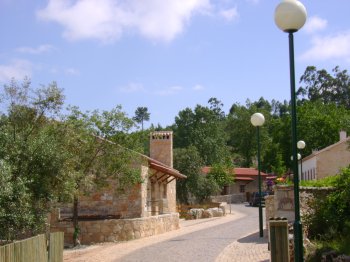
The chapel of Santo Antão is deployed on a terrace, secluded place away from the village of smart arse. Is a granite building, of rectangular plant North\/South-oriented with the forecourt enclosed by a granite wall. The front facade has a portal frame rectangular protruding, bearing on the lintel inscription "YEAR 1754", flanked by two rectangular horizontal slots, surmounted by a pediment angular interrupted. Inside this Chapel stands the high altar in polychrome and gilded carvings.

Igreja Matriz de Aguiar / Igreja de Nossa Senhora da Assunção
- heritage
Largo 25 de Abril, 8
7090-226, Viana do Alentejo
Its exact foundation is unknown. However, it is mentioned in royal documents from 1320. In the 17th century, its main elevation underwent major architectural changes. It features a granite portal, a lintel, a triangular pediment topped by a stone cross, a spire at the north end, and a robust, sharp-pointed bell tower opposite, made of masonry decorated with artistic sgraffito, two eyelets, and an equal number of cast bronze bells, the oldest dating from 1772.