Explore the best places
Results for check portal now PROBLEMGO.com how to get my brother out of jail today for money in Portugal


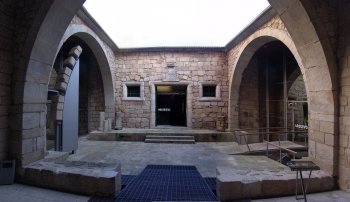
Casa do Infante
- heritage
Rua da Alfândega, 10
4050-029, Porto
The Casa do Infante, so designated around was born Henry the Navigator, is a complex of buildings that were being built to house the services of the Crown at the port: Customs, the Mint and the Accounting of the farm. Its history dates back to 1325, when King Afonso IV ordered the construction of the "Almazem" Regal, against the will of the Bishop, then Lord of the village. The building was the subject of a rehabilitation process and musealization and today offers a set of diversified valances: Museum; Municipal Historical Archive; Portuenses Affairs library; Memory Room; Exhibition Hall and Auditorium. …
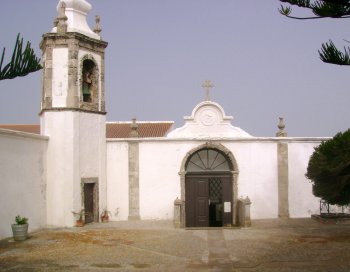
Ermida de Nossa Senhora dos Remédios / Igreja de Nossa Senhora dos Remédios
- heritage
Estrada dos Remédios, 120
2520, Peniche
The chapel of Nossa Senhora dos Remédios, located along the coast at the western end of the peninsula of Peniche, forms the basis of a sanctuary consecrated to worship mariano. It is unknown if the date of construction of this temple, assuming that will have been built at an earlier date to the 19th century. XVII. According to legend, the statue of our Lady was found in the 19th century. 12TH hidden in a small cave, situated at the place where today stands the Hermitage, having started, from that date, the cult of Senhora dos Remédios. The importance of this …
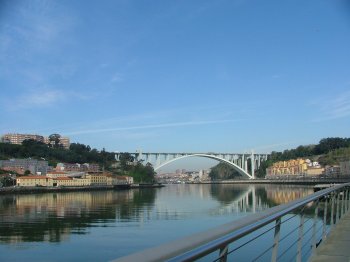
Ponte da Arrábida
- heritage
Sobre o Rio Douro
4150, Porto
Planned by Edgar Cardoso and opened in 1963 (although the Works began in 1957), the Arrábida Bridge was one of the more advanced architectonic works of its time. The 270 metres concrete span was, for some years, a world record on this kind of bridges. The arch spire has 52 meters and the roadway rises to 70 meters height. It is said that, at the opening, many photographers and journalists from abroad came to witness an expected tragedy, because it was common sense that the “large” configuration of the bridge would not stand the weight of the vehicles. Today, it …
Castelo de Pena de Aguiar
- heritage
Castelo
5450-280, Castelo
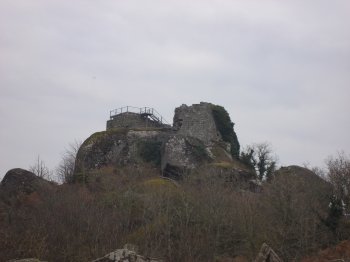
Aguiar Castle is a unique rock castle, whose current structure dates back to the 9th or 10th centuries. Situated on a massive granite boulder, archaeological finds have revealed three major levels of occupation: Prehistoric, Celtic, and Roman. Access to the building is via an entrance with six staircases, beneath an ogival portal. Climbing some rocks leads to the highest point, from which a sweeping panorama over the entire Aguiar Valley is offered. The building includes a vaulted-ceilinged room, as well as the embrasure room, a window with privileged strategic visibility.
Convento da Granja
- heritage
Rua do Cabo, 4-A
5460-451, Granja
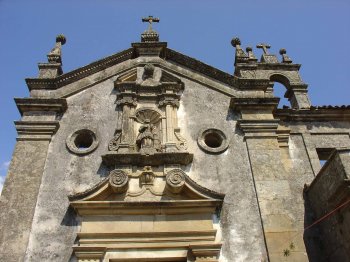
Also known as "School of Granja" consists of a chapel and buildings (dormitories, various rooms, patio), into ruin. The chapel has a beautiful Baroque façade, with an imposing rectangular portal, flanked by two rectangular horizontal slots, the frame of the doorway is in granite worked with volutes. On top has a small kiosk, richly decorated and crafted, with pilasters shot a triangular pediment with a globe, which houses a sculpture of Santa Bárbara. Its construction built on the 18th century and have been connected to the Cistercian order. Already at the end of the nineteenth century worked as a women's …
Capela de São Bartolomeu
- heritage
EM312-2
5460-125, Beça
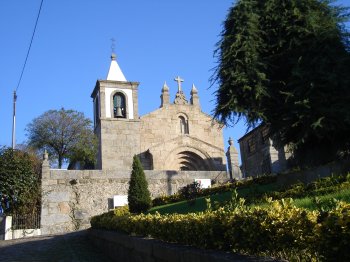
The parish church of Romanesque style, Wicked, is dedicated to the Apostle St Bartholomew. Is a longitudinal-oriented plant building towards ENE\/OSO, consisting of nave and chancel, behind which lies the vestry. The main façade, with a round arch portal, is topped with a gable with cornice, the stretching of the which is a Greek cross surmounted by a belfry. Inside the temple granite predominates, choppy by colourful altars and religious imaginary, the floor is paved with 49 caps graves, numbered and separated by tabs. It is in this church that, annually to 24 August, religious crafts are celebrated the feast …

Igreja do Salvador de Unhão
- heritage
Lugar da Igreja
4650-652, Unhão
Of modest proportions, this temple has a single nave and a rectangular chancel, highlighting the main portal which, made up of four archivolts with a round arch decorated with geometric and vegetal motifs, frames a tympanum filled with the typical hollow cross of the bracarense tradition. The gilded carving of the altarpieces that flank the triumphal arch and the main altarpiece appears during the 18th and 19th centuries. The Church of Salvador de Unhão reflects the importance and scope of the settlement of the region during the 13th century, whose foundation can be dated from the epigraph that records the …
Igreja de Nossa Senhora da Ajuda / Matriz de Vestiaria
- heritage
Largo Monsenhor José Cacella
2460-743, Alcobaça
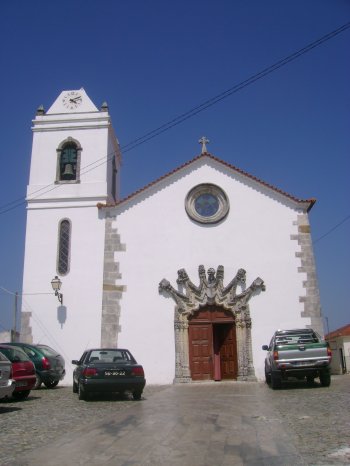
Founded in the 19th century. XVI, the Igreja Matriz de ʻiʻiwi is dedicated to Nossa Senhora da Ajuda, whose image, to which they ascribe miraculous powers, there would have been found. On the facade, stands the Manueline portal that displays a great decorative wealth with an unusual variety of ornaments. The interior of a single nave covered in wood, has a triumphal arch that gives access to the main Chapel closed by a ribbed dome. Also worth mentioning are the two sinks of holy water, a Romanesque origin and the other in Manueline style, the Foundation of the contemporary church.
Castelo Novo
- country
- heritage
Castelo Novo
6230-160, Fundão
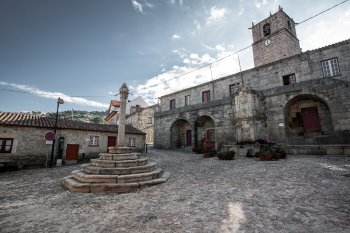
Village located at an altitude of about 700 meters, at the foot of the Serra da Gardunha, where traces of occupation in the Roman period are visible. In this locality stand out the medieval castle, in ruins, with the keep, the Manueline pillory, the D. João V fountain, the Igreja Matriz, of Pombaline design, several manor houses and Lagariça. The miniatures in wood and iron, lace and regional embroidery constitute the local handicraft.
Flor da Rosa
- country
- heritage
Flor da Rosa
7430, Flor da Rosa
This village, located two kilometres north of Crato, stands out for its typically regional houses. A special note to the church of Flor da Rosa, from the 16th and 17th centuries, the monastery fountain and of the Álama, from the 15th century, some baroque manors and the monastery of the Flor da Rosa, currently a pousada. A traditional pottery centre, Flor da Rosa has a pottery school.