Explore the best places
Results for MAKEMUR.COM buy a lawyer who knows the judge dark web fast enter clients love us in Portugal


Castro do Castelo Velho
- heritage
Hortinhas
7250-069, Hortinhas
Fortified village, with plant irregular, having been used and modified at different times, particularly in the Chalcolithic, Bronze age, iron age and Islamic Era. Presents housing structures limited by defensive structures with traces of walls, towers and access doors.
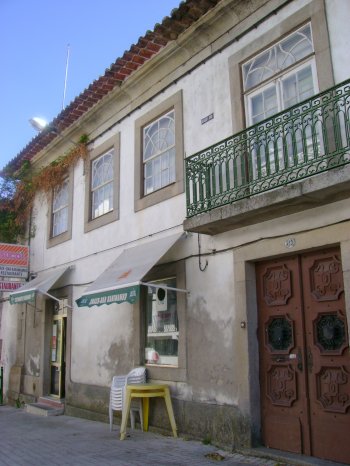
Casa do Doutor David
- heritage
Rua da República
6400-440, Pinhel
Wealthy House of rectangular plant irregular, being the main elevation of symmetric composition differing from the other by use of Grouting, masonry cornice and pilasters. The Bay window over the main door the lajeado and the lobby floor staircase with Tuscan column.
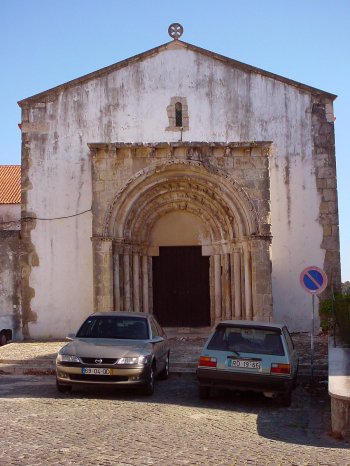
Capela de São Pedro
- heritage
Largo de São Pedro
2400-235, Leiria
It is the only vestige of the Romanic architecture in Leiria. It was profoundly remodelled in the XVII and XVIII centuries; it was profaned in the XIX century and used as a barn and theatre until 1880. It was rebuilt and retaken the cult in 1940. Several Romanic elements as arches, columns and capitals survived.
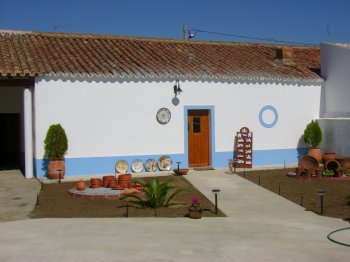
Mufla
- leisure
Rua Doutor José Garcia da Costa, 10
7200-139, Reguengos de Monsaraz
Mufla is a space dedicated to the production of utilitarian and decorative red clay ceramics. Operating since 1995, this shop continues to use the potter's wheel and hand-painting to produce a wide variety of handcrafted pieces that quickly become the finest in Alentejo ceramics.
Bar do Lago
- food & drink
Rua Dom António Ferreira Gomes, 50
4560-260, Penafiel
A bar all surrounded by glass located right in the Sameiro park, over a lake. It is a modern space with two floors and surrounded by the garden. The Bar do Lago (Lake Bar) has a space where one can use the internet for free.
Núcleo Museológico da Anta das Pedras Grandes
- art
Bairro Casal Novo
1685-045, Caneças
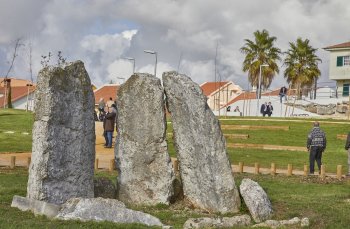
Dolmen with a chamber formed by seven upright stones and a small corridor facing southwest. This structure of large limestone blocks was used as a burial space during the Late Neolithic and Chalcolithic periods. It has been classified as a National Monument since 1944.
Espigueiros de Cidadelhe
- heritage
Cidadelhe
4980-452, Lindoso
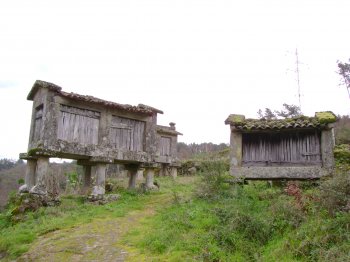
Core of granaries of the eighteenth and nineteenth centuries. This set is marked by its architectural characteristics and by its harmonious landscape. Are used for drying and storing corn thick. It is about 200 metres from the nearest road, being the final access effected on foot.
Estação de Arte Rupestre de Alagoa
- heritage
Lugar de Alagoa
3465-012, Barreiro de Besteiros
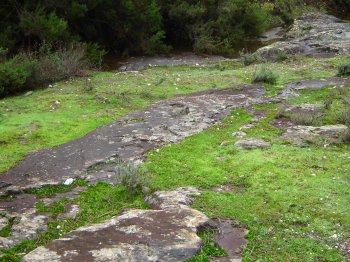
A space consisting of eight shale rocks with hundreds of engravings, some overlapping. Among the various motifs depicted are human footprints (podomorphs), horseshoes, dimples, and circles. The engravings were likely obtained through the pecking technique using lithic tools.
Fornos de Telha da Boca da Ribeira
- heritage
Canada do Arrendamento
9900-491, Horta
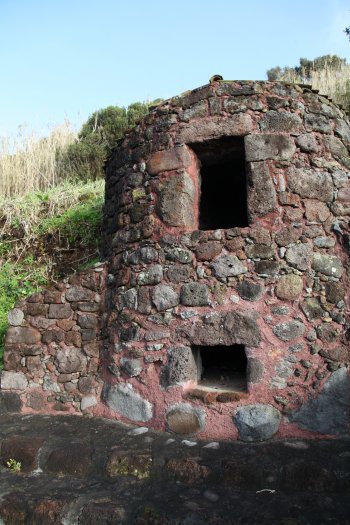
These ancient firewood ovens, built in the early 20TH century 20, testify to the work and the art of potters that here amassavam, and coziam served the clay, which is then used to coat the houses on the island. In 2007 were recovered and can now be seen properly.
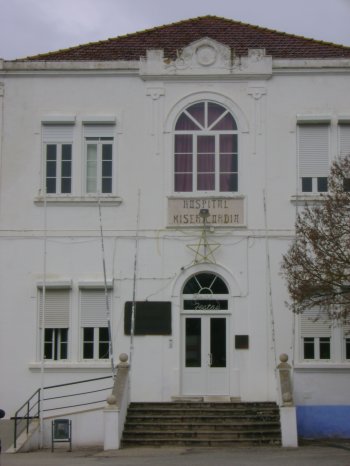
Hospital da Misericódia de Rio Maior
- heritage
Avenida Doutor João Afonso Calado da Maia
2040-333, Rio Maior
Structure built from 1926, according to the design of the engineer Mendonça. It was opened in 1935 and presents itself as a building adapted to the typology of a Hospital Center. In 1950 was built the Chapel and other annexes and progressive increases very useful, as the kitchen and the dining room.