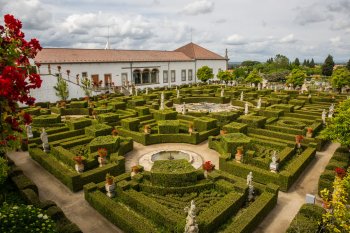
Explore the best places
Results for access web now MAKEMUR.COM Need to get my son out of juvenile hall tonight cash waiting Nitra in Portugal


Quinta da Gafaria
- hotels
Quinta da Gafaria
2080-052, Almeirim
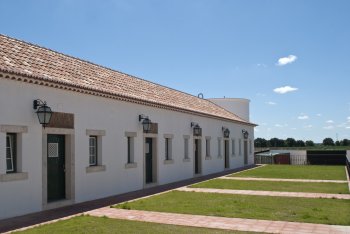
Quinta da Gafaria is located halfway between the cities of Santarém and Almeirim few meters from the bank of the River Tagus in the province of Ribatejo. Built in the XVII century, the propriety nowadays integrates smoothly the exploitation of agriculture and animal husbandry with the tourist activity. The area of rural tourism in the Quinta da Gafaria offers direct contact with the different animals that make up the farm cattle, as well as participation in agricultural activities and engaging in other multi-sport activities available to visitors, in addition to access to the regional patrimonial wealth, gastronomic and cultural surroundings.
Castelo de Pena de Aguiar
- heritage
Castelo
5450-280, Castelo
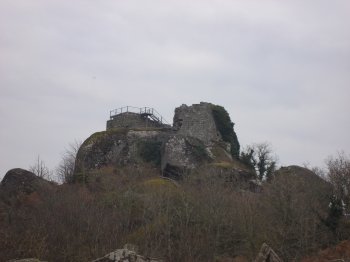
Aguiar Castle is a unique rock castle, whose current structure dates back to the 9th or 10th centuries. Situated on a massive granite boulder, archaeological finds have revealed three major levels of occupation: Prehistoric, Celtic, and Roman. Access to the building is via an entrance with six staircases, beneath an ogival portal. Climbing some rocks leads to the highest point, from which a sweeping panorama over the entire Aguiar Valley is offered. The building includes a vaulted-ceilinged room, as well as the embrasure room, a window with privileged strategic visibility.
Capela de São Salvador de Viveiro
- heritage
Rua Central, 10
5460-492, Viveiro
The chapel in the village of Viveiro, dedicated to St. Sebastian, is a granite building, of rectangular plan East\/West oriented. In 1940 was the target of expansion works that shaped the building as currently finds itself. Integrated into the main façade are clearly visible traces of the primitive Bell Tower whose arc became the main access door to the temple. Inside stands the high altar, prepared in the central part of the headboard, in gilt, which houses religious imaginary. It is in this chapel that annually in January, is celebrated the mass in honor of s. Sebastião followed by the …

Quinta Pedagógica dos Olivais
- leisure
Rua Cidade de Lobito
1800-088, Lisboa
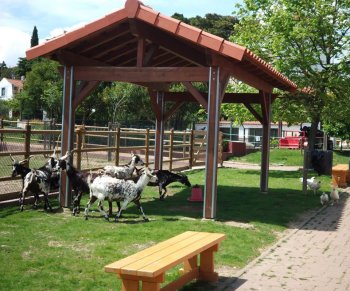
Inaugurated in April 16, 1996, the Pedagogical Farm is a project which is framed along the lines of non-formal education, which integrates the educational components and playful-recreational. This space, about two hectares, seeks to relive rural traditions from North to South of the country and celebrate rural calendar festivities. Here it is possible to live unique moments, participate in daily activities and own a farm as farming, vegetable gardens and orchards, tasks of day-to-day domestic animals, composting, discover and live the pathways of bread, sweet butter, and experiences that are accessible to all.
Igreja Matriz de Freixo de Espada à Cinta
- heritage
Rua de Trás do Adro, 26
5180-125, Freixo de Espada à Cinta
The church has three rectangular naves, a chancel, two apsidioles, and a sacristy. The main elevation, finished with a gable and formed by three sections separated by buttresses, features a door with a large, depressed arch with an ornate frame, topped by a decorative arch. The interior features a flagstone floor and ribbed vault ceiling. Also, noteworthy is the high choir in the first section and the wrought-iron pulpit. One of the apsidioles provides access to the sacristy through an 18th-century door, topped by a polychrome national coat of arms. The other apsidiole houses a funerary monument in an arcosolium.
Igreja de Nossa Senhora da Ajuda / Matriz de Vestiaria
- heritage
Largo Monsenhor José Cacella
2460-743, Alcobaça
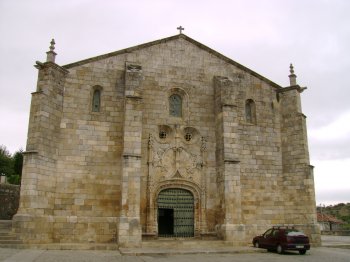
Founded in the 19th century. XVI, the Igreja Matriz de ʻiʻiwi is dedicated to Nossa Senhora da Ajuda, whose image, to which they ascribe miraculous powers, there would have been found. On the facade, stands the Manueline portal that displays a great decorative wealth with an unusual variety of ornaments. The interior of a single nave covered in wood, has a triumphal arch that gives access to the main Chapel closed by a ribbed dome. Also worth mentioning are the two sinks of holy water, a Romanesque origin and the other in Manueline style, the Foundation of the contemporary church.
Alegrete
- country
- heritage
Alegrete
7300-311, Portalegre
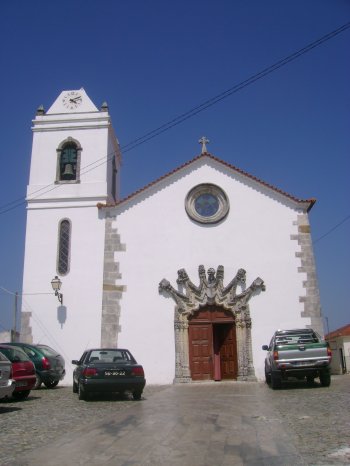
Village with origins that go back to the D. Dinis Reign, when it was inhabited. Besides its interesting historical value, the Alentejo characteristics also stand out in its constructions, namely the white row of houses. As for the architectonical patrimony are worthy of notice the Alegrete castle, National Monument, the clock tower, the parish church of S. João Baptista, a construction from the XVI century, the bandstand, the ruins of the S. Pedro chapel and the Misericóridia chapel, dated from the XVII century.

Ibis Lisboa Parque das Nações
- hotels
Rua do Mar Vermelho, lote 1 - 07 2 2
1990-203, Lisboa
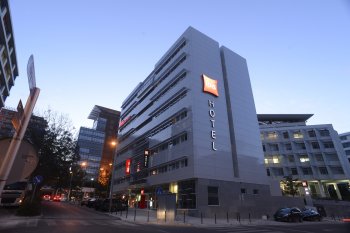
The Ibis Lisboa Parque das Nações was opened in 2013 and is the first Ibis in Portugal with the new concept of public spaces, designed by the architect Philippe Avanzi. Lobbies, reception desks and bars were transformed into areas with a more modern design, warm and relaxed, more current. Interior decoration stands out by soft colours and comfort, also patent in 112 rooms. The Hotel also offers a bar service with light meals available 12:0 am.
Jardim do Passeio Alegre
- country
- leisure
Rua do Passeio Alegre
4150, Porto
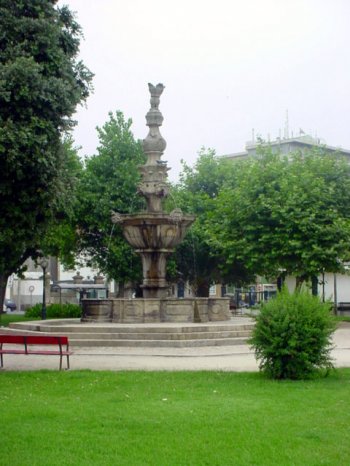
In this beautiful large garden placed at the Foz do Douro, created at the end of the XIX century, the fountain and the two obelisks by Nasoni stand out. There is also a small lake with a sculpture in the centre representing a young lady with a seal, a sculpture in honour of the writer Raúl Brandão, a bandstand, and the public toilets, built in 1910, decorated with Art nouveau Azulejos (tile) and English china. At last, the place has a mini-golf pitch and a small cottage – esplanade called the Chalé Suíço.
Jardim do Paço
- country
- leisure
Rua Bartolomeu da Costa, 5
6000-773, Castelo Branco
Classified as a national monument, it is one of the ex-libris of the city and one of the most original examples of the Baroque style in Portugal, having been built at the behest of D. João de Mendonça, Bishop of Guarda, around 1720. It features five lakes on the main slope, where the water features stand out, while the intermediate one has the Lago das Coroas and the Stairs of the Apostles and Kings, where all the Portuguese monarchs are represented. On the upper deck is the Staircase of Moses.