Explore the best places
Results for go online quick MAKEMUR.com Buying a get out of jail now pay later plan in Portugal


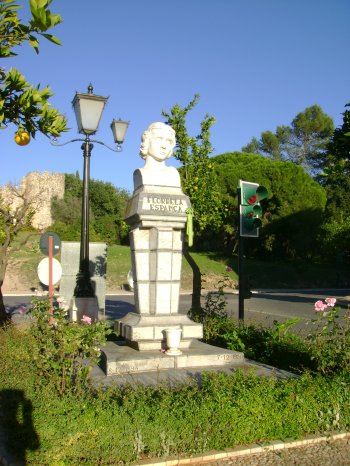
Busto de Florbela Espanca
- heritage
Avenida Bento de Jesus Caraça
7160-253, Vila Viçosa
Florbela Espanca was born in 1894 in Vila Viçosa. Was a writer and poet and his life is associated with various troubles, patents on his literary production and in your life. She was married three times, but it is believed that the lack of itself wasn't stable or positive, despite being a beautiful woman by many who knew her. Thirty-six years after his birth, on his birthday, commits suicide in Matosinhos, Portugal, where he lived. Years later his remains were moved to Vila Viçosa, where there is a statue and a movie theater with his name.
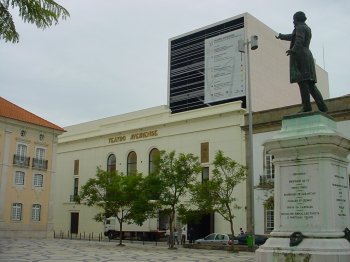
Teatro Aveirense
- art
Rua de Belém Pará
3810-066, Aveiro
In 1855-1858 began the construction of the Teatro Aveirense, a project by Araújo e Silva. The building would only be completed in 1878-1881, having been inaugurated by the Dona Maria II Theater Company. In 1912 the animatograph sessions began. Later, in 1947-1949, the space was rebuilt and opened, having been designed by Ernesto Korrodi and Engineer Von Haff. True ex-libris of the city of Aveiro, this room was the stage for a wide range of shows as Ney Matogrosso, Maria Bethânia and Vicente Amigo. It was also the space chosen for the academic soirees of the University of Aveiro.
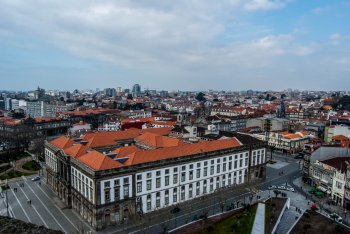
Universidade do Porto
- heritage
Praça de Gomes Teixeira
4099-002, Porto
This building was first the Real Academia da Marinha do Comércio, (Navy and Commerce Royal Academy), then the Academia Politécnica (Polytechnic Academy) that later became the Sciences Faculty. Its construction began before the first French invasion and finished in the XIX century, at the same spot where a former XVII century used to be: the Graça Church, annex to the Recolhimento dos Orfãos, founded in 1651 by the father Baltasar Guedes. The temple still existed during the city siege and, at that time, abandoned, it became a blood hospital. In the middle of the last century, it was demolished to …
Museu de Olaria
- heritage
Rua Cónego Joaquim Gaiolas
4750-306, Barcelos
Created in 1963, this museum is the result of a donation of a valuable collection gathered by the ethnographer Joaquim Sellés Paes de Villas Boas. It began as the Regional Ceramics Museum and later became the Museum of Portuguese Popular Ceramics. However, when the pottery pieces formed a collection, it simply became the Pottery Museum. In this space you can appreciate more than 6600 pieces from various regions of the country, from Portuguese-speaking countries and some from abroad, divided into four main groups: black pottery, matte red pottery, glazed pottery and figurative pieces.

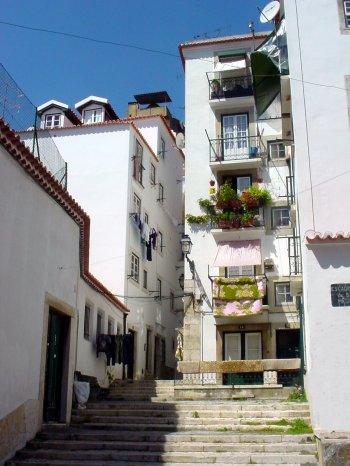
À Descoberta de Alfama
- heritage
Bairro de Alfama
1100, Lisboa
This typical quarter was once one of the most cosmopolitan of lisbon. Placed between the castle and the river, Alfama is an historical quarter that makes us go back to the time of the portuguese discoveries. Its typical buildings prevail over the hearthquake of 1755, leaving the façades intact. Experience the unique atmosphere of life in the neighborhood, with its small stores and taberns, finding your way through the..net of streets and…Because it is an area with a big declive, the best choice is to make the tour up to down.Places to visit: Casa dos Bicos; Saint Jorge's castle; Sé; …
Castelo Novo
- country
- heritage
Castelo Novo
6230-160, Fundão
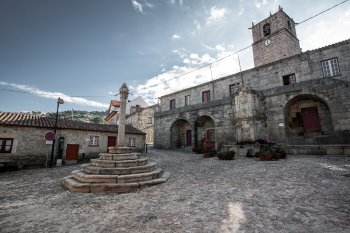
Village located at an altitude of about 700 meters, at the foot of the Serra da Gardunha, where traces of occupation in the Roman period are visible. In this locality stand out the medieval castle, in ruins, with the keep, the Manueline pillory, the D. João V fountain, the Igreja Matriz, of Pombaline design, several manor houses and Lagariça. The miniatures in wood and iron, lace and regional embroidery constitute the local handicraft.
Flor da Rosa
- country
- heritage
Flor da Rosa
7430, Flor da Rosa
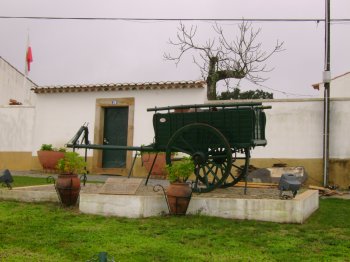
This village, located two kilometres north of Crato, stands out for its typically regional houses. A special note to the church of Flor da Rosa, from the 16th and 17th centuries, the monastery fountain and of the Álama, from the 15th century, some baroque manors and the monastery of the Flor da Rosa, currently a pousada. A traditional pottery centre, Flor da Rosa has a pottery school.
Lamas
- country
- heritage
Lamas
4870, Lamas
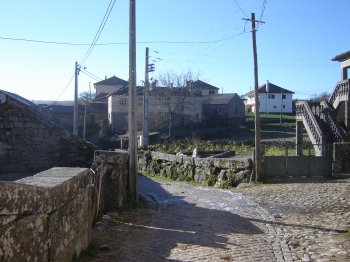
A village located in a lush valley with narrow streets, tradtional farm houses with culm rooftops and rural houses, namely the Gaspar House, the Cabo House, the Seixo House and the Carvalinha House. A special note to the Chapel of Our Lady of Remédios (Remedies), to the "alminhas", on a wall that protects the water spring, the "canastros" that stand on stone pillars and several sun clocks. The "crossas" stand out in the local craftswork.
Marvão
- country
- heritage
Marvão
7330, Marvão
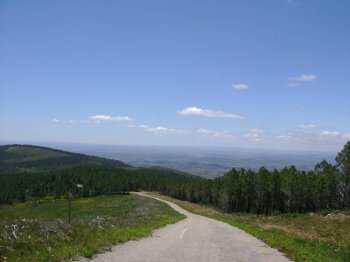
This small group of houses is located by the Marvão mountain. Located inside 17th century walls, it stands out for its unity and homogeneity. Located near Spain, this border fortress that exists since the 12th century had its first charter in the 13th century. A special note to the castle, a National Monument, the Convent of Our Lady of Estrela (Star), the pillory and several churches. A nice area for mountaineering.
Herdades da Frupor
- hotels
Brejo Redondo - Brejão
7630-569, Brejão
The Manors Of Frupor lies in the Brejão, a small village of rural and nature located in the Natural Park of Southwest Alentejo, near the beaches of Carvalhal and Zambujeira of Sea. Inserted in an agricultural property, with 3 villas, completely independent, with modern standards of comfort, but with a rustic and traditional appearance. The houses are surrounded by landscaped gardens, which open out onto private patios. This is a unit that invites to full rest, in contact with nature.
