Explore the best places
Results for proceed to portal PROBLEMGO.com pay for early release from jail HMP Berwyn in Portugal


Vitor's Village
- hotels
Rua Infante Dom Henrique
8400-230, Lagoa
Located on a hill at the entrance to the typical fishing village of Ferragudo, this holiday complex offers views of the sea and the river Arade, being still can view the Forte de Santa Catarina and the Marina de Portimão. Just two minutes from the city of Portimão and Praia da Rocha Beach nightlife, and five minutes from the golf courses Gramacho and Vale de Pinta, this set of 100 apartments offers a prime location combined with a high level of comfort and refinement.
Miradouro do Pico Ruivo
- country
- leisure
Estrada do Pico das Pedras
9230-156, São Jorge
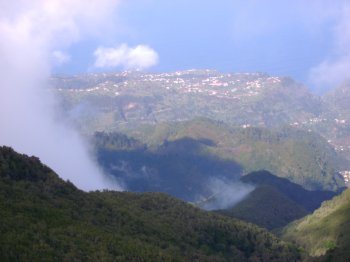
Viewpoint located at the highest point of the Madeiran archipelago, at 1861 meters above sea level, and the 3rd highest in Portugal. Being a very rocky environment, flora species such as ferns, mosses and lichens persist, while the fauna that can be seen includes the Blackbird, the Madeira Chaffinch, the Madeiracrest, the Common Linnet and the Red-legged Partridge. The peak is accessible by road from Santana, or by a pedestrian route that starts from Pico do Arieiro. During the summer months, there is an inn that operates just below the mountain's summit.
Castelo de Belmonte
- heritage
Largo do Castelo
6250-067, Belmonte
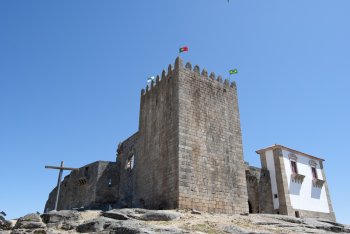
As we approach the entrance to the village, we come across its Castle, classified as a National Monument. Pedro Álvares Cabral, the most famous inhabitant of Belmonte, was born here. The fort was built in the 13th century, at the behest of D. Afonso III, and in 1466 it became the residence of the Cabral family. One of its most emblematic points is the Manueline-style window from the 16th century, from where you can enjoy a breathtaking view of the valleys and mountains that surround the village.
Corpo da Guarda Principal em Almeida / Câmara Municipal
- heritage
Praça da Liberdade
6350-130, Almeida
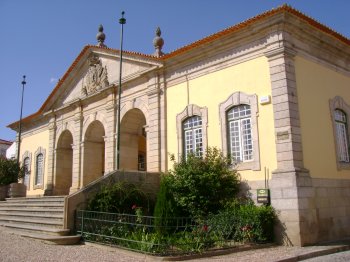
Close to the Quartel das Esquadras, the Town Hall of Almeida operates in a historic and emblematic building, dating from the 18th century and which previously housed the Former Body of the Main Guard. With a Neoclassical style, it is the last military building built from scratch for military purposes in Almeida. On the main façade, the three arches framed by pilasters stand out, as well as the triangular pediment, which integrates the royal arms. These show the shield surrounded by acanthus and baroque shells, supported by warlike elements.
Casa Independente
- food & drink
Largo do Intendente, 45
1100-285, Lisboa
The detached house is an art project of Tropical Irony. Is in Largo do Intendente, in an old mansion, where still in the 19th century if discussed free speech values, the demystification of everyday life and was promoted an intense civic activity. With the motto "art and music as Tiger's milk for the soul" has the mission to recover the spirit of the ancient guilds and communities, from a contemporary and cosmopolitan dialogue with lifestyles, music and the Visual Arts. Enjoy the space and their cultural mission with some of the delicacies served from burgers to hot chocolate and gin.
A Casa da Boa Onda
- hotels
Sitio da Horta Nova - Junqueira
8950-011, Castro Marim
A Casa da Boa Onda is a slowlife and ecofriendly B&B, a haven of peace in the middle of nature but close to everything, 5 minutes from Castro Marim, 15 minutes from the beaches. The 3 suites, bright and spacious, with a refined decoration, have been designed to combine simplicity and comfort. Here, everything has been imagined to invite you to a totally rejuvenating stay: to the rhythm of nature, we find inspiration, we live in osmosis with the elements, with a free spirit.
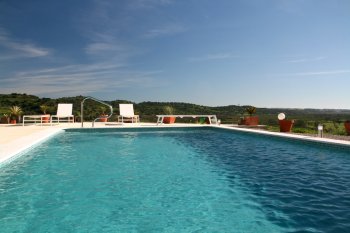
Igreja Paroquial da Pampilhosa da Serra / Igreja de Nossa Senhora do Pranto
- heritage
Lugar da Igreja
3320, Pampilhosa da Serra
Church dating from the second half of the 16th century. Religious architecture, with a regional character. Parish church with a wide nave and a three-leaf façade, following an architectural scheme common in the region in the 18th and 19th centuries. Highlights include the 16th-century collateral altarpiece in polychrome Ançã stone, perhaps originally from a Coimbra workshop that followed João de Ruão, the Neo-Gothic altarpieces with carved carvings, and a late 18th-century sculpture in polychrome wood (Our Lady of the Rosary).
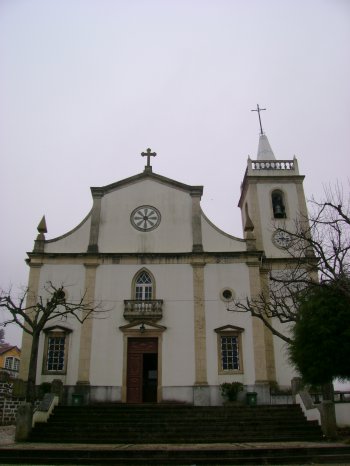
Igreja de São Lourenço / Igreja Matriz de Alhos Vedros
- heritage
Largo da Igreja, 37
2860-410, Moita
It is thought that the initial construction of the Church of São Lourenço dates back to the end of the 13th century, but nothing remains of that primitive construction. With a single nave, dating from the 17th century, the church is characterized by tiles that relate passages in the life of S. Lourenço (patron of the church), dating back to 1749. From the various chapels that make it up (S. Sebastião, S. João Baptista, Nossa Senhora do Rosário and Nossa Senhora dos Anjos) that of S. Sebastião is also classified as a Property of Public Interest.
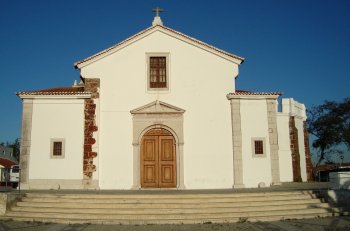
Mosteiro de Santa Marinha da Costa
- heritage
Largo Domingos Leite de Castro
4810-011, Guimarães
Convent founded in the 12th century by Queen Dona Mafalda, wife of Dom Afonso Henriques. The monastery owes its current appearance to the reconstruction that took place in the 16th century. The vault of the chancel and the cloister covered with tiles from the 18th century date from this time. The interior follows rococo and neoclassical styles. Note the choir, pulpit, organ and rococo carvings decorated with angels and mythological figures. In 1951, a fire damaged the convent part, which was restored and turned into a Pousada.
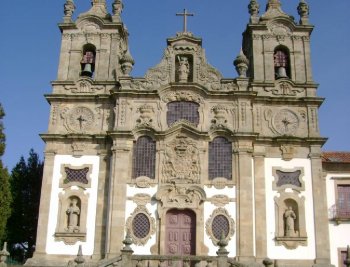
Muralhas de Guimarães
- heritage
Avenida Alberto Sampaio
4810-250, Guimarães
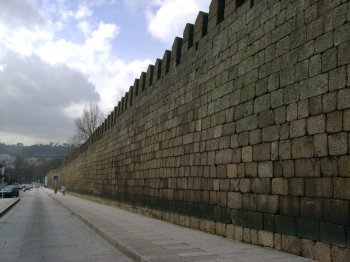
The high part of Guimarães was the first to approach the wall; it was probably during the Kingdom of D. Dinis. From this wall that is extended through around two thousand metres, it only survived an extensive chunk and from the eight towers that were distributed thought the wall, there is still one on the Vila Door. This wall construction started in Dom Afonso III Kingdom and finished during Dom Dinis Kingdom. This wall used to connect the Castle town to Santa Maria town, on the lower part.