Explore the best places
Results for check main MAKEMUR.com how to get out of jail fast for money in Portugal


William Restaurant
- food & drink
Estrada Monumental, 139 - Belmond Reid's Palace Hotel
9000-098, Funchal
Inside the main building, in a space where blue and white dominate, the décor is governed by the hotel's standards of elegance and refinement, which guarantees perfect and unforgettable meals. It also has the attribute of the menu having been designed by the award-winning chef Joachim Koerper, who surprised the island with haute cuisine proposals that are not common in these parts. Luís Pestana takes on the role of executive chef, providing irresistible proposals every day. The combination of luxury has already resulted in a Michelin Star.
The Decadente Restaurante & Bar
- food & drink
Rua de São Pedro de Alcântara, 81
1250-238, Lisboa
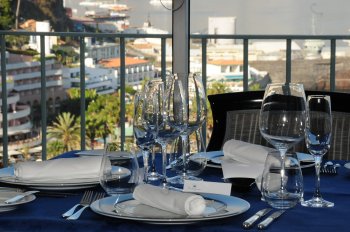
The Decadent Restaurant & Bar is the space of restoration of The Independent Hostel, situated in the Bairro Alto. It's a relaxed place, where you can sample traditional Portuguese cuisine with modern dishes by Chef Nuno Bandeira de Lima. The interior space, which can accommodate up to 50 people sitting, shall be increased by a private terrace, only accessible through the main entrance of the Hostel with a capacity of about 40 people. There is also a bar and a lounge for all those who want to sample seasonal cocktails.

Fortaleza do Guincho
- food & drink
Estrada do Guincho
2750-642, Guincho
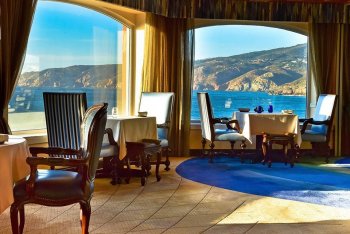
Always a restaurant with strong French influences, Fortaleza do Guincho seeks new horizons within what is called the "Portugality". The person in charge is the Portuguese chef Miguel Rocha Vieira, who took over it in 2015. With a philosophy based on haute cuisine and the sea as its main inspiration, Fortaleza do Guincho offers a daring incursion into traditional gastronomy. In 2001, the restaurant, with a strong influence of haute cuisine, won its first Michelin star that it still holds today.
Sortelha
- country
- heritage
Sortelha
6320, Sabugal
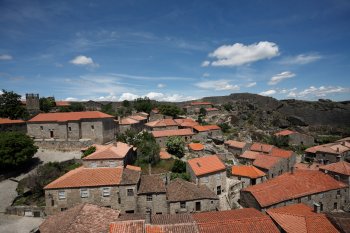
Sortelha, located on a high rocky hill at an altitude of over 760 meters, is one of the oldest villages in the country. With excellent defensive conditions, it was initially inhabited by Castro cultures and, much later, populated by King Sancho II. Of the medieval castle, which underwent several transformations, some defensive towers, the keep, and, along the walls, some Gothic gates remain. Of particular note is the parish church, dating from the 14th century, with Baroque carvings on the main altar from the 18th century.
Percurso pelos Parques e Jardins de Coimbra
- country
Estrada das Lágrimas
3040, Coimbra
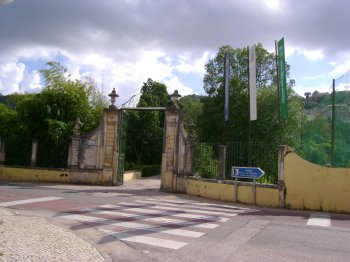
To take a walk or rest for a while, there nothing better than the tour through the parks and gardens of Coimbra. Starting at the Choupal, a shelter for students’ loves, continue to the Quinta das Lágrimas, where the tradition locates the drama of D. Pedro and D. Inês. Next, get to know the Botanic Garden, where thousands of exotic and autochthones species are gathered, and add to this, decorative elements such as fountains and ponds. The Sereia Garden, so-called because there is a fountain with a triton the people called a mermaid, was the place meant for entertainment and …
Ecomuseu de Barroso - Espaço Padre Fontes
- heritage
Terreiro do Açougue, 11
5470-251, Montalegre
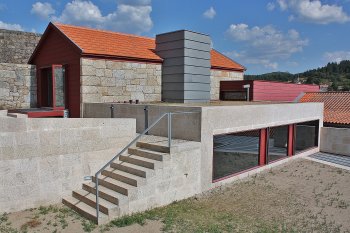
The Barroso Ecomuseum is a key element of the integrated and sustainable development strategy for the Barroso region. It integrates documentation, research, and interpretation of the region's cultural and natural values. The headquarters serves as the Regional Interpretation Center, boasting a wealth of creativity and the ability to motivate visitors to explore the thematic centers scattered throughout the municipality. It is located in the area surrounding Montalegre Castle, forming part of its wall. The public space aims to offer visitors the experience of the senses that this region offers: the sound of oxcarts, the images we can't always capture, the …
Belmonte
- country
- heritage
Vila Histórica de Belmonte
6250, Belmonte
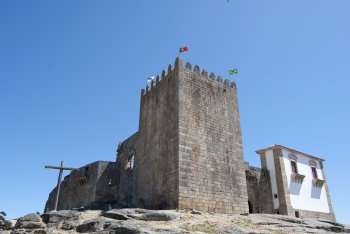
The small town of Belmonte is located on a hill, on the east slope of the Estrela Mountain, by the Cova da Beira and the Zêzere River. The romanesque church of Saint Tiago and the castle stand out in its urban medieval set, as well as the Tower "Centum Cellas", of the 1st to 4th centuries AD, built by the romans, and several vestiges of menhirs and castros (a celtic village). The local Jewish community, that still keeps to the old habits, is an interesting feature. The new church has the image that Pedro Álvares Cabral may have taken on …
Sernancelhe
- country
- heritage
Sernancelhe
3640, Sernancelhe
Built at the location of an old castro (a celtic village), near the Távora river, the romanesque Mother Church of Saint John the Baptist stands out, with its portal and its archivolts, the niches, the carvings and a visigoth chapiter. On the lovely and well preserved square, one finds the pillory (Public Interest Construction). A special note to the houses of Comenda da Ordem de Malta and of the Barons of Moçâmedes, the Carvalhos Manor, the bridges on the Medreiro and Abade rivers, the Fountain of the Chafurdo da Ponte do Rio and the Monaster's Convent as well. The local …
Biblioteca Pública Municipal do Porto
- heritage
Rua de Dom João IV - Jardim de São Lázaro
4049-017, Porto
Being the most ancient library in the Invicta city, founded in 1833 and placed at the former Santo António da Cidade Convent, a XVIII century construction, presently classified as Public Interest Building. The library has more than 1 200 000 printed documents (monographs and periodical publications) and several special funds, among which we point out, for its sparseness, the manuscripts, from the Middle Ages to our times. This place has Internet access service, juvenile library, sound library (for the visual and motor handicapped) and photocopies, among other services.
Convento Corpus Christi
- heritage
Largo de Aljubarrota, 13
4400-012, Vila Nova de Gaia
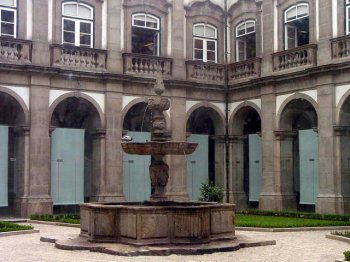
It was founded in 1345 by a noblewoman from Gaia, Maria Mendes Patite, who handed it over to the S. Domingos Order. In the 17th century, with the floods in the Douro River, the Monastery underwent profound changes and ended up being extinguished in 1834, leading to the construction, in the second half of the 17th century, of a new temple. With a unique architecture, the Choir stands out inside, with an imposing ceiling decorated with oil paintings. Its recovery has revealed many pieces of sacred art, such as a sculpture of Christ crucified dating from the 14th century, and …