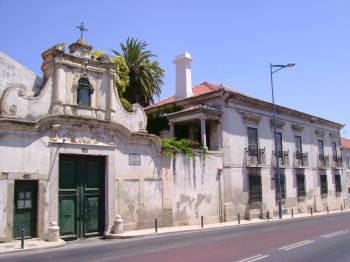
Explore the best places
Results for view now MAKEMUR.com how much to bail my daughter out tonight in Portugal


Casa da Boa Fonte
- hotels
Rua da Fonte, 234
4990-655, Ponte de Lima
The House of good source represents the typical constructions for Minho of the twentieth century, without forgetting the traditional rain-fed. All the remodeling of the space was carefully thought out, in order to maintain the original, without forgetting the comfort necessary for a pleasant stay. Its location gives prominence to the shrine of Lord do Socorro. In addition to the swimming pool, guests have a wide range of leisure activities.
Edifício do Teatro Eduardo Brazão
- heritage
Rua Dom Nuno Álvares Pereira, 25
2540-073, Bombarral
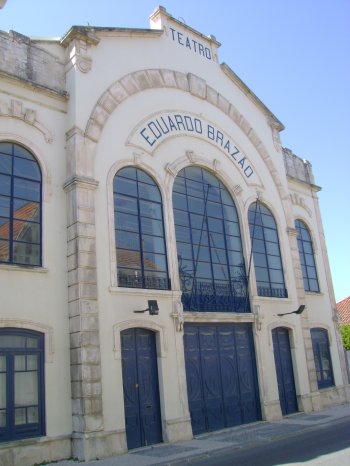
A classical Italian horseshoe theater, very rare in Portugal. Inside, the wooden structure of the boxes stands out, with decorative gilded stucco applications. Eclectic decorative elements are also visible in the main hall: the walls are decorated with shell-shaped moldings and (neoclassical) festoons with stucco symbols alluding to the theater. There are also hints of Neo-Baroque and Art Nouveau styles (iron railings on the large window).
Igreja e Claustro do Convento de São Francisco
- heritage
Rua 31 de Janeiro
2000-142, Santarém
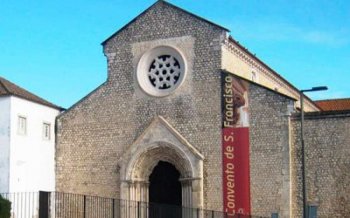
Built in the 13th century, it underwent several modifications over the years, its structure bearing marks of various styles such as Gothic, Baroque, Manueline, and Renaissance. Inside, one can observe high-quality decorative elements such as the Renaissance arch of the Chapel of Saint Anne or the Mannerist design of the Chapel of Souls. In the central nave, the upper choir stands out, where the tomb of King D. Fernando is located.
Mamoa de Madorras
- heritage
CM1262
5060-408, São Lourenço de Ribapinhão
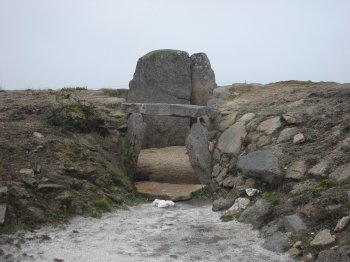
With around 30 meters in diameter and around two meters in maximum height, it is a prehistoric tomb built around 6000 years ago. It was discovered in 1912 by Albino Lopo and was first excavated between 1983-1988. It stands out for its monumentality and state of conservation, which led to some scientific interventions that provided innovative and important results for the knowledge of the communities that built this imposing tomb and inhabited the region.
Marco Miliário de Cervos
- heritage
Arcos
5470-051, Cervos
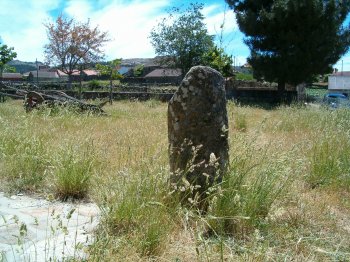
Milestone anepígrafo from Pindo, arches, later being transferred to the school garden of deer. It is a medium-grained granite cylinder the rude, well cut out about one meter tall. Was fractured at the top, where there seem to be traces of letters. It is believed that signaled the Via XVII of the Antonine itinerary, which connected Bracara Augusta (Braga) to Asturica Augusta (Astorga) through Aquae Flaviae (Keys).
Igreja de Santa Cruz
- heritage
Largo de Santa Cruz
2000, Santarém
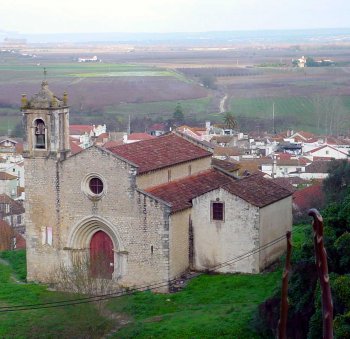
This temple was built in the middle of the 13th century and it was influenced by the introduction of the Gothic style in the town. On the 16th and 17th century it was adapted to new artistic tastes and it underwent some transformations: it received a sculpted pulpit in stone and the walls were covered in glazed tiles. On the 18th century it was added a doorway and a tower in baroque style. It stands out the worked capitals, the main chapel vault and the 17th century glazed tiles.
Igreja da Misericórdia de Tavira
- heritage
Rua Damião Augusto de Brito Vasconcelos, 2
8800-443, Tavira
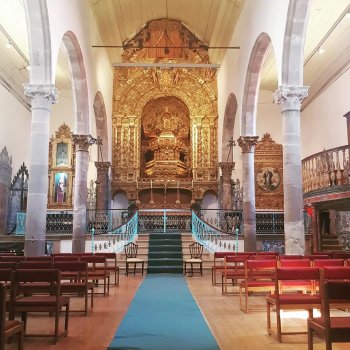
Church built in the XVI century, considered to be one of the finest exemplars of renaissance in all Algarve. Its portal of great beauty, deeply worked, stands out at the façade. Inside, are worthy of notice the main chapel with a beautiful altar retable of golden carving and the images of Nossa Senhora da Visitação and Santa Isabel. The glazed tiles covering the walls represent the Works of Mercy and are duly captioned.
Muralhas de Setúbal
- heritage
Centro Histórico de Setúbal
2900, Setúbal
Setúbal was once surrounded by two belts of walls. The first, called Muralha Afonsina for being constructed during the reign of King D. Afonso V, traced out the boundaries of Setúbal. This wall was made to protect this fishermen community from the attacks of pirates. The second wall was constructed during the reign of King D. João IV and was made to protect the village that expanded outside the first walls.

Quinta da Macieira
- heritage
Rua Visconde do Rosário, 9
5400-727, Redondelo
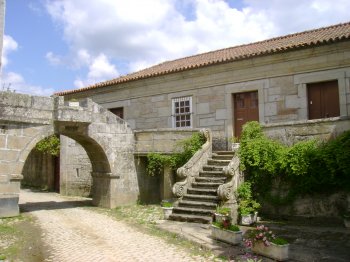
This manor house with rectangular plan and two floors has an attached chapel which was constructed under the command of Manuel Alvares Calvão, between 1747 and 1759. It has a peculiar balcony laying on one side in a high wall and on the other side is settled on a thick column and on the pathway. Its granite composition also stands out. This is a private property recently classified as a Building of Public Interest.
Quinta do Assentista
- heritage
Rua Elias Garcia, 116
2700-708, Amadora
Also known as Quinta dos Intendentes, the main façade dates from 1746, in which the Johannine gate stands out, despite the simplicity of the façade's features. At the top you can see a niche that houses the image of Nossa Senhora da Saúde. Inside, it has a living area, patio and gardens, in which you can admire various tree species, fountains, garden benches and a chapel.