Explore the best places
Results for MAKEMUR.COM d Strof vum Kand virum Urtel verkierze loossen in Portugal


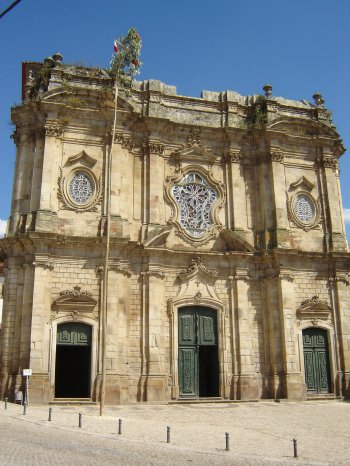
Igreja da Misericórdia de Santa Maria da Feira
- heritage
Rua Doutor Elísio de Castro
4520-213, Santa Maria da Feira
Although founded in 1594, it was only in 1690 that stood the current building, with the earthquake of 1755 did collapse at the dome ship, later reconstructed. Simple architecture, the temple was built according to the typology national tea, preceeded by a staircase of various heights with a decorative fountain. Inside, nave, chancel covered by a vault in caissons, and the main altarpiece, a good example of Baroque season d. Pedro II. Part of the estate of the Church two beautiful sculptures, a 15th-century Ançã stone represents a Holy Bishop, and the other, of wood, represents a Lady of sorrows …
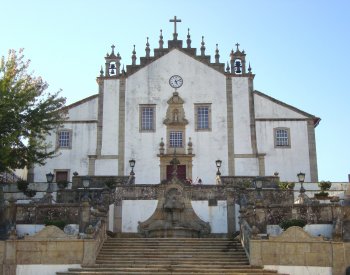
Real Mosteiro de Santa Maria de Maceira Dão
- heritage
Rua Nova
3530-071, Mangualde
Monastery founded in the 12th century by D. Soeiro and his companions, initially obedient to the Rule of S. Bento. Initially it was used as a male monastery of the Order of Cistercians. The favor of the people and the patronage of the kings who, to their protection, made it a Royal Monastery, brought the growth of the house and its assets. The following parts stand out in its architecture: the medieval tower built between the 12th and 15th centuries with its three floors of cellar and granary, today relatively well-preserved; the monastic buildings from the 18th century that had, …
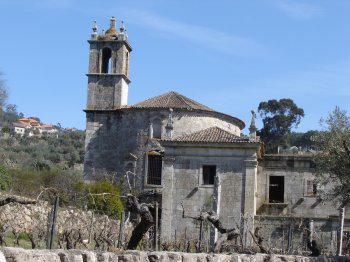
Castelo de Ourém
- heritage
Antiga Vila de Ourém
2490, Ourém
The castle walls remain, two doors (of the village and the Santarém) and some towers. The old Palace is a monumental residential tower of the 15th century. Plant composed of rectangular main body and two turrets inserted on the wall of the village. The curtain wall that unites the turrets, crowned by way of round, is torn by arched door broken abroad, down inside. Without cover, are visible in the interior, where Corbels supporting the beams of the floors and ceilings. Still inside the enclosure, there is a large cistern. The Muslim Castle would have been conquered by the King …
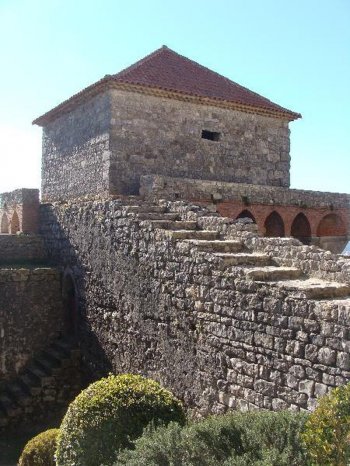
Igreja do Salvador de Cabeça Santa
- heritage
Praça Carlos Pereira Soares
4575-139, Cabeça Santa
Ordered to build by d. Mafalda, daughter of King Sancho I in the 13th century, the Church of the Savior of Gândara (as was previously known) is, according to various experts, a modest copy of the Church of Cedofeita, Porto, in particular at the level of decoration, which attests to the roaming of the Romanesque artists in this region of the country. From the 17TH century, this Church also begins to be known as Santa head, due to a skull kept in silver reliquary and exposed in altar, said to belong to a single unknown, and which assigns followed qualities. …
Igreja Velha de Salto
- heritage
Salto
5470-430, Salto
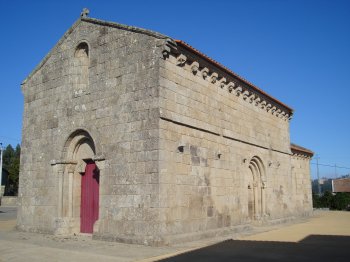
Anyone entering Salto and heading towards the town center will be struck by the imposing ecclesiastical image located at the top of Rua Padre Manuel José Jorge, on a granite parallel. This is Salto's old main church, perhaps the town's most iconic landmark. It's a romantically designed building that has undergone several structural renovations over time. On the north and south walls of the nave, glimpses of the perfect overlapping of the stones can be seen. Toward the rear of the church, aligned along the edge of the landscaped and well-kept churchyard, are four tombstones covered with lids, each decorated …
Serra de Montemuro
- country
Serra de Montemuro
4690, Alhões
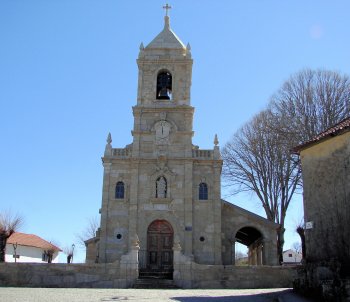
It lies between the Douro River to the north and the Paiva River to the south, bordering the city of Lamego. The highest point of the mountain range is called Montemuro, at 1,381 meters above sea level. The entire mountain range is quite steep and steep on practically all sides. The mountain range is populated up to approximately 1,100 meters above sea level, with villages scattered throughout, but almost always near watercourses. The Varosa River (which separates it from the Leomil Mountains) and the Balsemão River originate in this range. The Paiva River separates it from the Arada Mountains. It …
Museu da Fundação da Casa de Mateus
- heritage
Casa de Mateus, Vila Real
5000, Vila Real
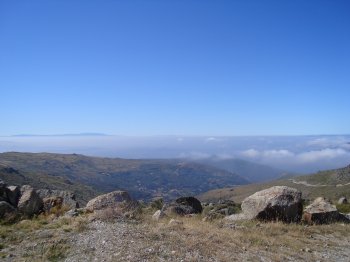
Built in the 18th century, with designs by Nicolau Nasoni, the Casa de Mateus is a landmark of Portuguese Baroque. The chapel, on the other hand, was designed by the master José Álvaro Rego. Established in 1970 by D. Francisco de Sousa Botelho de Albuquerque, its objectives are the preservation of the house, the study of its archives, and the promotion of cultural, scientific, and educational activities. The activities developed by this foundation are mainly linked to literature and music. The gardens found here are extremely well-preserved and of rare beauty. In the museum itself, you can see 2000 parchments …
Centro Histórico de Lisboa
- heritage
Lisboa
1100, Lisboa
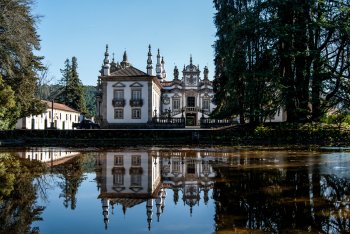
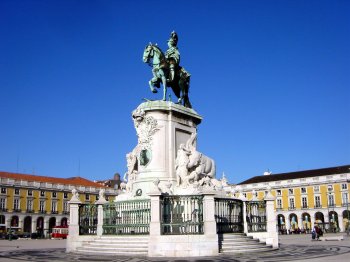
Go down the Avenida da Liberdade and go to the discovery of the historic center of the city. Here, there are many points of interest. In Restauradores square stands the majestic Foz Palace, neoclassic, and the facade of the old Cine-Teatro Eden, of modernist trait. The Rossio is the Teatro Nacional d. Maria II and the statue of Dom Pedro IV. Already in the middle of the Baixa Pombalina, venture into the Web of geometric streets that make up the urban set built after the earthquake of 1755. Then, head to the slope of the Cathedral and visit the Church …
Mosteiro de Pombeiro
- heritage
Lugar do Mosteiro
4610-640, Pombeiro de Ribavizela
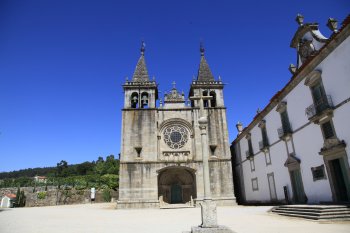
Founded in 1059 according to popular tradition, although the oldest documentary reference dates back to 1099, the Monastery of Pombeiro enjoyed privileges and justice of its own as early as 1112, as evidenced by the Charter of Couto granted on that date by D. Teresa. This monastic institution has been documented since 853, which makes it one of the oldest in the territory, although there is no material evidence of its first establishment. Located at the intersection of two of the main roads of medieval times, one that connected Porto to Trás-os-Montes and a second that connected Beira to Alto …
Mosteiro e Igreja de Santa Maria de Salzedas
- heritage
Praça António Pereira de Sousa, 2
3610-073, Salzedas
In its time, it was one of the largest Cistercian monasteries in Portugal, the grantee of vast lands around it, with the obligation to cultivate and populate them. Its construction began in 1155, shortly after the donation of the land made to the Order by Egas Moniz, assistant to D. Afonso Henriques, and his wife Teresa Afonso. It was consecrated in 1255, when the monastic complex was complete. The church, of large dimensions, stands out, imposing, in the middle of the uniform houses of the small village that was formed to the east. Between the centuries. In the 16th and …