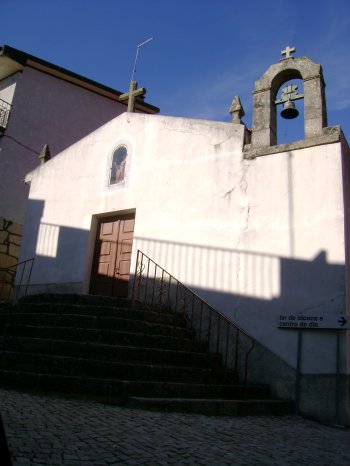
Explore the best places
Results for Santa Maria do Bouro in Portugal


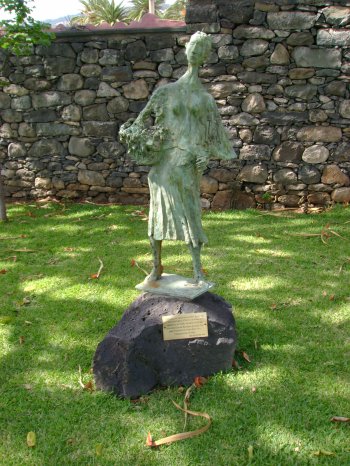
Homenagem à Florista da Madeira
- heritage
Rua Bela de São José - Quinta do Revoredo
9100, Santa Cruz
Work of the sculptor Agostinelli, paying homage to the traditional florists of Madeira. During many years it was at the Hotel Atlantis Madeira, but after its demolition it was offered to Santa Cruz autarchy that placed it on the gardens of the Casa da Cultura (Culture house) at Quinta do Revoredo.
Villas d' Água
- hotels
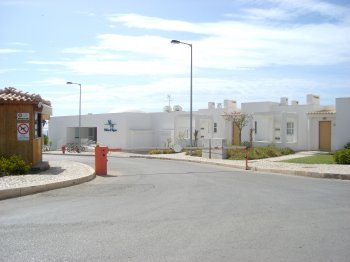
Torre da Medronheira
8200-635, Albufeira
A tourist village located by the cliff, near the Maria Luísa beach. In a scenery of harmony with nature on finds 52 lodgings facing the ocean.
Chafariz do Cercal
- heritage
EN1-5
2550, Cercal
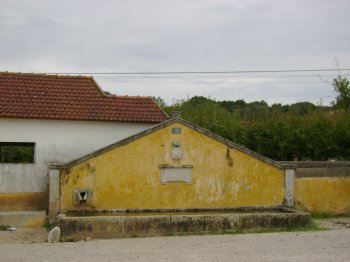
18th century fountain of backrest built by Queen Maria i. consists of a backrest and a rectangular tank. The backrest is bounded by pilasters in the extremes.
Fundão
- food & drink
Rua da Escola, 88 - Hotel Rural de Charme Maria da Fonte
4830-065, Póvoa de Lanhoso
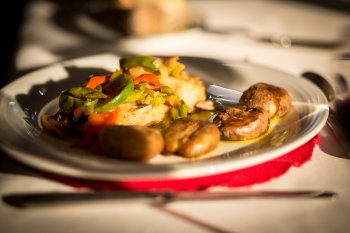
O restaurante Fundão insere-se na Quinta Turística do Fundão, da qual faz parte o Hotel Rural Maria da Fonte. Situado na freguesia de Calvos, na Póvoa de Lanhoso, este restaurante rústico dá a provar a gastronomia típica da região.
Castelo de Palmela
- heritage
Avenida dos Cavaleiros de Santiago e Espada
2950-317, Palmela
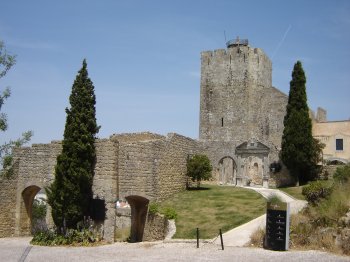
The fortress stands on the eastern spur of Serra da Arrábida, from which you can see an extensive landscape from Sines to Sintra. Its main points of interest are the entrance, the 17th century walls, the convent of the Order of Santiago, the church of Santiago, from the 15th century, the Paços de D. Jorge, the turrets, the 14th century keep, the ruins of the church of Santa Maria, the parade ground and several portals. There is also the Castle Nucleus, one of the museum spaces of the Palmela Municipal Museum.
Castro do Jarmelo
- heritage
São Pedro do Jarmelo
6300-210, Jarmelo (São Pedro)
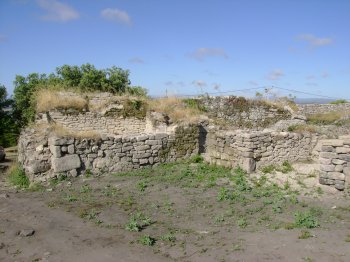
It is a fortified mound, dominating vast horizon, endowed with water supply infrastructure and showing walls with two concentric levels. The Roman road with the vestiges of the Moorish Fountain and a tomb excavated in the rock, near the Church Santa Maria del Jarmelo, the area of St. Peter's Church, cemetery and belfry and casa da câmara, two graves dug into the rock and the land that comprises the Church of San Miguel and two sources of diving. Reveals occupations from the iron age to Medieval times.
Marco Miliário da Rua Doutor Bento Carqueija
- heritage
Rua Doutor Bento Carqueija
3720-214, Oliveira de Azeméis
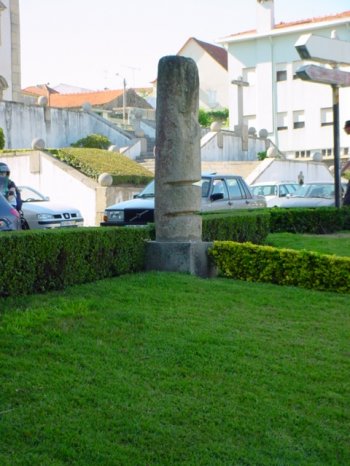
The milestone, one of the testimonies of the Antiquities of Oliveira de Azeméis, was found during the demolition of the Church of Ul, in the late 18th century. Removed from their place of origin had several locations, finding itself today exposed at the square near the Church. This milestone marks the 12TH Mile until Langobriga (Civitas in Fiães, Santa Maria da Feira) and probably the Mile route between 16TH LX Braga and Lisbon, and was erected during the rule of Emperor Tiberius, between 23 and 24 of our age.
Muralhas de Guimarães
- heritage
Avenida Alberto Sampaio
4810-250, Guimarães
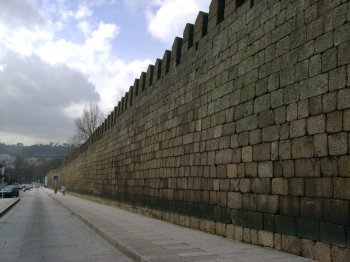
The high part of Guimarães was the first to approach the wall; it was probably during the Kingdom of D. Dinis. From this wall that is extended through around two thousand metres, it only survived an extensive chunk and from the eight towers that were distributed thought the wall, there is still one on the Vila Door. This wall construction started in Dom Afonso III Kingdom and finished during Dom Dinis Kingdom. This wall used to connect the Castle town to Santa Maria town, on the lower part.
Capela de Santo António de Mouções / Capela de Santo António de Monções
- heritage
Mouções
3570, Mouções
This 16th-century chapel stands out by the crosses and Bell existing in the side and rear facades that form a Via Crucis.
Capela de Santo António em Ribamondego / Igreja de Santo António em Gouveia
- heritage
Rua Fonte de Belém, 16
6290-251, Gouveia
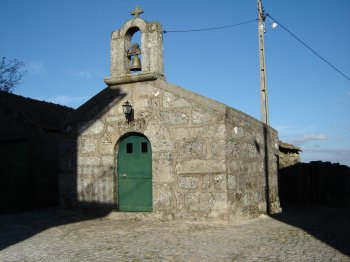
Chapel of rectangular plant consisting of two juxtaposed rectangles, a sacristy and a Bell Tower. In the interior, highlighted by a Mannerist altarpiece composed of three cloths divided by four columns de fuste smooth and composite capital.