Explore the best places
Heritage in Portugal


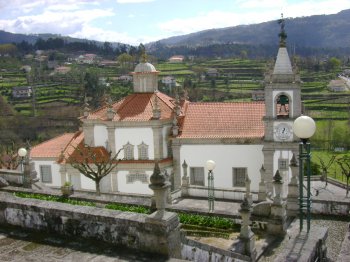
Capela do Senhor dos Aflitos
- heritage
Praça da República, 160
4620, Silvares
It is located in the center of the village and sits atop the hill of the same name. Baroque in style, to reach this church, visitors must first ascend a route through dozens of staircases lined with trees. It has a bell tower and an external clock.
Igreja de Santa Maria de Meinedo
- heritage
Lugar da Igreja
4620-356, Meinedo
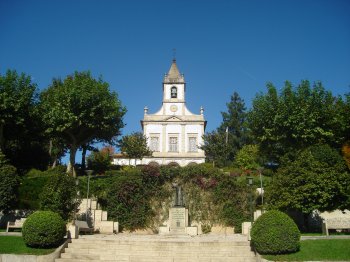
The construction date of this temple is estimated to be 1262, judging by the inscription at the entrance, although it may correspond to the reconstruction of an old 11th-century hermitage which, in turn, was built on a 7th-century Suevi-Visigothic building – archaeological excavations carried out in 1991 revealed a structure belonging to a pre-Romanesque temple. Of particular note is the existence of an image of Our Lady of Meinedo, in limestone and with traces of polychromy, which constitutes one of the rare examples of Romanesque sculpture in Portugal.
Igreja Matriz de Pias
- heritage
Pias
4620, Pias
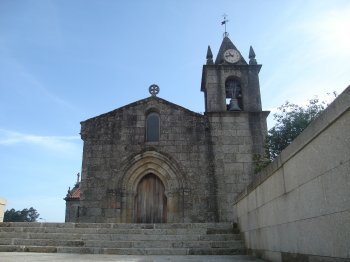
A church dating from 1736 that displays altars with Baroque wood carvings and figurative tiles. It includes a bell tower and a bell tower, whose construction is later than that of the church.
Ponte de Vilela
- heritage
Lugar de Vilela
4620-021, Aveleda
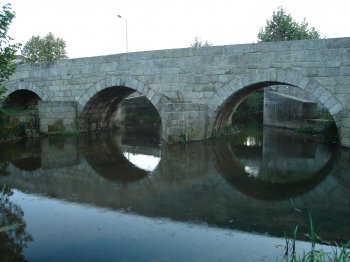
Although difficult to date, the construction of this bridge can be placed between the 17th and 18th centuries, considering its technical and constructive characteristics and judging by references in the Parish Memoirs of 1758. However, it may have been built during a period of increased circulation needs in the region during the 13th century, with strong demographic expansion, the Crusades, pilgrimages, and growing population mobility. Featuring four perfect semicircular arches, its typology is inspired by Roman constructions.
Ponte de Espindo
- heritage
Lugar de Espindo
4620-364, Meinedo
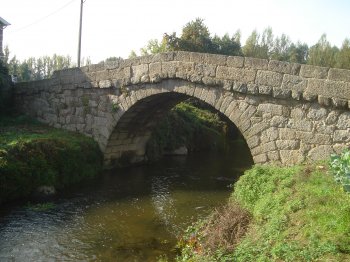
Although its dating is difficult, it is assumed to have been built during the late Romanesque period, judging by the construction technique, exhibiting a Gothic character due to its trestle-style deck. Formed by a single perfect arch, with the pillars rising directly from the banks (a feature that ensures greater longevity for Romanesque bridges compared to Roman ones) it provides communication between the villages of Bustelo and Boim.
Igreja do Salvador de Aveleda
- heritage
Lugar da Igreja
4620-078, Aveleda
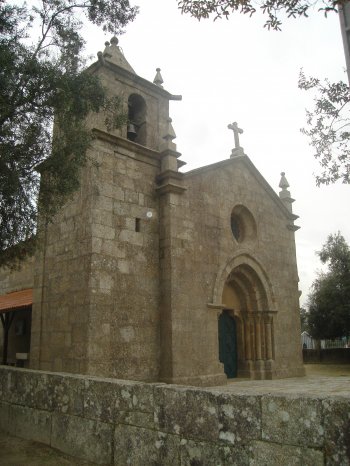
The first documented references to this temple date back to 1177, when Vela Rodrigues, heir of Egas Moniz and Teresa Afonso, donated his property in Lousada to the Monastery of Salvador de Paço de Sousa. Later, the church's patron saint is documented in 1218 and in the Inquiries of 1258. Despite these references, the current building is of more recent design, possessing quite late elements from the end of the 13th century and even the 14th century. Having undergone renovations in the Modern Era, it retains the nave and the western façade of Romanesque characteristics, attesting to the persistence of …
Torre de Vilar
- heritage
Lugar da Torre
4620-886, Vilar do Torno e Alentém
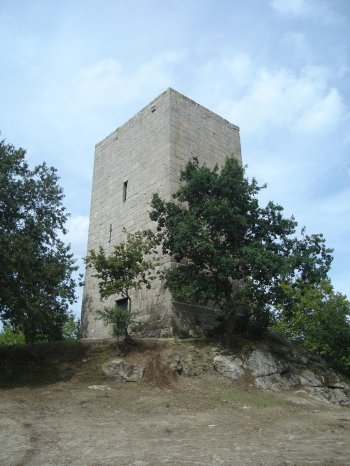
Built between the second half of the 13th century and the beginning of the 14th century, the Vilar Tower is a symbol of seigniorial power over the territory and proof of the existence of a "domus fortis," a fortified manor house in the Sousa Valley. It is a five-story building with granite ashlar masonry. The tower was illuminated by Romanesque-style arrow slits and accessed through an arched doorway with a tympanum.
Núcleo Museológico do Castelo de Lanhoso
- heritage
EN205, 560
4830-597, Póvoa de Lanhoso
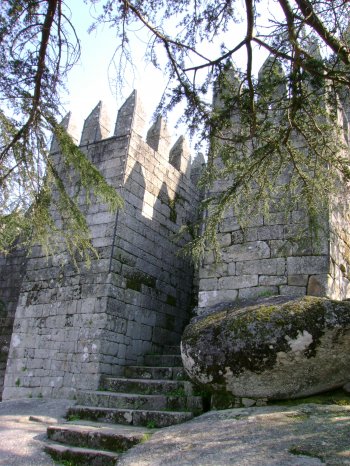
The collection of the Museum Center is composed of archaeological objects found near the Castle, especially in the Castro de Lanhoso. The second floor of the Tower has been transformed into an audiovisual space where visitors can learn all about the history of the Castle and the Lands of Lanhoso. The Center also has a multimedia information space where tourists can learn about the various phases of occupation of Monte do Pilar.
Museu do Ouro de Travassos
- heritage
Rua da Aldeia de Baixo, 263
4830-771, Travassos
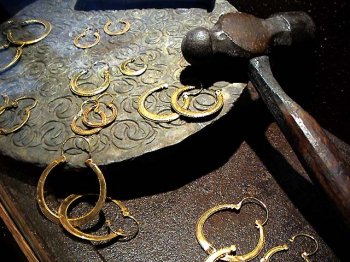
The Gold Museum is housed in a goldsmith's workshop at Casa de Alfena (now a rural tourism accommodation unit) and is part of a group of workshops dating back to the 18th century. This space aims to showcase the identity of a community linked to gold work since ancient times. The museum is the result of the efforts of a goldsmith from Travassos, Francisco de Carvalho e Sousa, who, over fifty years of activity, collected gold objects, utensils, and furniture, now exhibited here.
Santuário de Nossa Senhora de Porto d'Ave
- heritage
Rua do Santuário, 165
4830-761, Taíde
This is one of the most important Marian Shrines in Portugal. Its main heritage value, included in the attached museum of sacred art, lies in the richness of its artwork, architecture, gilded wood carvings, images of saints from various periods, varied liturgical objects in gold and silver, gold-embroidered vestments, oil paintings of clergy figures, and a valuable collection of ex-votos. This Shrine was elevated to the status of Royal Shrine by Royal Charter in 1873, and together with its eight chapels and staircase, it constitutes one of the most interesting and beautiful places in the municipality.