Explore the best places
Results for MAKEMUR.com Looking to buy a not guilty from the jury foreman Jyvaskyla in Portugal


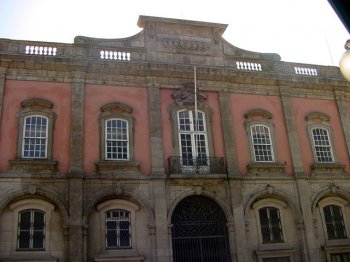
Edifício da Antiga Companhia de Seguros Douro
- heritage
Largo São Domingos
4050-545, Porto
It was built to be the headquarters of the Ordem de São Francisco but, in 1832, during the Porto Siege, it almost all destroyed by a fire. The Banco de Portugal (national Portuguese bank), Banco de Lisboa at the time, bought and repaired it. Its name comes from the fact it was once the headquarters of the insurance company Douro.
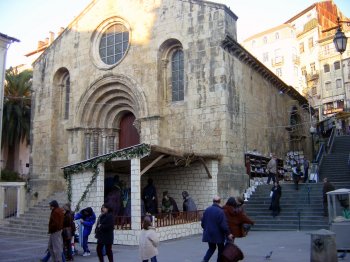
Igreja de São Tiago
- heritage
Praça do Comércio, 57
3000-116, Coimbra
Romanic church from the last quarter of the XII century. The temple, with three naves, was sacred in 1206. It suffered transformations on the XVI, XVIII and XIX centuries. Outside the eye-window and the portal with columns and decorated capitals stand out. Inside are worthy of notice the retable at the main-chapel and the gothic portico of the chapel.
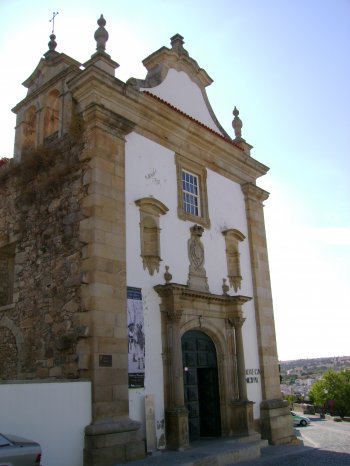
Igreja do Antigo Convento dos Frades Trinos / Biblioteca Municipal de Miranda do Douro
- heritage
Rue de L Cunbento
5210-187, Miranda do Douro
A church belonging to a Baroque convent, remodeled and converted into a Municipal Library, while maintaining parts of its original structure. The convent was built by the Discalced Friars of the Order of the Holy Trinity, with permission from Dom João V. The church was subsequently constructed between 1718 and 1728, and the library was installed here in 1999.
Mamoa 1 de Pereiro
- heritage
Cambeses do Rio
5470-041, Cambeses do Rio
Megalithic monument partly destroyed, to present about 17 feet maximum diameter, a central depression accentuated. Are not visible Struts. In the surrounding area there are a few stones of walls that may have been mainstays. It is believed to date from between the end of the 5th Millennium BC and the beginning of the third millennium BC.
Mamoa 4 de Fraga da Moura
- heritage
EM513 - Fraga da Moura
5470-490, Tourém
Tumulus barely visible in the landscape, located a few meters from the road which connects Pitons to Tourém, belonging to the Megalithic Necropolis of the Mourela plateau. Presents some 12 meters in maximum diameter, a central depression accentuated and a "tumulus" almost shallow, traces of dolmen, including what appears to be a mainstay.
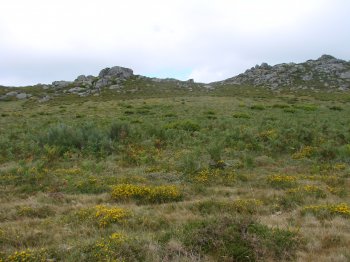
Igreja de Nossa Senhora da Assunção / Igreja Matriz de Lavre
- heritage
Largo da Igreja
7050-467, Lavre
It was built in the 13th century, having been destroyed by the earthquake of 1755. In the eighteenth century became the rise showing longitudinal plant centralizante composed by horizontal articulation of the nave, transept, projecting rectangular chancel, vestry and attachments. It is surrounded by botaréus of masonry, being the front, at an angle. The baptistery is from the 16th century.
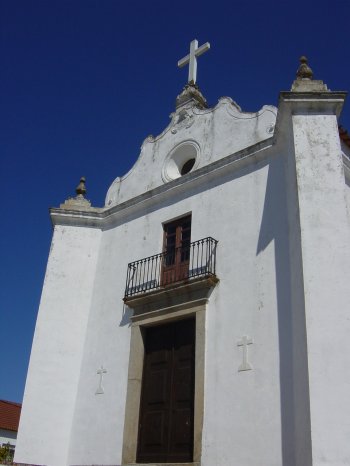
Igreja de Nossa Senhora da Conceição
- heritage
Rossio da Vila de Monforte
7450, Monforte
Church with buttresses topped by pinnacles and the entire top is battlemented. On the main façade, the portico, topped by an oculus, has a round arch, supported on pilasters and with a triangular pediment. Inside it has a single nave, covered by a barrel vault, decorated with tempera paintings. The walls are covered with "standard" tiles from the 17th century.
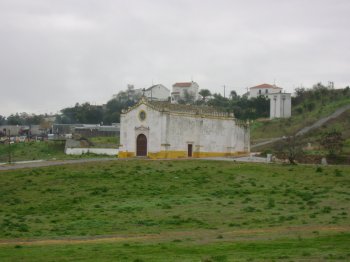
Igreja de Orada
- heritage
Largo da Igreja
7150-308, Orada
Church of white facade and with fine shot in blue, with three arches on the porch, which was founded by d. Nuno Álvares Pereira who have prayed before the battle of Atoleiros, from which it emerged victorious. Outside one can see a tile Panel built by poet borbense Azinhal Abelho.
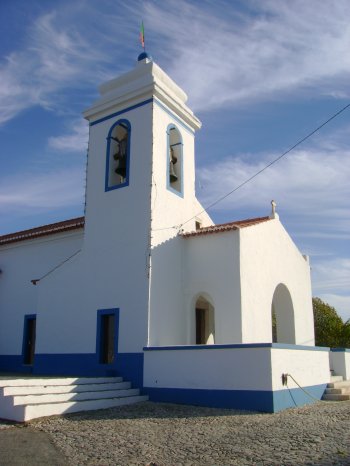
Igreja de Santa Quitéria de Meca / Basílica de Santa Quitéria
- heritage
Largo de Santa Quitéria
2580-181, Meca
This is a neoclassic work built in limestone from this region, with two bell ringer towers. The façade presents six pilasters with Ionic capitals where three windows and three porticos open up, on the porch. On the inside it is worthy to mention the marbles and the paintings, particularly the canvas with the images of John the Baptist and the Last Supper.

Igreja de Santiago Maior
- heritage
Rua de Santiago
7200-175, Reguengos de Monsaraz
Its construction dates back to the 18th century, but there are references to this church from the 13th century. Was successively expanded to such an extent that the monument primitive disappeared, although traces remain of josefino period. In the 20th century its state of degradation was ruinous, but in 1987 began to be rebuilt and today is also a diversified cultural space.