Explore the best places
Results for visit main site MAKEMUR.COM Looking to pay the DA to drop assault charges Monroe County Jail in Portugal


Casa do Conselheiro Afonso de Melo
- heritage
Avenida António José de Almeida, 3
3500-046, Viseu
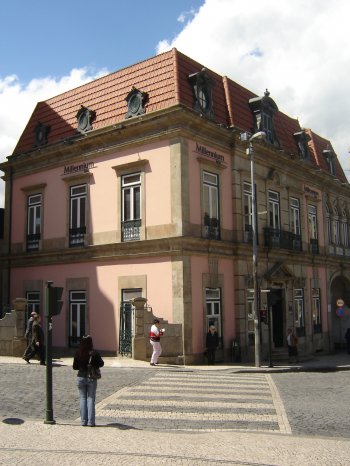
This building was built in the 19th century by the Counselor Dr. José Maria de Sousa Macedo. It had different owners until, in 1989, it bacame a bank. It has a rectangular plan, with two floors, a mansard and symmetrical façades. The main façade has a more elaborated ornamention, of vegetalist Art Nouveau. Tha mansard has spans that are circular for the most part in contrast with the square lines of the other two floors.
Capela Nossa Senhora das Graças
- heritage
Rua da Capela, 109
5460-210, Nogueira
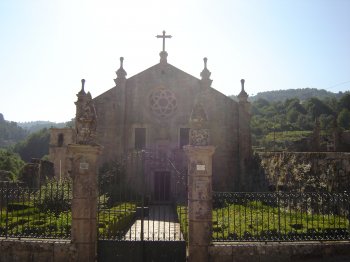
The most important worship space, dedicated to our Lady of graces, is flanked by the old cemetery of the village. The main façade has a rectangular portal, flanked by two horizontal slots, surmounted by an oculus, the stretching of the gable has a bell tower with a Bell, crowned by a cross flanked by triangular pinnacles with ball. Inside this Chapel stands the high altar in gilded and marbled wood that houses local devotions religious imaginary.

Capela da Senhora da Livração de Fandinhães
- heritage
Rua da Nossa Senhora da Livração
4625-253, Paços de Gaiolo
The current Chapel of Our Lady of Deliverance is what remains of the main church of São Martinho, a significant testament to the itinerant work of artistic teams during the Romanesque period. The crevices and capitals reflect a design also adopted in the churches of Cabeça Santa, Águas Santas, and Cedofeita. The nave of the Church of São Martinho, in ruins, was demolished in 1873, and its stone was reused in the expansion of the current parish church of São Clemente.
Capela de Nossa Senhora do Monte
- heritage
Rua Senhora do Monte
2000-150, Santarém
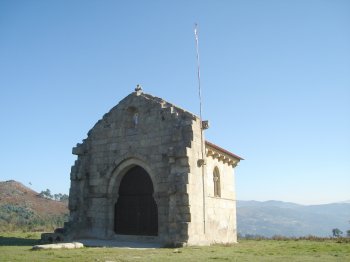
This Chapel belonged to leprosaria 12TH century, having been abandoned in 1292 with the change from the hospital. In the 16th century was restored in Renaissance molds. The chapel reveals in its architecture the artistic moments that passed: Lancet arches, images from the 16th century and 17TH century tiles. The artistic wealth of this temple comes mainly from 16th-century campaign of restoration. The colonnaded porch in the main and South facades.

Mosteiro de São João de Tarouca
- heritage
Mosteiro de São João de Tarouca
3610, Tarouca
In this space, dating back to the 12th century, a special note to the main retable, the tubes organ, the magnificent set of chairs, located in the central nave, the sacristy, with tile covered walls, of the 17th century, paintings from the 1500s, namely the painting of Saint Peter, by Grão Vasco or Gaspar Vaz, both from the "School of Viseu", the granite statue of the Virgin with Jesus as a Child, of the 14th century, and the tomb of Dom Pedro.
Tesouro da Igreja Matriz de São Vicente de Cuba
- heritage
Rua Serpa Pinto, 81
7940-171, Cuba
The artistic patronage of the Monastery, which owned the parish of Cuba, resulted in the donation of liturgical artefacts that enriched the building's ambiance, whose interior is covered in 17th-century tiles. The brotherhoods and sisterhoods based in the building also competed in commissioning works, demonstrating the land's richness. The collection thus assembled became the treasure of the main church of São Vicente, which later incorporated pieces from other churches in the town.
Casa de Lamas
- hotels
Rua Tenente Gonçalo Meireles, 56
4860-333, Alvite
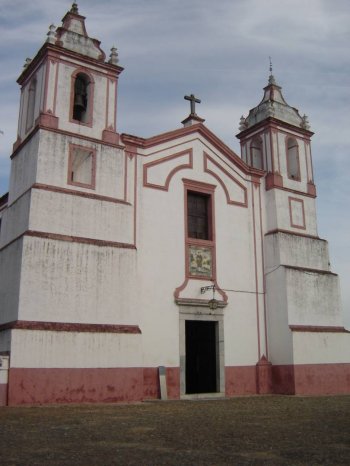
Solar with origins in the 17th century, with the Chapel, the family estate Alvim since that date. Internally restored, retains architectural traces of later times and a friendly traditional garden, characteristic of the region's manor houses. Offers, four rooms, in the main house and four houses of various types along the garden. Breakfast is served in one of the two living rooms of the Manor. This unit features a swimming pool and tennis court.
Igreja Matriz de Pavia / Igreja de São Paulo
- heritage
Largo da Igreja
7490, Pavia
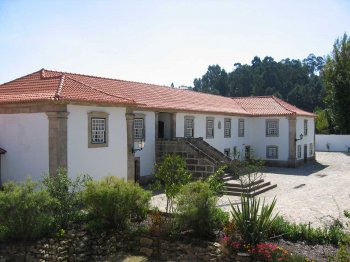
Mudéjar-Manueline construction, from the beginning of the 16th century. Protected by seven small cylindrical towers, it is crowned with Muslim-style battlements. The facade is from the 18th century, with a triangular pediment, a tower with a square plan and a portico with squared jambs and lintels on the main facade. The interior has three naves with a ribbed vault. The altarpiece features four oil painting panels from the second half of the 16th century.
Igreja de Santo António
- heritage
Rua General Alberto da Silveira, 1
8600-594, Lagos
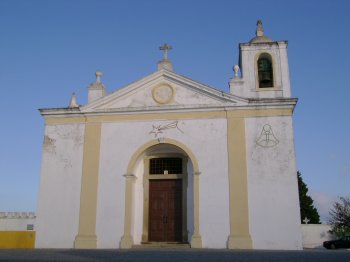
This church was rebuilt in 1769 by orders of the command of the Infantry Regiment of Lagos, in order to become a chapel for them. The riches and profusion of the golden carvings on the high altar and the side walls, make this church one of the main examples of the Portuguese baroque. The wooden ceiling imitates a barrel-vault with a perspective painting. On the side walls one can admire 8 paintings that allude to Saint Anthony's miracles. The patron saint stands on the altar.
Palácio Amarelo
- heritage
Largo Cristóvão Falcão, 13-15
7300-089, Portalegre
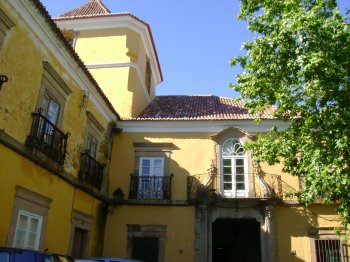
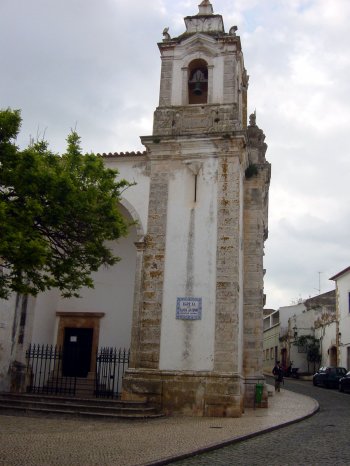
Built in the mid-17th century, the house underwent several alterations throughout the 18th and 19th centuries. Eleven windows with wrought-iron grilles remain from the original construction. The main door and the window above it date from the 18th century. Coats of arms of the residents can be seen on the corners of the building. Also noteworthy is the square, cornered turret with a mat roof and four windows, dating from the 19th century.