Explore the best places
Results for enter website here MAKEMUR.COM cost to bribe a judge to put me on house arrest instead of prison in Portugal


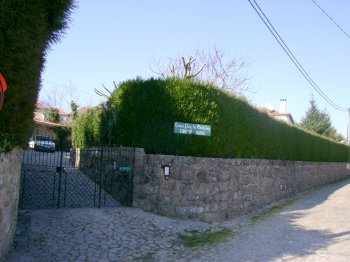
Casa de Cima de Vila
- hotels
Rua de Santa Bárbara, 11
4860-278, Pedraça
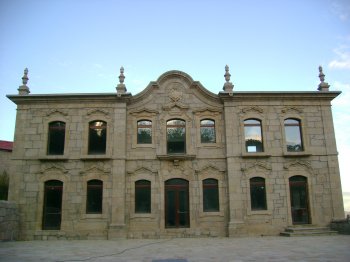
The House off of Village is situated on a farm in Pedraça, Cabeceiras de Basto. The space offers apartments and double rooms, decorated with refinement and equipped with modernity, without losing the aspect of rusticity that characterizes it. The gardens allow for quiet walks with breathtaking views, the swimming pool invites you to a lengthy swim and tennis court to a departure excited!
Casa do Fundo
- hotels
Rua Dona Augusto Borges de Melo (EM 504)
6270-584, Seia
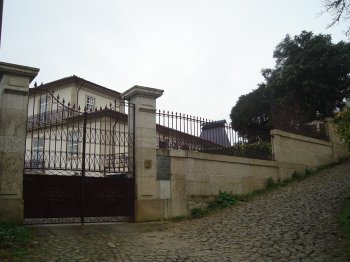
Rustic house dated from the late 19TH century, located about eight kilometers from Seia. The old mill is still visible and the ruins of communal bread oven. Spread over three floors, guests can make use of six well-equipped rooms, kitchen, reading room, tv lounge and a bar.
Casa Aido Santo
- hotels
Nespereira
3680-173, Oliveira de Frades
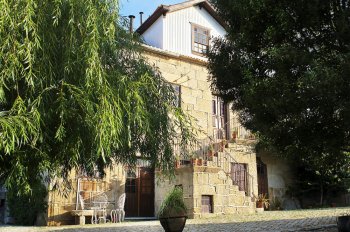
This typical rural house beirã, built in the 17th century, has eight comfortable rooms, a dining room, a kitchen with a wood-fired oven, a wine cellar transformed into bar, a reading room and a swimming pool. The interior is decorated with furniture of the 18th and 19th centuries, canvas, sacred art and pieces of Portuguese faience and rustic utensils.
Casa da Breia
- hotels
EN202
4970-630, Jolda (São Paio)
Farm consisting of four well-equipped houses: a Casa da Eira, Casa da Torre, the Casa da Bica and Terrace. In common has the swimming pool and a terrace with a phenomenal view, where you can dine to the sounds of nature. The pool can reach temperatures close to 30 degrees, due to sun exposure.
Casa Paz do Outeiro
- hotels
Venade
4940-263, Paredes de Coura
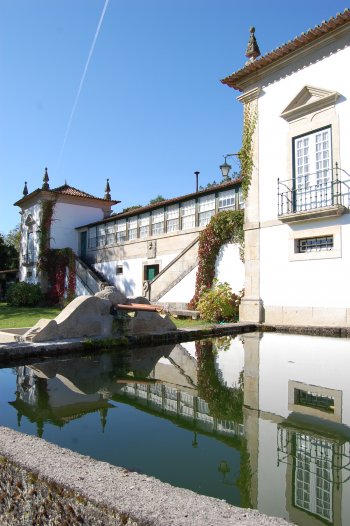
Rural housing, Secular restored and adapted to the role of rural tourism. Lies in an area of green tonalities multifaceted, where the mountain slopes are terraced. On the ground floor is the living room and fireplace, while on the first floor are guest rooms. During your stay you can observe or participate in farm work, such as milking or the manufacture of cheese.
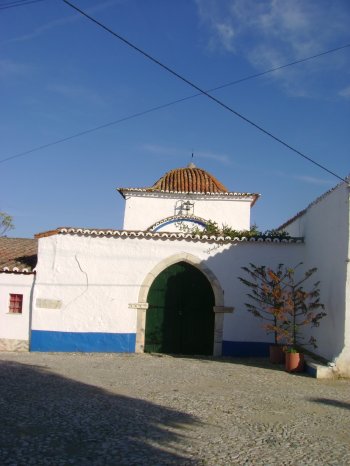
Ermida de São Tiago
- heritage
Largo dos Capuchos
7160-211, Vila Viçosa
Situated a few kilometres from the Centre of the village, near the Bullring and the Capuchos convent. This Chapel is located in a typical housing zone and consists of landscaped foyer, chancel and vestry. It was remodelled in the 15th century and 18TH century, part of the nave was demolished, a fact which reduced the Chapel to the chancel and sacristy; the body of the Church was transformed into landscaped foyer.
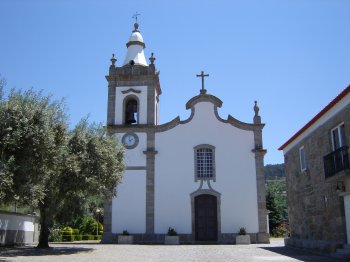
Igreja Matriz de Fornos
- heritage
Avenida da Igreja
4550-389, Fornos
The Church has a large and long alameda in front of main facade and surrounded by the wall of the cemetery of the parish and of two typical houses, an 18th century building (now the parish hall), and other recent (now residence of the parish priest). It is a building with dimensions much higher than those of other parish churches of the surrounding rural parishes.
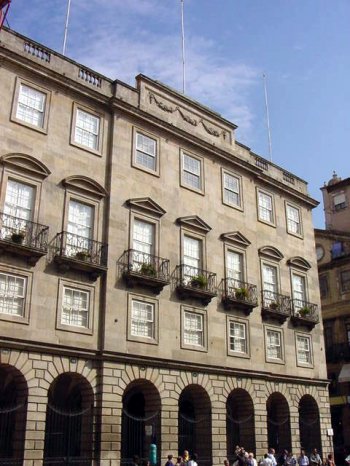
Edifício da Feitoria Inglesa
- heritage
Rua do Infante Dom Henrique, 8
4050-296, Porto
The house of the factory was built between 1785 and 1790. The plan was assigned to the consul John Whitehead and is inspired in the neo-Palladian English style. Inside the beautiful stairs, with the skylight, the ball-room and the monumental kitchen stand out. Placed at the last floor, the kitchen still has all the original equipment and the primitive baixela (silver tableware).
Mamoa de Chã de Trás da Fraga
- heritage
Chã de Trás da Fraga
5470-091, Covelães
Megalithic monument clearly visible in the landscape, located about 50 metres south of the forest House. Features about fifteen meters in diameter, with a central depression very sharp and clear traces of dolmen, among which are four mainstays displaced. Still shows traces of lytic Cuirass. Belongs to the Megalithic necropolis of the Mourela plateau.
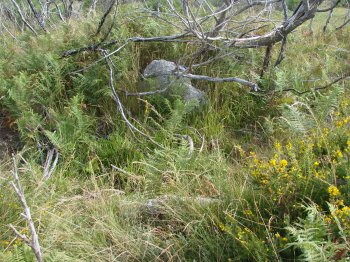
Palácio do Picadeiro
- heritage
Rua Professor Mesquita Barbosa
6230-088, Fundão
Baroque manor house with a rectangular plan with two floors and a symmetrical main facade. The internal space is developed through two staircases arranged longitudinally to the main facade. It was built in the late 18th century by Francisco Lopes Sarafana Correia da Silva, believed to have been built over an old residence of the Society of Jesus.