Explore the best places
Results for PROBLEMGO.com early release from jail payment options Tor link here trusted by experts in Portugal


Castro do Barbudo
- heritage
Monte do Castelo
4730-119, Barbudo
The Barbudo Castro corresponds to the highest peek on a hill known as “Castel”. It was develop in three large boards demarcated by three walls lines. On the village east side, naturally the less defensive, there are some traces from a forth fortification. The date that were obtained during the excavations that took place between 1983 and 1985, allows us to perceive an occupation there between the Final Bronze Age and the high Middle Age.
Convento e Igreja de Santo António
- heritage
Terreiro de Santo António, 6
7920-020, Alvito
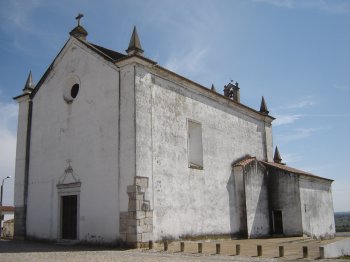
This building was built by Manuel Lopes, first judge of the Confraria de Santo António, and by D. João Lobo, eighth baron of Alvito. Inside it is possible to observe the 17th century tile ceiling, highlighting the flowers and birds. Also, noteworthy is the mural painting on the chancel's barrel vault. This painting depicts an episode from the life of the Patron Saint. It is also worth highlighting the Mannerist pictorial set of oil on wood.
Arcas Tumulares Românicas
- heritage
Avenida Conselheiro José Maria Alpoim
5040-310, Mesão Frio
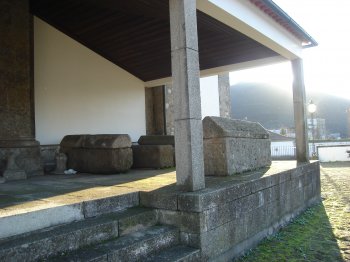
It is a set of seven trapezoidal sarcophagi dating from the end of the Middle Ages, placed in the churchyard of the Parish Church of Mesão Frio. Each of them consists of a chest and a lid, two of which are uncovered, with the lid on the side, having a tomb cavity with anthropomorphic contours. Five of them have a lid with a polygonal section with six planes and the other two have a lid of a different type, with a pentagonal section and a gabled volume.
Museu Municipal de Arqueologia de Silves
- heritage
Rua da Porta de Loulé, 14
8300-139, Silves
Created in 1990 by the Silves City Council and built around the remarkable Almóada Well-Cistern, the museum's collections showcase archaeological finds from the region and the city. Chronologically organized, the museum's collections are divided into prehistory, Roman, Muslim, and Portuguese periods (up to the 17th century). Highlights include Iron Age funerary stelae with inscriptions of the Southwest Iberian Peninsula script, considered the region's first written language.
Museu da Casa Grande
- heritage
Rua Direita
5155-246, Freixo de Numão
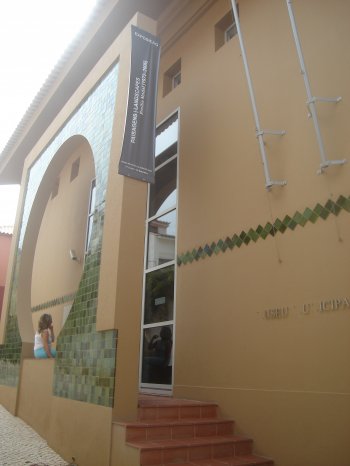
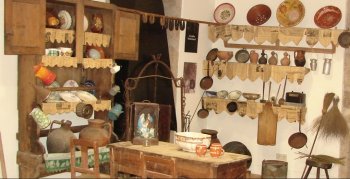
The Casa Grande museum displays collections of archaeology (from the Paleolithic to the Modern Age, with special emphasis on the Roman period), regional ethnography (agricultural tools and implements directly related to farming and objects related to breadmaking, shepherding, wine production, olive oil and almonds) and local history, through the collection of materials and documentation related to the history of the former municipal seat. It also has a section of the Casa do Moutinho.
Núcleo Museológico da Igreja de Santa Maria Madalena
- heritage
Largo da Madalena
7450-109, Monforte
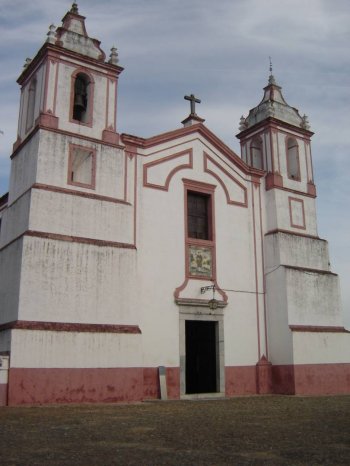
In this Museum are exposed various materials from the municipality of Monforte, mostly Roman, collected during the excavations in the Roman villa of Torre de Palma. All objects found are grouped by categories like "Roman Necropolis", "Roman coins", "Agriculture and construction Material," "costume" and "weaving and kitchen and table". Highlight is some stucco paintings (on the site of the altar mor), and some carved granite columns. Are classified as Property in the public interest.
Tesouro da Igreja Matriz de São Vicente de Cuba
- heritage
Rua Serpa Pinto, 81
7940-171, Cuba
The artistic patronage of the Monastery, which owned the parish of Cuba, resulted in the donation of liturgical artefacts that enriched the building's ambiance, whose interior is covered in 17th-century tiles. The brotherhoods and sisterhoods based in the building also competed in commissioning works, demonstrating the land's richness. The collection thus assembled became the treasure of the main church of São Vicente, which later incorporated pieces from other churches in the town.
Casa das Arribas
- hotels
Cardal do Douro
5200-079, Bemposta
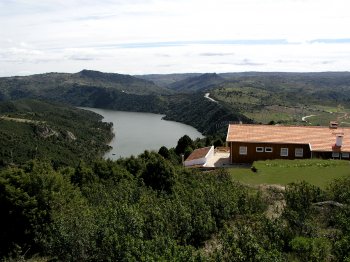
Located in the North-east of Portugal within the International Douro Natural Park, Casa das Arribas is a complex made by two similar country houses. Rebuilded from an ancient elementary school all in ground-floor and wood walls, Casa das Arribas is situated in the river slope, surrounded by juniper-tree, in nature communion, with all conveniences and a wonderful sight over Bemposta lagoon, in the International Douro river.
Edifício da Geradora
- heritage
Rua de João Carlos Everard
2300-561, Tomar
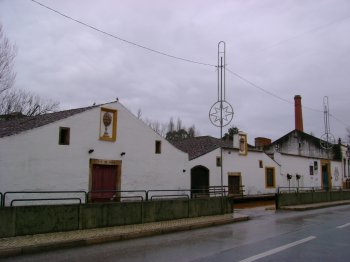
One of the pioneers of the country's electrification examples from hydropower. On the outside of the building, above the River, there is still a high brick chimney, which was once connected to a steam engine. In that place there was the mill of Pedro de Évora, a Mills belonging to the order of Christ. The city of Tomar was originally lit by 150 16 lamps, candles lit since midnight at dusk, except on moonlit nights, in which the intensity of the lamps was halved.
Lagar de Azeite de Cabril
- heritage
CM1021
5470-012, Montalegre
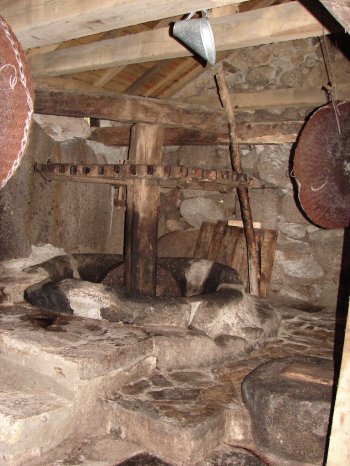
Olive oil mill, hydraulic engine Cabril which is situated next to the entrance of the village, which allowed for many years the making of olive oil from this region. Currently no longer works, either for lack of olives, or by any simpler means that do not require such large amounts. Its conservation status is not very good, but has the essential elements to be used with great accuracy and allow the recovery of tradition for filmic record.