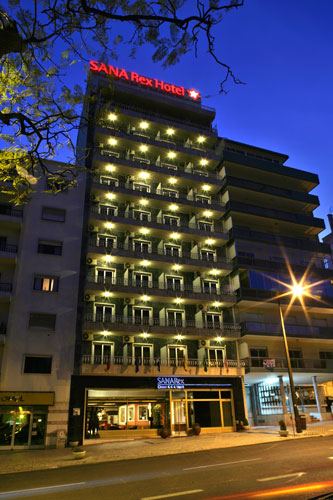
Hotel overlooking the beautiful Eduardo VII Park and the Tagus River, being housed in a commercial and business area of the capital. The space has been completely renovated and now features a more modern face. The restaurant "Kitchen D'El Rei", with a varied menu of national and international dishes.
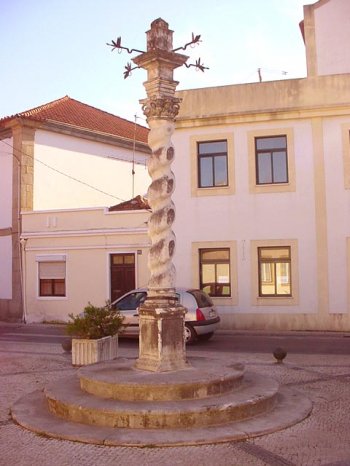
Built on the XVIII century, it is located on a small square, in front of the former town-hall. What used to be a jurisdictional mark is now a baroque pillory with a spiral shaft and a corinthian chapiter decorated with acanthus leafs. At the top it has the national arms, a boat, crossed arrows and the armillary sphere.
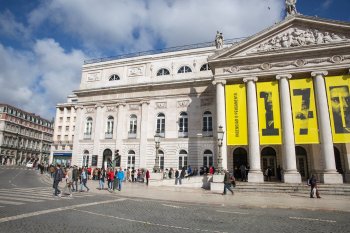
Placed on the north side of Rossio, the National Theatre Dona Maria II, which name pays homage to the daughter of Dom Pedro, was built in the 1840s by the Italian architect Fortunato Lodi. The façade of this neoclassic building is composed by six columns coming from the São Francisco Convent and is ended by a triangular fronton where the figures of Apollo and the Muses are sculpted. On top of the fronton is possible to see the statue of Gil Vicente, maybe the most important Portuguese dramaturge of all times, considered to be the father of the national theatre.
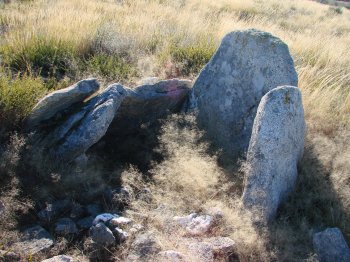
Tumulus about 8.5 m maximum diameter, features plated remains and lithic tumuli reasonably visible, a result of the great depression. The Chamber there are six Struts that outcrop at the surface, some of them to about half a meter. The mainstay which looks as if it belonged at the head emerges over one meter. The tumulus is located in a small ground, on the right side of the road that connects Pedrário to Meixide, along a seam of Quartz. This is a great example of how visible would be the construction of a tapir.