Explore the best places
Results for access main PROBLEMGO.COM buy a fake letter from the IRS saying I owe nothing in Portugal


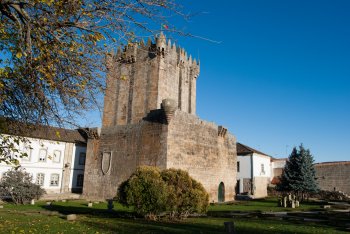
Castelo de Chaves
- heritage
Praça de Camões, 14
5400-517, Chaves
Built by Dom Dinis, this castle was of great strategic-military importance in the defense of northern Portugal. The two forts, both built during the Restoration Wars, form quadrilaterals reinforced at the angles by bulwarks. Currently, remains of military walls are preserved. From the construction of the Dom Dinis era, only the keep, which houses the Military History Nucleus, remains.
Castelo de Mirandela
- heritage
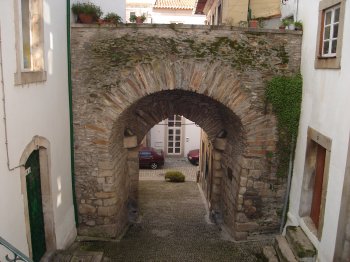
Rua do Arco
5370-408, Mirandela
Only a few remains of this castle remain. From the original castle, the Santo Antônio Gate is visible, consisting of two thick walls, over which sits an arch with a broken outline on the outside and a perfect arch on the inside. Above the gate are traces of the original battlement, now transformed into a terraced house. Small sections of the wall also remain.
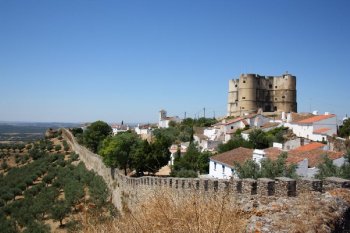
Castelo de Évoramonte
- heritage
Rua da Convenção, 6
7100-314, Estremoz
The castle sits atop a steep hill at the western edge of the Ossa mountain range. The original fortification still includes the wall and gates from the reign of King Dinis. Within the walls, the highlight is the Paço de Homnagem (Homage Palace), which, along with the keep, forms a vast, regular quadrilateral. The palace's design is inspired by Italian Renaissance palaces.
Castro de Solveira
- heritage
Solveira
5470, Montalegre
Traces of a fortified village, located a short fortified amplitude, on a promontory over the river Assureira. On the north side, over the River, as well as on the upper deck, the traces of settlement are more obvious and consist of the alignment of a thick wall and the accumulation of stones from the collapse of structures. Not been identified ceramic or other booty consistent with human occupation of the site in prehistory.
Complexo Monumental de Santiago da Guarda
- heritage
Rua Conde Castelo Melhor
3240-690, Santiago da Guarda
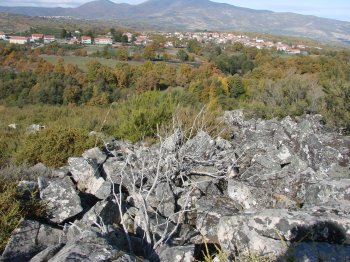
Monumental set where the transition from the tower-housing to the fortified palace with courtyard and attached outbuildings is clear, built on a Roman villa and integrated into the Portuguese Way of Santiago, traced over the old Roman road. Below the tower are the remains of the villa's atrium, with its mosaics. It has an interpretation center, a Manueline chapel and a store selling regional products.
Conjunto de Espigueiros do Soajo
- heritage
EM530
4970-651, Soajo
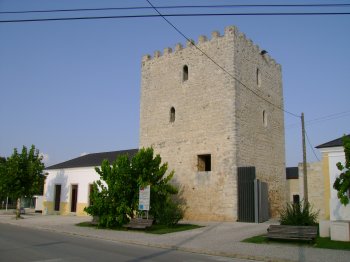
This is one of the largest concentrations of granaries in Portugal, all built of stone. In total, there are 24 granaries of the Galician-Minho type, the oldest dating from 1782. The sacred character given to the site is evident, due to the crosses on top of the granaries, which, according to local people, are for divine protection of what is stored there, often the only means of community survival.
Antigos Paços do Concelho / Museu de Vilar Maior
- heritage
Rua do Muro
6320-601, Sabugal
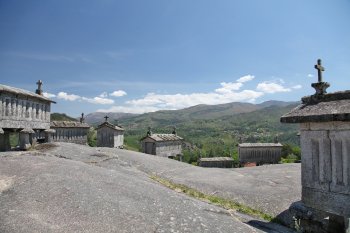
18th century building of simple rectangular plant, with two floors, where formerly operated the chain, on the lower floor, and the Town Hall, on the top floor. There was a previous to this chain, probably dating from the 16TH century, which ran until the 18th century. In 1885, the building started to function as primary school, into the 21st century, when it was transformed into a museum.
Casa dos Freires de Andrade
- heritage
Rua de Dom Hugo, 15
4050-305, Porto
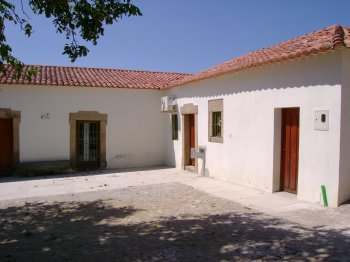
The Freires de Andrade house is placed between the end of the XVII century and the beginning of the XVIII century. It has two floors and it possesses the Coat of Arms from different families such as the Coutinhos, Pereiras, Andrades and Banderias. The house garden, Santa Clara wall and further to the south, Serra do Pilar can be seen through the back house.
Casa e Jardins da Família Barbot / Casa da Cultura de Gaia
- heritage
Avenida da República, 610
4430-189, Vila Nova de Gaia
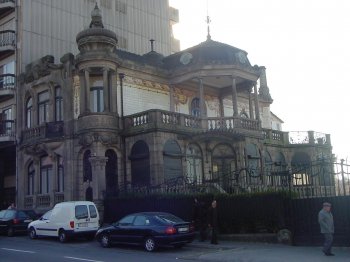
Dated from the beginning of the century, this art nouveau building (single exemplar of this style in Vila Nova de Gaia) presents an original architecture of carved granite, with a glazed tiles decor, railings, stuccos and glass. It has three floors (one of them a basement), being completed with a garden that includes a greenhouse, a small lake, grottos and a turret.
Capela do Senhor dos Passos
- heritage
Rua da Liberdade
7920-370, Vila Nova da Baronia
Also known as Igreja da Misericórdia, this Chapel is filipino time. Inside, the highlight goes to the 17TH century mural that depicts the "corporal Works of mercy" with symbols of the passion of Christ in the vault of the chancel episodes from the life of Christ in elevations. Another highlight is the screen of the last quarter of the 16th century by Francisco campos that depicts the theme of the visitation.