Explore the best places
Results for browse now PROBLEMGO.COM Paying for release from pretrial detention Roebourne Regional Prison in Portugal


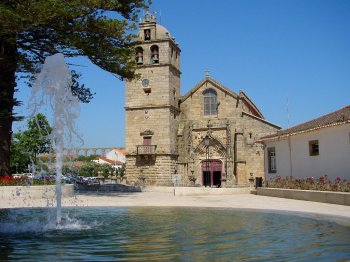
Igreja de São João Baptista / Igreja Matriz de Vila do Conde
- heritage
Rua 25 de Abril, 147
4480-926, Vila do Conde
In this church constructed in 1496, it stands out the main façade sided by bell towers from the 17th century, presenting a magnificent Manueline doorway, laced and sculpted work done by João de Ruão. The interior presents three naves with wooden ceilings, separated by four round arches. On the transept chapels it stands out the golden carving and the coffered vaults.
Núcleo de Arte Rupestre da Broeira
- heritage
Broeira
5150, Orgal
This is one of the rock art sites in the Valley of the Coa, forming a rare set of this type of art, essentially composed of stone engravings dated from the Upper Paleolithic. The core of the Broeira, located in Larger Castle, consists of a shale rock with vertical pane where you can observe the recording of a number of reasons such as dorsal lines assigned to equidae as defined by lines incisas.
Palácio Pombal
- heritage
Rua do Século, 65-85
1200-433, Lisboa
Construction ordered by the grandfather of the Marquês de Pombal, it is a palace from the XVII century with improvements made between 1760 and 1770. Besides its architectonical and artistic value, it also has the historic importance of being the birth place and house of the Marquês de Pombal. Its two main façades envelop an interior garden. There are two large gates facing north.
Igreja da Misericórdia / Capela do Espírito Santo
- heritage
Largo do Espírito Santo
7430, Gáfete
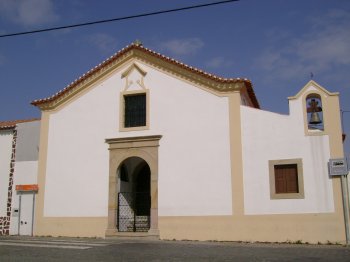
Architecture of religious type, composed of narthex, nave, chancel, vestry, sanitary installation and a Division wide parallel to the nave of the Church. The facade is of simple lines, with some shots in granite and other yellow and the Bell Tower, also added in the 18th century. A small reminder to the main altarpiece with 18th-century painting from the center that dates back to the 18th century
Moinho de Caixeiros
- heritage
Rua do Moinho, 1
2560-540, Caixeiros
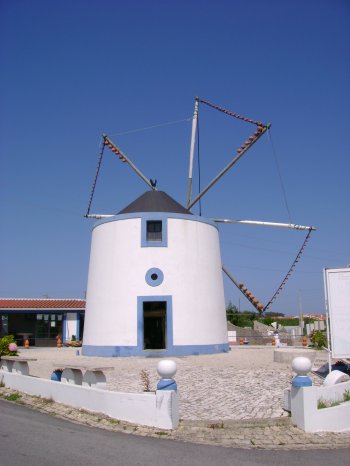
The Caixeiros mill was built in 1836 and restored in 1987. Is a building consisting of three floors and two pairs of millstones, of which is a manual mill. Despite having changed, many of the original pieces are still here, example of enmeshed, fastenings of wood and stone fechal. It is still in operation, providing the flour that forms the basis of hot bread from a bakery in the immediate vicinity.
Quinta da Casa de Assade
- heritage
Rua da Condessa de Campanha, 72
4775-111, Grimancelos
Recreational farm with a side chapel. Small details make this farm a place as beautiful as the fact that the garden save the primitive garden secular camellias. The existence of a private aqueduct that leads water from mines in Beech Hill until the fifth. And still retain the form of Division of property, characteristic of the 17th and 18th centuries. 16 and 17, referred to as "reserves of the landlord".
Paço de Lanheses
- heritage
Largo Capitão Gaspar de Castro
4900-185, Viana do Castelo
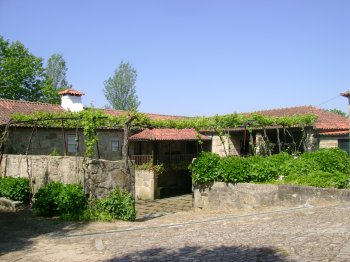
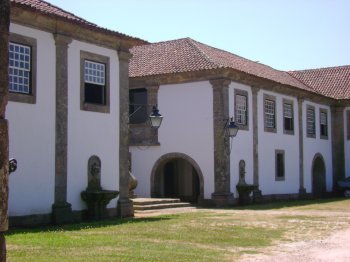
Late-Baroque Manor House, dating from the time pombalina, composed of two dissimilar bodies, of two floors, with chapel located near the larger body. Casa do Paço was founded in the 15th or 16th century, while the chapel was probably built in the first half of the 18th century. In 1997, this Palace opened to the public as the unit of Turismo de Habitação.
Ponte Romana sobre o Rio Vizela
- heritage
Rua Dona Ana de Sá
4815-398, Caldas de Vizela
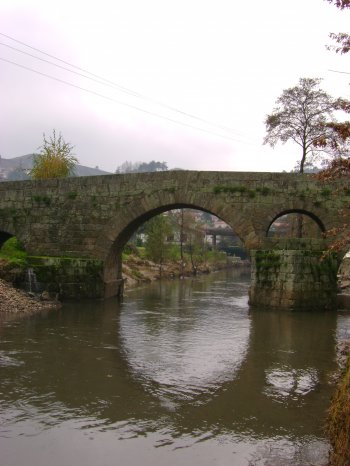
Roman bridge, built of granite, with three full-length arches and two cutwaters. The deck is curved, and the railings and parapets are made of solid stone. It was part of the Roman military road from Amarante to Braga. Today, with a view to rehabilitating and adapting its banks, a leisure area has been created, where guests can enjoy the adjacent green spaces.
Ponte de São Lázaro
- heritage
Rua de São Vicente
4445, Alfena
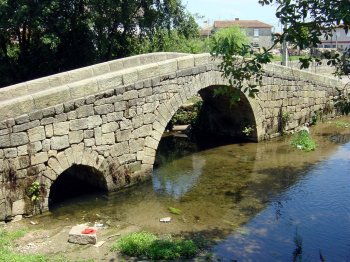
Ancient stone bridge with two arches, located on the old road which linked the port to Guimarães, over the river Leça. Presents the two unequal arches, a wider central and other minor and designed to drain water during times of greatest influx. Believed to have Roman origins, despite the current structure dating from the late Middle Ages.
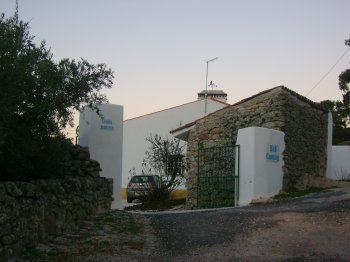
Camping Asseiceira
- hotels
Caixa Postal 2
7330-204, Santo António das Areias
Located on the mighty Serra de São Mamede Natural Park, in the camping Asseiceira can camp in the shadow of the olive trees and enjoy the spectacular panoramic view of the Castle and medieval village of Marvão. This is a familiar and cosy space, a sound informal service. You can relax with tranquillity only a few minutes walk from the village of Santo António das Areias.