Explore the best places
Results for Santa Maria do Bouro in Portugal


Casa da Boa Fonte
- hotels
Rua da Fonte, 234
4990-655, Ponte de Lima
The House of good source represents the typical constructions for Minho of the twentieth century, without forgetting the traditional rain-fed. All the remodeling of the space was carefully thought out, in order to maintain the original, without forgetting the comfort necessary for a pleasant stay. Its location gives prominence to the shrine of Lord do Socorro. In addition to the swimming pool, guests have a wide range of leisure activities.
Farol da Mama
- heritage
Rua Adolfo Casais Monteiro
2790-042, Carnaxide
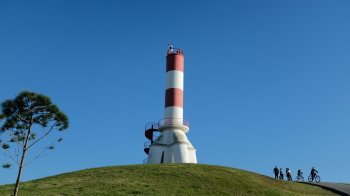
Farol que, pela sua localização e paisagem desafogada é muito procurado pelos turistas. É rodeado de jardins e passeios pedonais. Este vértice geodésico consiste numa edificação branca com três pés, com semelhanças a um "foguetão". A lanterna do farol encontra-se instalada numa plataforma a dez metros de altura.
Necrópole de São Gens e Penedo do Sino
- heritage
Lavandeira
6360-302, Celorico da Beira
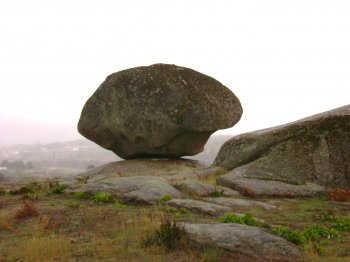
This is an ancient cemetery with four types of tombs: bathtub-shaped, triangular, anthropomorphic, and carved into movable stones. Near these graves is the Penedo do Sino, a pedunculated granite block, shaped by weathering, and well-known for its strange and beautiful balance. This site was occupied between the 1st and 2nd centuries and later between the 12th and 13th centuries, although it is believed that this necropolis dates from the 6th to the 14th centuries.
Palácio da Mitra
- heritage
Largo Félix da Silva Avelar Brotero
2660-119, Loures
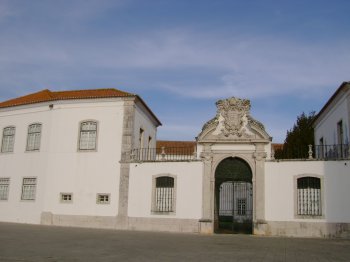
Former residence of archbishops, Palácio da Mitra or Palácio dos Arcebispos is a 16th-century building in the shape of a "u", which features typical Portuguese tiles in the rooms, also characterized by the thematic decoration of the time (representations of rural scenes, seasons or cooking). The church was completely rebuilt in the 16th century. The statues that decorate the interior rooms of the palace are from this period, as well as the monumental fountain, in Baroque style.
Quinta do Assentista
- heritage
Rua Elias Garcia, 116
2700-708, Amadora
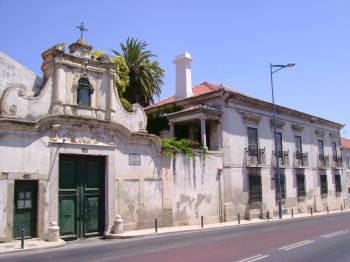
Also known as Quinta dos Intendentes, the main façade dates from 1746, in which the Johannine gate stands out, despite the simplicity of the façade's features. At the top you can see a niche that houses the image of Nossa Senhora da Saúde. Inside, it has a living area, patio and gardens, in which you can admire various tree species, fountains, garden benches and a chapel.
Paços Municipais de Viana do Castelo
- heritage
Praça da República
4900-520, Viana do Castelo
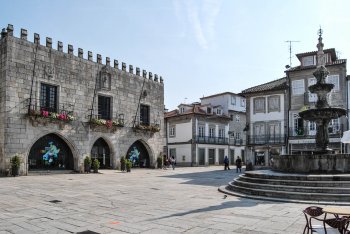
The construction was initiated during the reign of Dom Manuel I and finished in the reign of Dom João III. It has two floors, entirely built in granite. The lower floor is formed by a shed with thre ogival arches. In the upper floor there are three windows with balconies. One can also view, on the top of the windows, a royal shield, an armillary sphere and a sailboat, heraldic symbol of Viana do Castelo.
Pelourinho de Alverca
- heritage
Praça João Mantas
2615, Alverca do Ribatejo
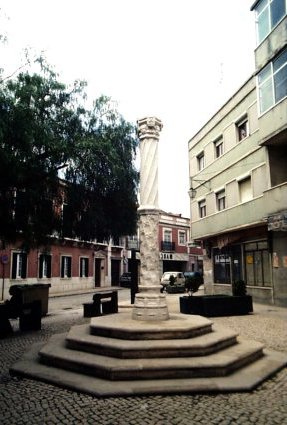
Awarded property of public interest, this pillory vinca in its ornamentation, the fact that during manuelina. The 4 wide steps and base oitavados, quadrifoliadas flowers and his effort with elements linked to the theme of maritime expansion are testimony of an artistic current well Portuguese and so linked to our history. This pillory is opposite the spot where once existed the House Chamber extinct municipality of Alverca do Ribatejo
Ponte dos Canos
- heritage
Rue da Fonte dos Canos
5210-196, Miranda do Douro
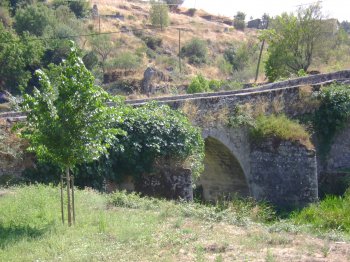
A medieval bridge with a flat deck and a maximum width of four meters, it rests on three unequal broken arches, the central arch being the largest. It also features two high cutwaters and schist masonry railings topped with granite ashlars. Located over the Fresno River, it is part of an old road that connected Miranda do Douro to Duas Igrejas. The original medieval construction was rebuilt in the 18th century.
Torre do Relógio de Castelo Branco
- heritage
Rua do Relógio
6000-195, Castelo Branco
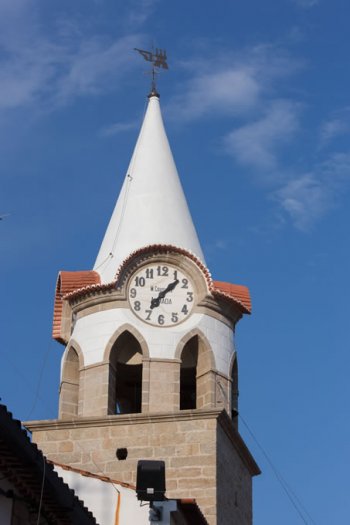
In the heart of the historic area, stands the imposing Torre do Relógio, unavoidable in the landscape of Castelo Branco, as it is visible from the most diverse locations. Its creation is related to the expansion process of the city and the enlargement of the limits of the walls, since it was created where there was an old tower of the outer wall, adapted for its current functions in the 19th century. Its characteristic hourly chimes are heard by residents and visitors alike.
Parque de Campismo Quinta do Convento
- hotels
Rua do Convento - Apartado 365
6230-045, Fundão
The campsite Quinta do Convento, situated in the foothills of Mount of São Brás, in serra da Gardunha, is surrounded by leafy trees, with magnificent views over the Cova da Beira and the Serra da Estrela. This is the space of choice for enjoying moments of relaxation in contact with nature. Is starting point for discovering the potentials of the municipality of Fundão-on footpaths or cycle-where tradition and modernity come together in complete harmony.
