Explore the best places
Results for castelo in Portugal


Pelourinho de Castelo
- heritage
Largo do Pelourinho
3620-145, Castelo
This pillory has a base composer by two square and flat steps in which the first one is covered by the floor. The prismatic shaft fits directly on the superior step. The section is square, slightly chamfered on the inferior part narrowing towards the top. The finish is composed by a cube above which settles another parallelepiped with lower faces encircled by rectilinear frames with traces from spherical finishing.
Pelourinho de Castelo
- heritage
Castelo
4890-020, Arnóia
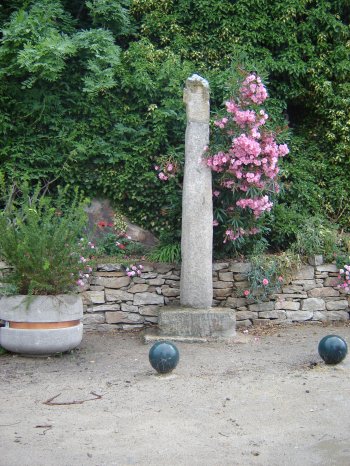
Located in a small square, this pine cone pillory, of which only the base and column remain, has a circular base and a column with a smooth shaft. It dates back to the 16th century.
Pelourinho do Castelo
- heritage
Rua do Pelourinho
3560-044, Castelo
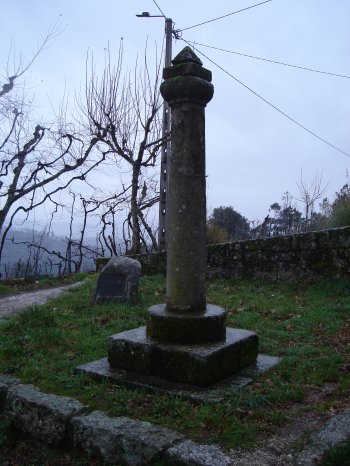
This pillory has four square steps, one monolithic column with a square base and an octave shaft. In the capital it is possible to see a round frame decorated with vegan symbols. Above the capital there are pinnacles which are remarkable pieces decorated with vegan symbols.
Torre do Castelo
- heritage
Largo Dom Dinis
7100-509, Estremoz
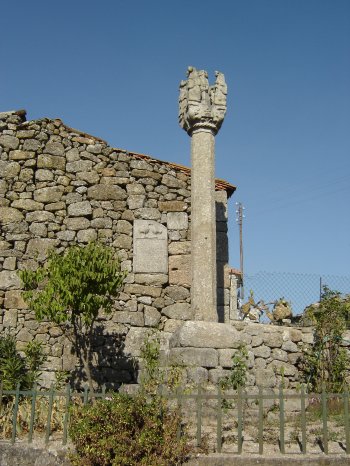
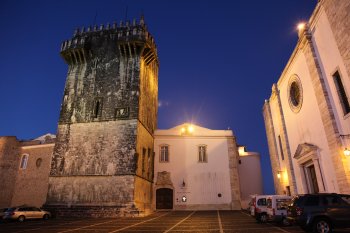
Donjon of the castle of Estremoz, with 27 feet high, built of white marble. It is thought that it was a work that went through three reigns: d. Afonso IV, d. Pedro and d. Fernando and it was the latter who designated it "Tower of the three crowns", the name by which this tower is known.
Castelo de Alfaiates
- heritage
Praça Brás Garcia de Mascarenhas
6320-081, Sabugal
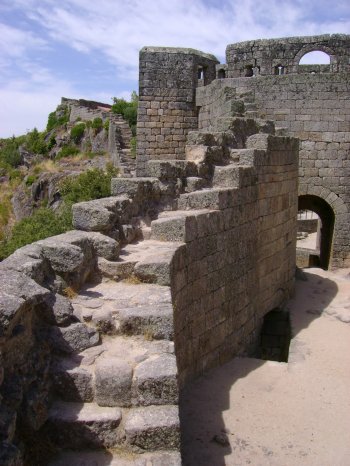
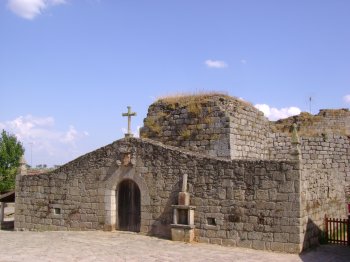
It is believed that this castle was built before the establishment of the nation, during the reign of Alfonso IX of León. Later, King Dinis recovered much of that region, ordering restoration and expansion works on its fortresses. King Manuel I granted a new charter to the town, leading to further restoration works. Currently, two square towers remain, one of the entrance gates bearing the royal crown and the coat of arms of King Manuel. Nothing remains of the wall that surrounded the town.
Castelo de Valongo
- heritage
Herdade da Grã
7005, Évora
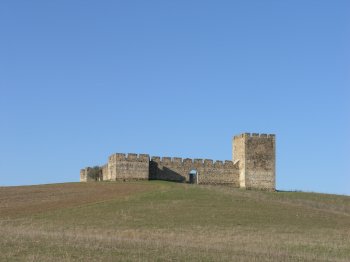
Medieval castle dating from 1283. In the 15th century, the keep underwent some alterations and, in the 19th century, it was acquired by its current owners. The architecture is both civil and military, with Gothic and Manueline influences.
Castelo de Arraiolos
- heritage
Rua do Castelo
7040-053, Arraiolos
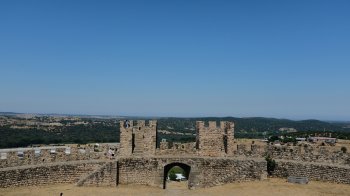
A Romanesque-Gothic castle built in the early 14th century, consisting of two fortified sets. The wall is quadrangular and defended by a tower, with two entrances: the Santarém Gate and the Town Gate. The mayor's palace, together with the wall on the north facade, was restructured in 1480. The Clock Tower has a Manueline design. In the middle of the walled enclosure is the old parish church, a 16th-century building that is quite damaged.
Castelo de Almourol
- heritage
Ilhota do Rio Tejo - Praia do Ribatejo
2260, Vila Nova da Barquinha
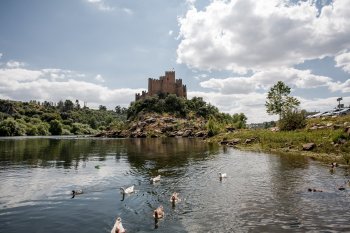
Located on a rocky Islet in the river Tagus, a Templar Castle warrant lift by Gualdim Pais, in the 12th century. Previously, it is believed to have existed a castro lusitano, improved by the Romans. The walls are flanked by ten towers that surround the keep and which gave the set an important defensive capabilities. Inside, there are several monumental doors that make communication between the different parts of the Castle. The access is made by river in a small boat crossing, lasting about five minutes.
Castelo de Sortelha
- heritage
Largo do Pelourinho
6320-536, Sabugal
A castle of probable Muslim construction, whose oldest written document mentioning it dates from the reign of King Sancho I, who ordered repairs to be made to the castle. Later, King Manuel I benefited from restoration works, marked by the insertion of the Manueline coat of arms on the castle walls. The alcazaba remains, with machicolations and loopholes protecting the entrance to the enclosure, and inside, a cistern. In the center of the citadel is the keep, with a square plan and a single floor. The walled enclosure, with two gates flanked by towers, completely surrounds the town.