Explore the best places
Results for castelo in Portugal


Castelo de Sortelha
- heritage
Largo do Pelourinho
6320-536, Sabugal
A castle of probable Muslim construction, whose oldest written document mentioning it dates from the reign of King Sancho I, who ordered repairs to be made to the castle. Later, King Manuel I benefited from restoration works, marked by the insertion of the Manueline coat of arms on the castle walls. The alcazaba remains, with machicolations and loopholes protecting the entrance to the enclosure, and inside, a cistern. In the center of the citadel is the keep, with a square plan and a single floor. The walled enclosure, with two gates flanked by towers, completely surrounds the town.
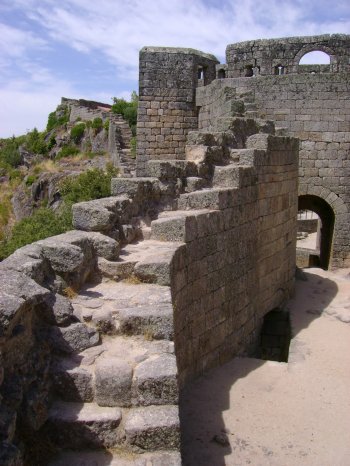
Castelo do Bom Jesus / Casa dos Castelos
- heritage
EN 103-3
4710-455, Bom Jesus
Former family property dated from the 19th century, who currently works as the House of turismo de habitação.
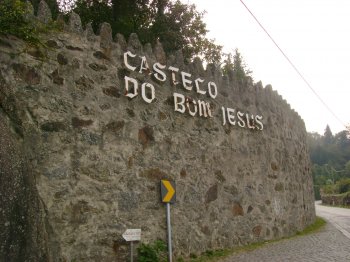
Castelo do Crato (vestígios) / Castelo da Azinheira
- heritage
Largo do Castelo, 1
7430-127, Crato
Four-pointed bastioned fortress with medieval-type walls and a redan. The ruins of the medieval fortification are visible in the central area, isolated walls or with structures attached to them for the construction of artillery platforms. As examples of ruins of modern fortification, there are four redan with a guardhouse and traces of chimneys and niches. The fort's door mantains the portcullises of the drawbridge, and there is a cistern right in the center of the fortification. Some sections of the wall and from the barbican are monumentally beautiful. The first fortress dates back to the reign of King Afonso Henriques, …
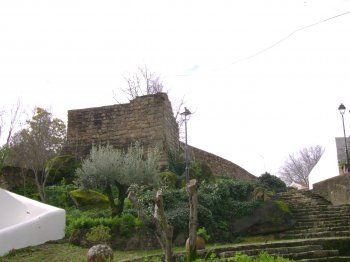
Castelo de Aljustrel e Igreja de Nossa Senhora do Castelo / Santuário de Nossa Senhora do Castelo
- heritage
Rua Nossa Senhora do Castelo
7600-076, Aljustrel
It's the most emblematic spot in the village of Aljustrel. The chapel, with its grand staircase, is used for pilgrimages. It features both Baroque and folk architecture. Some sections of the castle still remain.
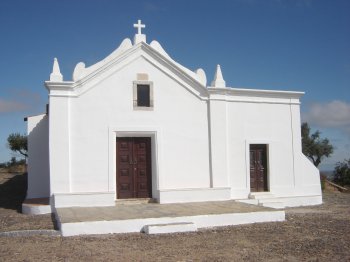
Cadeia Comarcã de Castelo de Vide / Núcleo Museológico de História e Arquitectura Militares
- heritage
Rua Direita
7320-151, Castelo de Vide
According to the Director-General of prison services, the municipality of Castelo de Vide received, in September 1933, subsidies for the construction of the civil jail.
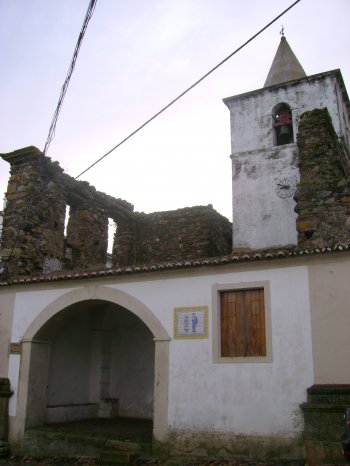
Forte Nossa Senhora das Neves / Castelo de Matosinhos
- heritage
Largo do Castelo
4450, Leça da Palmeira
This 17th century building is shaped like a four-pointed star, each protected by guardhouses. The vestiges of this defensive fort can be seen on Avenida Doutor Antunes Guimarães, Rampa do Castelo and Rua de Santa Catarina. It began to be built in 1638, but in 1655 it was still not completed. In 1832, during the civil war, it underwent some modifications and, in the 20th century, it was handed over to the Captaincy of the Port of Leixões, which carried out works to house its staff there.
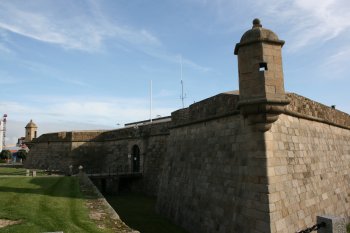
Palácio da Vedoria / Edifício do Arquivo Distrital de Viana do Castelo
- heritage
Rua Manuel Espregueira, 140
4900-318, Viana do Castelo
Noble House of Mannerist rectangular plant consisting of two bodies and roofs of four waters. Inside, the Foyer decentered with access ladder to the piano nobile. Originally, functioned as Vedoria and respective barracks, being currently here installed the District of Viana do Castelo File.
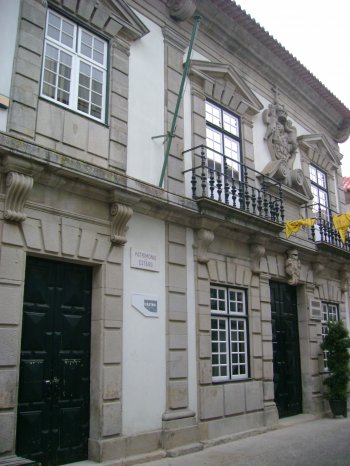
Alcáçova do Castelo de Mértola
- heritage
Mértola
7750, Mértola
On the northern slope of the Castle Hill, the possible Roman city forum creates an artificial platform, supporting the imposing monumental complex of the city of Myrtilis. This entire platform, leaning against the wall, rested on a solid underground gallery approximately 30 meters long and 6 meters high. In Late Antiquity, in the 5th and 6th centuries, lavish religious buildings were erected here; among them, a possible Episcopal Palace and a baptistery, of which significant fragments of a beautiful set of polychrome mosaics remain. During the Islamic period, during the 12th and 13th centuries, this entire area was occupied by …
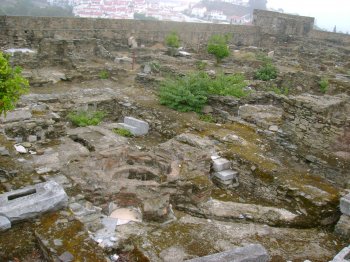
Castelo Velho do Caratão
- heritage
CM1267
6120-702, Mação
A Neolithic defensive hillfort, likely rebuilt and reoccupied by the Romans until the 1st century. In 1160, Dom Afonso Henriques donated it to the Templars, who were to have built a castle there. However, this never came to fruition.
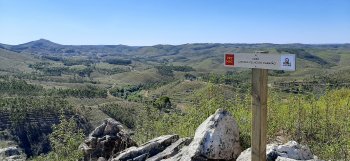
Castelo da Senhora da Luz
- heritage
Avenida dos Pescadores, 1
8600-250, Luz
Of unknown origin, this castle was rebuilt twice: the first during the reign of Dom João III and the second at the time of the Restoration wars. It was then adapted in order to become a private residence. It is classified as a Building of Public Interest.