Explore the best places
Results for Forte in Portugal


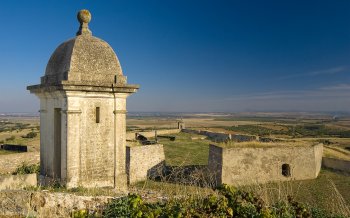
Forte de São Brás
- heritage
EN1-2A
9580-514, Vila do Porto
Fort built in the 16th century on the site of Cimo da Rocha to defend the town during the Philippine reign. It consists of a small bastion and the Command House and Troop Barracks. Inside, there is the chapel of Our Lady of Conception and an obelisk in honor of Commander Carvalho Araújo.
Forte de São Julião da Barra
- heritage
Passeio Marítimo de Oeiras
2780-267, Oeiras
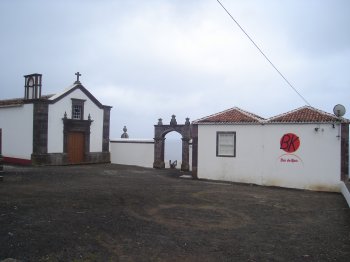
This fort, built at a strategic point that allowed it to dominate the entrance to the bar, was one of the most important Portuguese military bases. It is one of the best-preserved forts and the most perfect example of its 16th-century type, originating from Italy. Its esplanades, vaulted casemates, and cistern are notable.
Forte da Ilha do Pessegueiro / Forte de Santo Alberto do Pessegueiro
- heritage
Herdade do Pessegueiro e Ilha do Pessegueiro
7520-421, Ilha do Pessegueiro
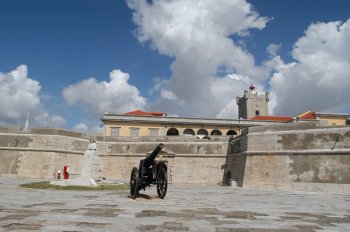
This fort, built by Philip III in 1603, is located on Pessegueiro Island, south of Porto Covo. During the Restoration War, this fortification suffered several Castilian attacks and was severely damaged. At the end of the 17th century, during the reign of King Pedro II, a new fort was built, which currently lies in ruins.
Forte de Nossa Senhora da Conceição
- heritage
Alameda Duquesa de Palmela
2750-335, Cascais
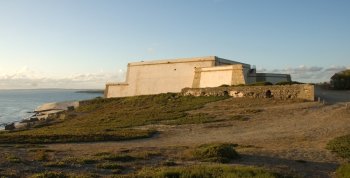
The ancient fort stood on the current Palace of the Dukes of Palmela. Currently, it remains only a parapet, dating from the 19th century.
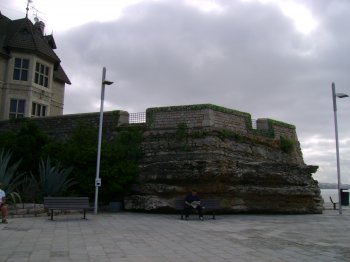
Forte de São Sebastião
- heritage
Rua do Castelo
9900-038, Horta
The Castelo de São Sebastião assumes a form roughly pentagonal and is deployed on a rocky spur beside the Bay Porto Pim. Is bathed in three sides, by the waters of this Bay. It was part of a defensive complex which included Guarita, stronghold of the Patrol and Strafing, connected by a wall of support along the Bay. Since August 2005, at the Fort, the Ecoteca of Faial.
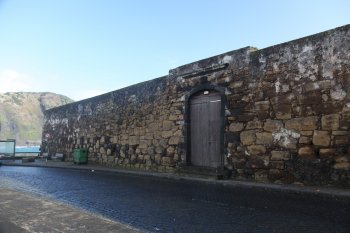
Forte do Ilhéu da Pontinha
- heritage
Cais da Pontinha
9000, Funchal
Accordingly to the existent bibliography, facts indicate that this fort was the refuge of Gonçalves Zarco and Tristão Vaz Teixeira, the finders of Madeira, before they reached the archipelago. In one of the extremities it is still possible to see the triangle where the sailors fastened their boats.
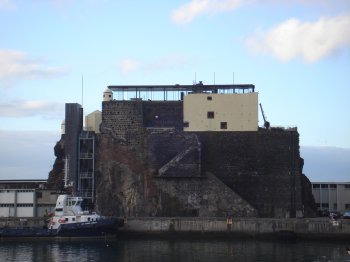
Forte de Nossa Senhora da Graça ou de Lippe
- heritage
Monte Senhora da Graça
7350-410, Alcáçova
An example of 18th-century European military architecture, built by King José I on the site of a former fort. This bastioned fort sits on an impressive rocky hill. Its wide spaces, interplay of lines and volumes lend it power and military effectiveness. Its distinctive feature is the Governor's residence, an unusual building within the fort's architectural context. It is also known as Lippe Fortress, named after the architect who proposed its construction. Inside, there is a chapel honoring Our Lady of Grace.
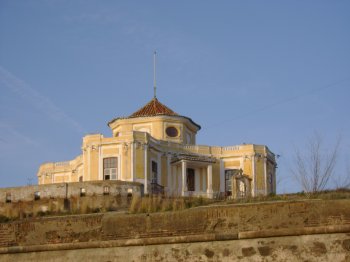
Forte Ponta da Bandeira
- heritage
Cais da Solaria
8600-645, Lagos
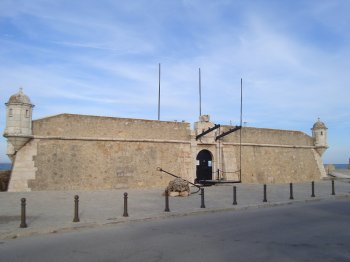
Located opposite the Bensafrim stream bar, this fort guaranteed the defense of the old port. It was built in the 17th century and features a moat, a drawbridge and a grandiose coat of arms. Inside, there is a small chapel with 18th century tiles. It is a privileged viewpoint to observe Lagos.
Forte de Santiago de Sesimbra
- heritage
Rua da Fortaleza, 39
2970-628, Sesimbra
An imposing fortress that preserves the various outbuildings for the garrison, the cisterns, the powder magazine, the governor's residence, the dungeons, and the private chapel. A fort with two elevated and two lower bastions, with a sloping wall and a parapet pierced by gun emplacements and cylindrical guard towers.
Forte de Santa Luzia
- heritage
Outeiro de Santa Luzia
7350, Elvas
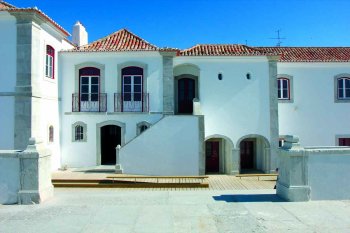
A monument of military architecture, created by a series of figures, including, for example, Martim Afonso de Melo, Hieronimo Rozetti, Lassart, and Rui Correia Lucas. Its construction model has served as inspiration for other forts. Today, it houses the Military Museum.