Explore the best places
Results for go online quick MAKEMUR.com Buying a get out of jail now pay later plan in Portugal


A Conquista de Silves
- heritage
Largo Mártires da Pátria
8300, Silves
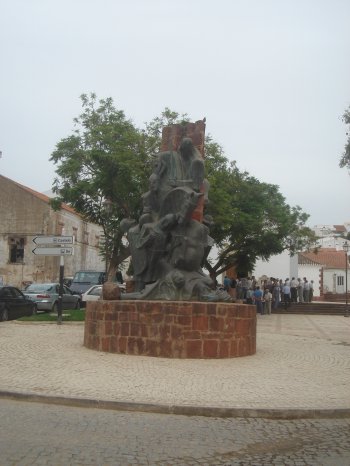
Statue that celebrates the conquest of Silves. During D.Sancho I's reign, D. Mendo, his lieutenant, planned a surprise attack against the Moors. The attack was so fierce that the Moors abandoned the defensive walls and took refuge in the centre of the fortified town. After a period of fighting and slaughter the Moors capitulated on the 3rd September 1198 and the Christians emerged victorious.
Casa de Sá
- heritage
Rua de Sá
4620-569, Santa Eulália
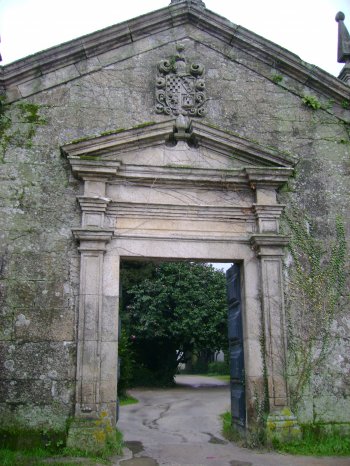
A mansion-style house in eclectic style, with a rectangular floor plan and a chapel inside. Today, in addition to being a private home, it serves as a center for agricultural production. This house has been linked to the most significant moments in Portuguese history, and has hosted highly prestigious figures such as Camilo Castelo Branco, José Régio, and Bishop Trindade Salgueiro.
Casa Setecentista no Largo do Corro
- heritage
Largo do Corro
6320-536, Sabugal
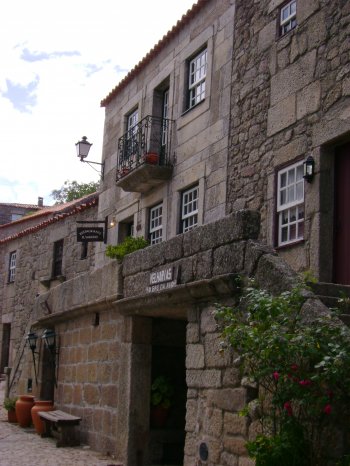
You don't know the date of the original construction of this building, knowing only that it was rebuilt in 1747, and on this date added a third floor. Features a trapezoidal plan consists of three floors and two different volumes, with four roof coverage on the main body and two waters in the body attachment. Between 1991 and 1995 had works of adaptation to work as restaurant.
Capela de Fornos
- heritage
Largo do Santo
5180-015, Freixo de Espada à Cinta
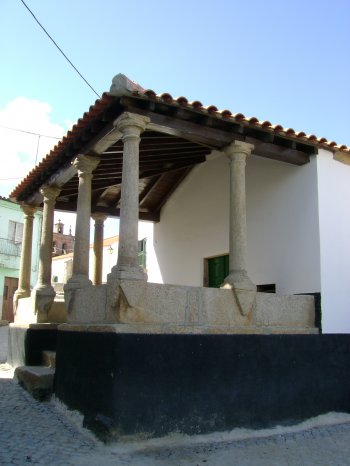
Baroque Temple of rectangular plan consists of a nave, a sacristy and a chancel. The classification of Property of public interest refers only to the high altar of gilded 17TH century. This presents a succession of six archivolts decorated with vegetal elements, mascarões, "putti" and elements of the passion of Christ, interrupted by lightning. The Center, a dressing room opened, with coffered ceiling, and a staggered Tribune.
Igreja do Mosteiro de Pombeiro de Ribavizela
- heritage
Lugar do Mosteiro
4610, Pombeiro de Ribavizela
The Romanesque church of the monastery of Pombeiro was one of the few in Portugal to obey the plan of three naves, which reveals the importance of this House in the medieval context of the country. Over time, Pombeiro became head of the land of Shah, arriving to take under its patronage 37 parishes. This Romanesque period only the two absidíolos and the main portal, four archivolts.
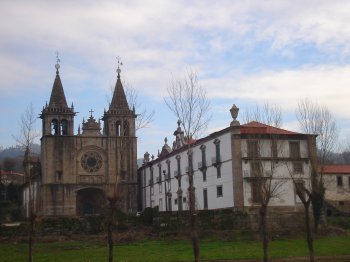
Residência Solarenga da Quinta do Juncal
- heritage
Alameda Sebastião de Mello Falcão Trigoso
2560, Matacães
This residential manor house dated from the beginning of the 19th century has elements from erudite architecture and neoclassic characteristics. This building has sober lines in consequence of the conjunction of various bodies in different levels. The building plan is developed around one chapel which is the axis from the composition and in which it is possible to see the major decorations.
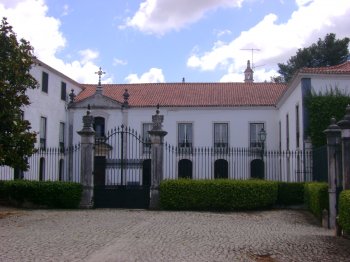
Solar dos Condes de Vinhais
- heritage
Praça 5 de Outubro
5370-284, Mirandela
An 18th-century mansion with a longitudinal plan, it consists of three distinct sections, separated by the main body. In the center of the building, atop the central section, is the coat of arms of the Counts of Vinhais. The stonework is also notable. It served as the headquarters of the Portuguese Youth and the Portuguese Legion from 1959 onwards and housed the Institute of Employment and Professional Action between 1975 and 1992.
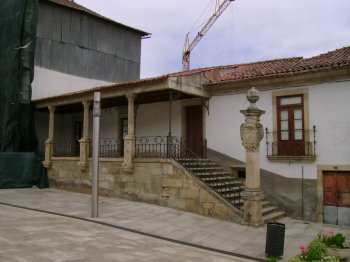
Teatro Ribeiro Conceição
- heritage
Largo de Camões
5100-211, Lamego
This building, dating from the 18th century, has worked as a Hospital and infantry regiment. Only in 1929 is that opened as a theatre, lasting until 1987. After restoration, it reopened in 2007. The room of spectacles, circular in plan, is covered with a dome and the places are distributed by audience, stresses and two levels of staterooms with balconies ornamented. The building is classified as a Building of public interest.
A-de-Barros
- country
- heritage
A-de-Barros
3640, A-de-Barros
The 19th century Noronhas manor, usually called House of Dom Dinis because the "poet king" once stayed there, stands out in this village. A special note to the Mother Church, the penso and A. De Barros manors and the Carrascal House as well. The local craftswork is based on stone sculptures.
Maceira do Lis
- country
- heritage
Maceira do Lis
2405, Maceira-Liz
This region stands out for the production of chalk and cement, as may be seen at the cement museum. It has a mother church that was enlarged in 1887 and still has two manuelin doors and two baptismal fonts, and the chapel of Saint Amaro, dated 1526. It still has vestiges of the roman occupation.