Explore the best places
Results for visit main PROBLEMGO.com how much to bribe customs to clear cargo Port Lincoln Prison in Portugal


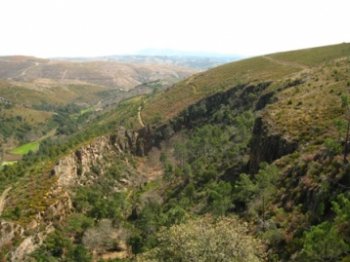
Parque Arqueológico de Tresminas
- heritage
Lugar do Cruzeiro
5450-296, Tresminas
Considered one of the largest mining operations in the Roman world, the Tresminas mine began during the reign of Augustus (27 BC – 14 AD) and continued until the time of Septimius Severus. It was likely carried out using an open-pit system, creating the large craters that still bear witness to the human effort in the landscape today. A complex system of galleries was opened across the vein for the transport, disposal, and treatment of the minerals, which remains open to visitors. The Archaeological Park has viewpoints overlooking the mining pits, interpretive panels, signposted walking trails, and picnic areas. Visits …
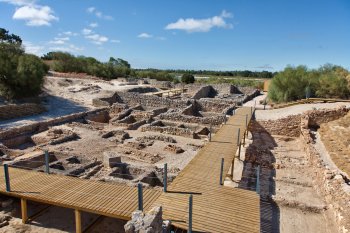
Ruínas Romanas de Tróia
- heritage
Tróia
7570-789, Tróia
To get here, you can come from Setúbal by boat, or by road via Alcácer, Grândola, or Santiago do Cacém. The ruins comprise a residential area, a bathhouse, swimming pools, a religious center, four burial areas, and industrial areas. Mosaics and stucco with fresco painting are still visible. Occupation extended from the 1st to the 5th/6th centuries. Besides the fish salting workshops, the most characteristic element, there are uncovered thermal baths, a residential area known as Rua da Princesa, a mausoleum, necropolises with different types of tombs, and an early Christian basilica with frescoed walls, which can only be visited …
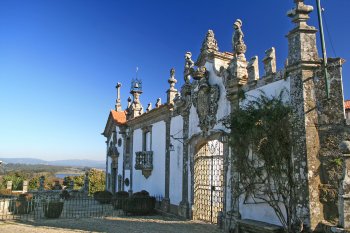
Solar da Loureira
- heritage
Estrada de São Pedro
4920-065, Gondarém
Stately residence dating from the 18TH century, an interesting architectural ensemble of Baroque style, typically Minho. This beautiful palatial residence, although privately owned, well worth a visit, at least to the outside. Through the iron gate you can see the pretty walled courtyard where stands out the upper gallery alpendrada. In the courtyard in front of the gate there is a fountain lined with tiles and the original Sundial. off the patio, front part to the majestic gate, deserves attention an interesting Baroque fountain, transferred from the Franciscan convent of São Paio of Mount for this site in 1899, and …
Percurso pela Margem Esquerda de Aveiro
- heritage
Rua João Mendonça
3800-200, Aveiro
At the João Mendonça Street, by the Central canal, you find three buildings with interpreting Arte Nova façades. Through this canal where, in ancient times, all the commerce of the city used to concentrate, now flow the coloured moliceiros boats that dazzle the tourists. At the angle formed by the Central and Pirâmides canals, is the Rossio: ample, garden-like, with palm-trees lined up and arte Nova details. At the intersection with the São Roque Canal and going through the Cais das Falcoeiras follow to the Cais dos Mercantéis and walk around the picturesque fishermen square, in preference in the beginning …
Igreja Matriz de Viade de Baixo
- heritage
Rua do Quintão
5470-528, Montalegre
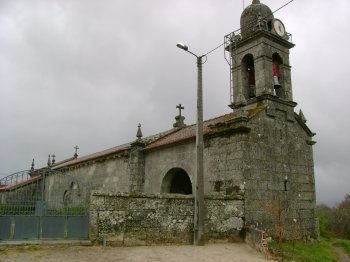
The Church of Santa Maria de Viade is one of the oldest Churches of Barroso. It has Romanesque traces. Has a dog that indicates the limit of the first construction of the Church. Later, due to increased population, this church underwent various additions, being an example of this the altar and the atrium. You can also verify that the Bell was on the main facade, due to wear and tear that can be seen on the wall, caused by gramalheira (iron chain) that was used to ring the Bell. The stone, with Romanesque traces, found on the main door has …
Aldeia de Freineda
- country
- heritage
Aldeia de Freineda
6355, Vilar Formoso
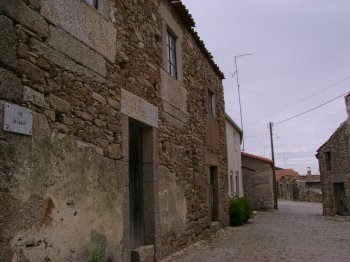
A village located on a plateau at 770 meters above sea level, on the right bank of the Coa River, Freineda was very important during the Napoleonic invasions. In fact, the headquarters of Wellington still exists today in the form of a baroque manor house, built in front of the main church. We suggest you to take a look at the fountains and cruises. Crafts are dominated by Arraiolos rugs, while the cuisine is characterized by roast kid and hare rice.
Convento, Igreja de São Gonçalo e Claustro
- heritage
Praça da República, 3
4600-038, Amarante
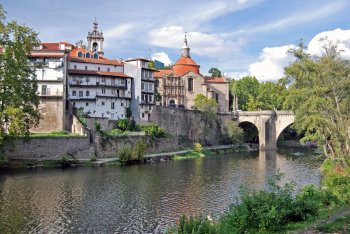
Founded in 1540, this convent features of various eras. In this monument are the main façade, the taste, the filipino side, with its three-story portico, (being the last Baroque, with pediment crowned by the Royal shield). A special attention to the balcony of Kings, five arches Gallery to the left side of the portico, the two cloisters and the interior, with three naves, with all its decoration. Currently, works here the Municipal Museum Amadeo de Souza-Cardoso.
Capela do Senhor dos Passos
- heritage
Rua Mouzinho de Albuquerque, 25
2070-104, Cartaxo
It has a peculiar location, as it is surrounded by two houses on a street close to the main church and the city center. Built in the 16th century, this chapel, of Manueline religious architecture, is attached to a manor house with internal communication through the upper choir. Its most notable features are the quartered coat of arms, the 16th-century portal, the triumphal arch, and the coffered vault. In 1808, it is believed to have sheltered Junot's troops during the French Invasions.
Capela da Misericórdia de Álvaro
- heritage
Praça de Misericórdia
6160-011, Oleiros
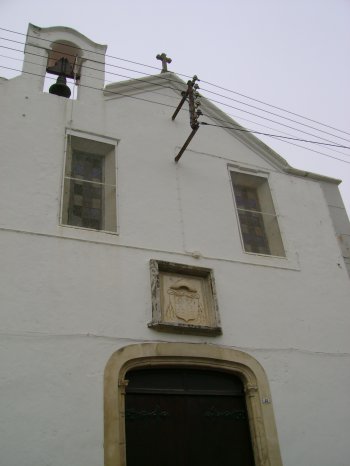
Religious architecture consisting of nave and chancel, separated by a Transept. The interior retains some of the symbolic religious figures, like a dead Christ with the Holy Women and s. John the Evangelist. It stands out, too, the altar in gilded, coffered ceiling and the niches of the main Chapel, where you can see 2 figures carved in stone from Ançã, depicting Joseph of Arimathea and Nicodemus. The ceiling panels saves the Via Crucis.
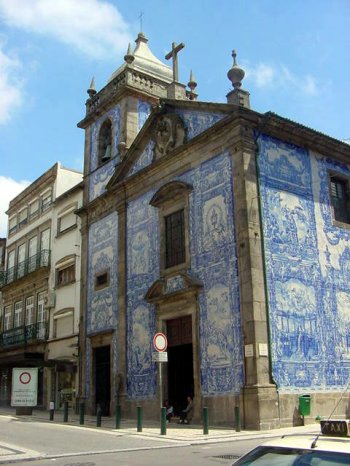
Capela das Almas / Capela de Santa Catarina
- heritage
Rua de Santa Catarina, 426-428
4000-124, Porto
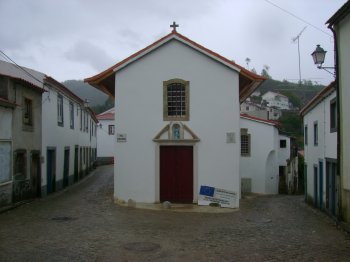
With a great architectonical simplicity, the Almas chapel dates from the beginning of the XVIII, and was repaired and enlarged in 1801. In 1929, the façades were covered with azulejos, by Eduardo Leite, representing the life of São Francisco de Assis and of Santa Catarina. The main façade presents a glass window by the painter Amândio Silva. Inside, the panel painted by Joaquim Rafael, representing the Lord’s Ascension and the image of Nossa Senhora das Almas stand out.