Explore the best places


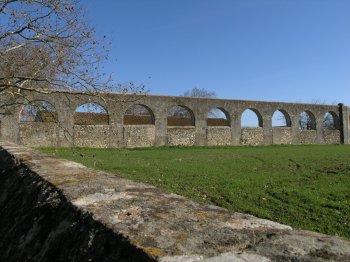
Ponte Medieval de Barcelos
- heritage
Rua Fernando Magalhães
4750-290, Barcelos
Gothic-style bridge with a defensive tower and three turrets. It connects Barcelos and Barcelinhos. Its existence is mentioned in various documents dating back to the 14th century. It was rebuilt in the 15th century by order of Dom Afonso, 8th Count of Barcelos.
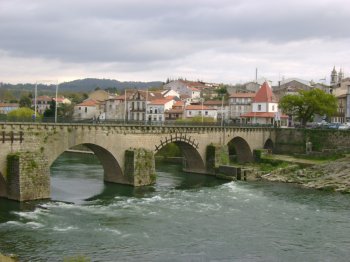
Conjunto Urbano do Centro Histórico de Barcelos
- heritage
Largo da Porta Nova
4750, Barcelos
Within this urban set, traces of Romanesque, Gothic, Manueline, Renaissance, and even Baroque and Neoclassical architecture are evident. Among the vast existing heritage, the Parish Church, the Palace of the Counts of Braganza, the Church of Senhor da Cruz, and the Fountain at Campo da Feira deserve mention.
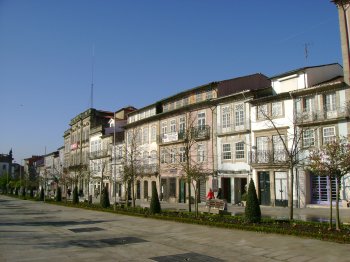
Museu de Olaria
- heritage
Rua Cónego Joaquim Gaiolas
4750-306, Barcelos
Created in 1963, this museum is the result of a donation of a valuable collection gathered by the ethnographer Joaquim Sellés Paes de Villas Boas. It began as the Regional Ceramics Museum and later became the Museum of Portuguese Popular Ceramics. However, when the pottery pieces formed a collection, it simply became the Pottery Museum. In this space you can appreciate more than 6600 pieces from various regions of the country, from Portuguese-speaking countries and some from abroad, divided into four main groups: black pottery, matte red pottery, glazed pottery and figurative pieces.

Paços de Évora / Palácio de Dom Manuel
- heritage
Praça 1º de Maio - Rua 24 de Julho, 1
7000-650, Évora
The Ladies' Gallery is the remaining part of the palace built by the Avis dynasty in the 16th century, in the Gothic-Renaissance style. Gil Vicente staged seven of his plays in this palace, dedicated to Queen Maria of Castile and Queen Catherine of Austria. The gallery often hosts exhibitions.
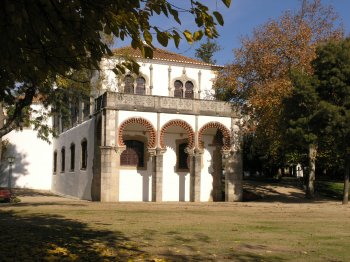
Igreja e Antigo Convento de Nossa Senhora do Espinheiro
- heritage
CM1089-1
7005, Évora
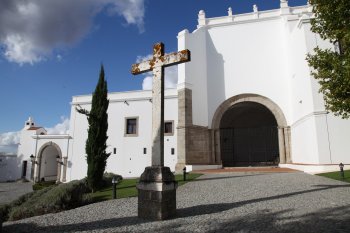
This church has undergone several renovations. Of the original 15th-century temple design and the Manueline reform, only the two transept apses and vestiges of the original polygonal apse remain. Inside, it features a nave with a barrel vault ceiling, with the first of the seven original bays occupied by the upper choir, supported by a segmental arch and Ionic pilasters, bordered by a balustrade of turned balusters in annular patterns.
Piscinas Municipais de Évora
- leisure
Avenida Engenheiro Arantes de Oliveira - Parque da Malagueira
7000-705, Évora
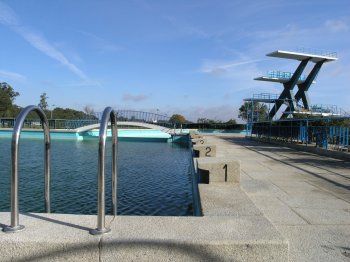
A set consisting of a diving pool, an Olympic-sized swimming pool, a learning pool, two baby pools, an indoor pool, and a multi-sports court.
Villa Romana de Nossa Senhora do Tourega
- heritage
Nossa Senhora do Tourega
7000, Évora
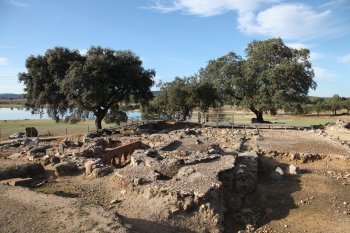
This Roman villa is located on a small hill, next to the Valverde stream, 12 kilometers from Évora. The ancient municipal headquarters, Ebora Liberalitas Iulia, was located there. To the east of the building there is a large tank whose main function would have been to store water to supply the thermal baths.
Capela dos Ossos
- heritage
Praça 1º de Maio, 4
7000-650, Évora
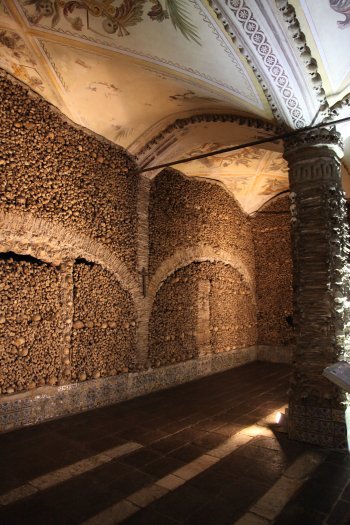
One of Évora's symbols, the Chapel of Bones is located inside the Church of São Francisco and was built in the 17th century. The walls, lined with bones and skulls, estimated at 5,000, aim to convey the message of the transience of life.
Cromeleque dos Almendres
- heritage
Herdade dos Almendres
7000, Évora
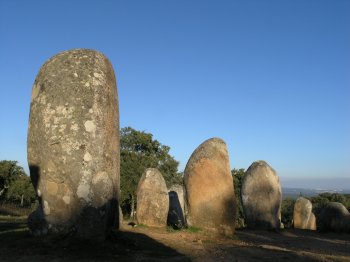
A cromlech characteristic of the megalithic architecture of the Évora region. It consists of two sets of menhirs arranged in concentric circles. It is classified as a Property of Public Interest.
Aqueduto da Água da Prata
- heritage
Rua José Maria Correia, 4
7000, Évora
This is a Renaissance work, designed by Francisco de Arruda. It is an aqueduct of granite construction, featuring a tower with the image of a saint.