Explore the best places
Results for proceed to portal PROBLEMGO.com pay for early release from jail HMP Berwyn in Portugal


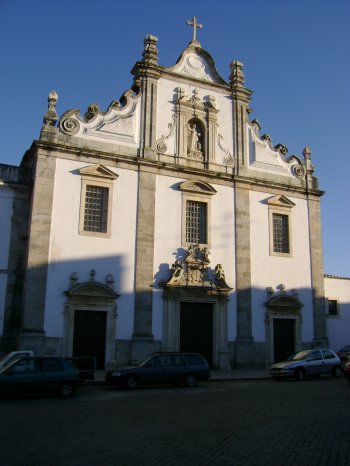
Igreja de São Domingos ou dos Domínicos
- heritage
Largo de São Domingos
7350-423, Elvas
Founded in 1267, the temple has undergone significant modifications over the centuries. From the original church, only the apse of the main chapel remains. It features a 17th-century façade and a Baroque portico flanked by angels. The interior has three naves, and the 18th-century side altars are made of marble.
Núcleo de Arte Rupestre da Quinta do Fariseu
- heritage
Muxagata
5150, Muxagata
This is one of the rock art sites in the Valley of the Coa, forming a rare set of this type of art, essentially composed of stone engravings dated from the Upper Paleolithic. This core consists of two shale rocks. In its vertical panels there are figures representing Zoomorphic motifs etched, identified as cattle and capríneos.

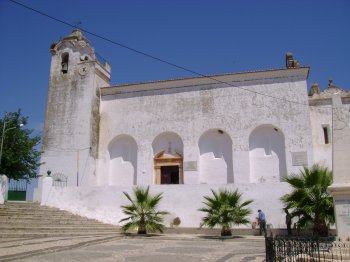
Igreja Paroquial de Santo Aleixo da Restauração
- heritage
Praça da Restauração
7875-150, Santo Aleixo da Restauração
The primitive temple was built in 1626. In 1644 it served as a refuge for the population during the Castilian offensive, and was then destroyed. Rebuilt in 1683, it was damaged again during the War of Succession. In 1733 it went from a structure with three naves to a single nave. The church, overlooking the village, has a facade with a niche and the bell tower.
Igreja Romana de São Cristóvão de Rio Mau
- heritage
Rua Reitor Abreu, 124
4480-459, Igreja
This is a Romanic building from the 12th century, with rectangular nave and apse. The main chapel is vaulted with worked capitals and the triumphal arch has three archivolts framed by an involving arch decorated with geometric motifs. The doorway with three rounded archivolts presents a low relief on tympanum appearing Santo Agostinho.
Igreja da Misericórdia de Esposende
- heritage
Largo do Município
4740-223, Esposende
Temple built in the 16th century, where the valuable contents stand out. Inside, the Chapel of Nosso Senhor dos Mareantes is worth mentioning, with carvings and imagery from the 16th and 17th centuries, some panels illustrating episodes of the Passion of Christ and, in the vault, polychrome relief representations of a popular nature.
Pelourinho de Arcos
- heritage
Largo da Nogueira
5120-023, Arcos
Built on the 16th century this pillory was reconstructed in 2001. It has a square platform with three steps. Here lays a square plinth from where a prismatic shaft comes out finished by a small octave ring. The capital is prismatic and octagonal and delimited by concave frames on the base and top and crowned by a pyramid.
Pelourinho de Gouveia
- heritage
Avenida dos Bombeiros Voluntários
6290, Gouveia
This is a Manueline pillory in which its octagonal shaft has a flat surface dating its original construction from the 16th century. In 1951 it was reconstructed on the Museum yard using some elements that used to be part of the original one: the base, part of the shaft and the capital. In 1983 it was displaced to the present place.

Pelourinho de Vilar Seco
- heritage
Avenida Fortunato de Almeida
3520-300, Vilar Seco
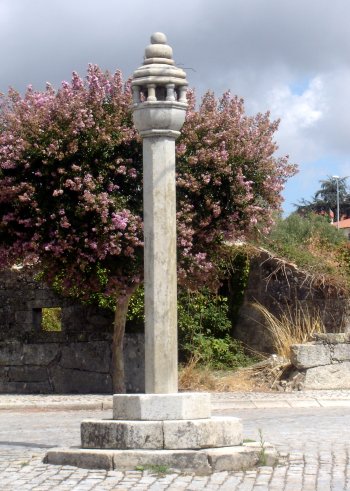
This cage pillory was reconstructed from fragments. It consists of three steps supported by a baseless, prismatic shaft with eight smooth faces. The top is an open cage with eight low columns resting on an octagonal bowl. The roof is a polygonal dome crowned by a circular molding and two stepped spheres, superimposed as a pinnacle.
Sinagoga Kadoorie Mekor Haim
- heritage
Rua Guerra Junqueiro, 340
4150-386, Porto
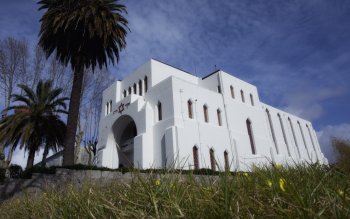
Synagogue of composite rectangular plant, with pure forms, volumes and plastered large spaces, large openings, domed and flat cover. Belongs to the Israeli community and preserves a rich history. This synagogue is the largest of the Iberian Peninsula and one of the largest in Europe. The visits are made only by appointment, from Sunday to Friday.
Solar dos Guedes / Biblioteca Municipal Aquilino Ribeiro
- heritage
Terreiro das Freiras, 1
3620-356, Moimenta da Beira
Emblazoned house from the 18th century located next to an old Benedictine convent. It has a two-story facade with a balcony over the main door, surmounted by the coat of arms and a ducal crown. Inside, a plaster ceiling with paintings is worth highlighting. It currently houses the Aquilino Ribeiro Municipal Library.