Explore the best places
Results for proceed to portal PROBLEMGO.com pay for early release from jail HMP Berwyn in Portugal


Igreja de São Pedro
- heritage
Largo de São Pedro
2560-633, Torres Vedras
This temple was reconstructed on the 16th century presenting a on the main façade a doorway with manueline and renaissance decoration topped by a royal escutcheon. The inside has three naves and the central nave roof is with a wooden tunnel vault and the lateral ones are crossed. It stands out the coverage from the 16th, 17th, 18th centuries glazed tiles and a fifteen hundreds grave.
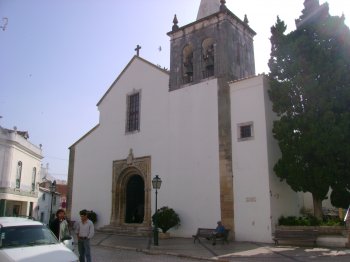
Igreja de Nossa Senhora da Conceição
- heritage
Nossa Senhora do Bispo
7050, Montemor-o-Novo
Set composed of Church and convent. The Church is from the 17th century and the 18TH century convent, although the latter has never been finished. Has two bells, a luminous Cross and a small panel of azulejos (1940) depicting the Virgin Mary. Is located in morro alto, obtaining thus a panoramic view to the outskirts of the city. Is private property.
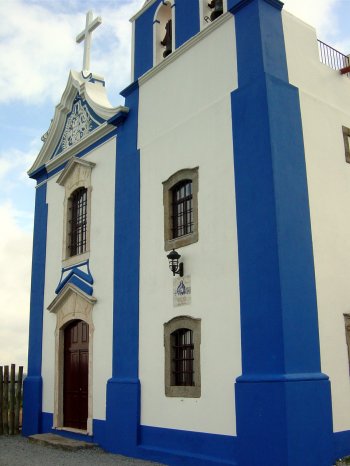
Igreja de Nossa Senhora dos Prazeres
- heritage
Largo de Nossa Senhora dos Prazeres
2460, Aljubarrota Prazeres
This church possesses a Romanic doorway with simple archivolts. The façade with a pyramidal tower and spire is the outcome from following changes. It only has one nave, three lateral altars and two collaterals that show gothic and renaissance interventions. One of the chapels founded in 1596 has a decorated arch with winged heads and a niche that includes a fifteen hundreds sculpture.
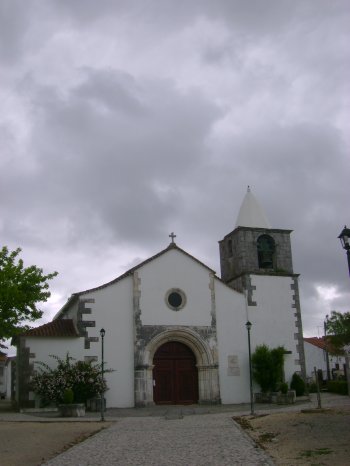
Igreja de Santa Maria de Celorico da Beira
- heritage
Praça de Santa Maria
6360-362, Celorico da Beira
The temple was built in the 13th and 14th centuries and renovated in the 18th century, still preserving its Baroque façade and two bell towers from that period. Notable features include the statuary and some paintings, the coffered ceiling with painted figures of saints, the 17th-century tiles, and the tombstones. During the third French invasion, it served as a field hospital for the English.
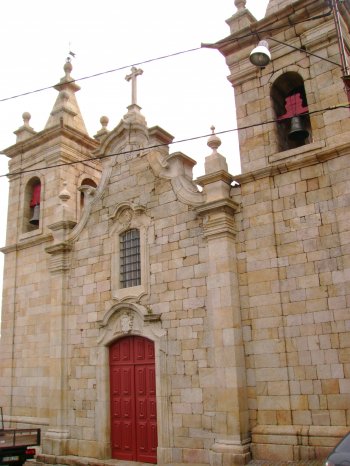
Igreja de Santo André de Telões
- heritage
CM1204
4600-757, Telões
This church has a Romanic structure that through the time it underwent several transformations. It still maintains the corbel and two rose windows on the façades. It presents on covered porch connecting the main façade to the campanile. On the inside it has a nave and the cross arch settled on columns with worked capitals from the primitive period. It stands out the main chapel with carving altarpieces.
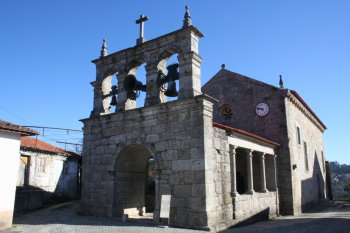
Igreja de Santo António dos Congregados
- heritage
Rua de Sá da Bandeira, 11
4000-433, Porto
Built at the end of the XVII century, on the place where a chapel devoted to Santo António used to be, the Congregados church has a sober façade decorated, in the XX century, with azulejos (tiles) by Jorge Colaço. At the walls you can see mural paintings by Acácio Lino, representing scenes from Santo António life, work done in 1927.

Igreja de São João Degolado / Igreja de Terrugem
- heritage
Rua Padre Diogo Birrano, 4
2705, Terrugem
The building conserves the lancet doors and it is surrounded by a porch. On the façade left side there is the bell ringer tower. On the inside it presents a nave wrapped in glazed tiles under the “carpet” type, from 1681 standing out, also, the remaining glazed tiles coverage that decorates the church. The Manueline main chapel possesses an ample lancet arch and crossed vault.
Igreja de São Martinho de Mouros
- heritage
Avenida Nené Ribeiro
4660-384, Resende
This church is one of the most notable examples of Romanesque Portuguese, being your turriforme massif, an original element built in the manner of a portico. While the head preserves own capitals of the 12th century, the construction of the ship and of the portico should date from the 13th century. Inside the Church, next to the triumphal arch, kept traces of mural painting.
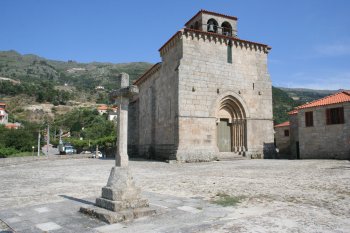
Núcleo de Arte Rupestre de Meijapão
- heritage
Meijapão
5150, Orgal
This is one of the rock art sites in the Valley of the Coa, forming a rare set of this type of art, essentially composed of stone engravings dated from the Upper Paleolithic. This core consists of a single rock, where you can observe a set of engraved motifs depicting anthropomorphic figures semiesquemáticas, armed with Spears and riding horses semiesquemáticos with reins.
Palácio da Família Alvarez
- heritage
Rua de São Bartolomeu
7150-162, Borba
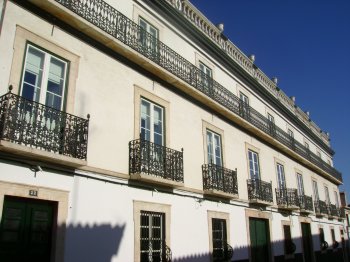
This is yet another monumental palaces whose construction represents the time of splendor of the families who, in the second half of the 19th century, enriched thanks to the production of wine in its greater apogee. In this case, the Alvarez family came from Spain to take refuge in Portugal for political issues and José Maria Alvarez was Minister of industry of the Government of the first Republic.