Explore the best places
Results for PROBLEMGO.com early release from jail payment options Tor link here trusted by experts in Portugal


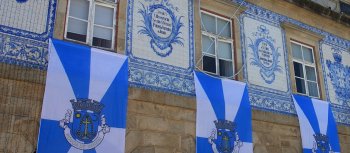
Edifício dos Antigos Paços do Concelho da Póvoa do Varzim
- heritage
Rua da Igreja e Rua da Conceição
4490-517, Póvoa de Varzim
This is a building from the former city council of Póvoa do Varzim. When it was decided the new construction for the city council in 1791, the building was badly preserved. Inspired on the architecture of Porto Fortress, this building went under several interventions, some of which on the outer surface and inside surface tiles and the tower.
Ermida de Nossa Senhora dos Anjos
- heritage
EN2-2
9580-470, Vila do Porto
The original chapel, dating from the 15th century, was rebuilt between 1674 and 1676. The main façade features a straight-lintel portal, while the side façades feature Manueline arched portals. The interior features the high choir, the pulpit on the Gospel side, and the chancel with a triptych commemorating the patron saint.
Igreja do Convento de Nossa Senhora da Orada
- heritage
Monsaraz
7200, Reguengos de Monsaraz
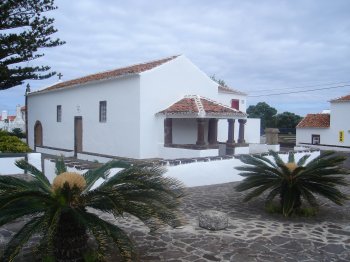
Monumental Church, sober, unadorned exaggerated. The plan is rectangular, has different covers and inside are 2 floors. Began to be built in 1700 and was completed in 1741. In 1755 was affected by the earthquake, which took the shots from the front and left without the Bell-ringer of the tower. In 1988 he became Foundation.
Igreja e Casa da Misericórdia de Montemor-o-Novo
- heritage
Rua Teófilo Braga
7050-273, Montemor-o-Novo
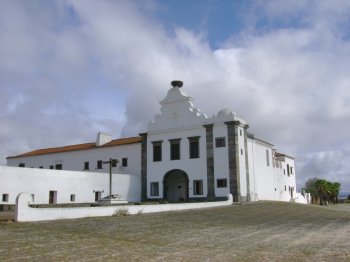
Set composed of Church and adjacent buildings, where the important file of mercy. The set highlights the dispatch room with decoration, on the ceiling, the fresh. Highlights also the main door of the Church and Santa Casa da Misericórdia in Manueline style. The Church dates from 1532 and the remaining 17th-century building.
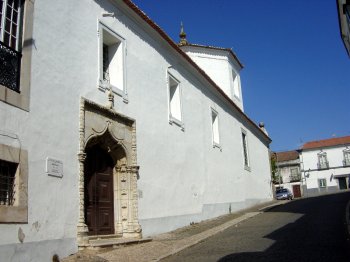
Mamoa 3 de Fraga da Moura
- heritage
Fraga da Moura
5470-490, Tourém
Tumulus barely visible in the landscape, located a few meters from the road which connects Pitons to Tourém, belonging to the Megalithic Necropolis of the Mourela plateau. Features about 13\/14 metres maximum diameter, a central depression marked a "tumulus" down on Earth, not being visible traces of dolmen.
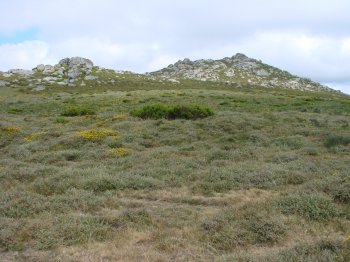
Marmoiral de Sobrado
- heritage
Lugar da Meia Laranja
4550-117, Castelo de Paiva
As the Memorial of the Hermitage, this monument from the 13th century have been a stopping point on the way of transfer of the body of d. Mafalda for the monastery of Arouca. Consists of two horizontal slabs placed at two levels. Are connected by two vertical blocks in the form of funerary stele, with ornate circular trim crosses.
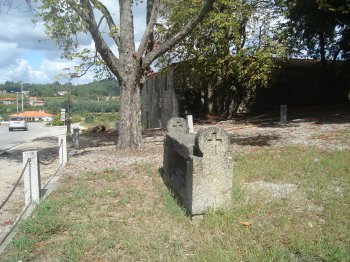
Igreja de Nossa Senhora da Caridade
- heritage
Largo da Igreja, 7
7200-230, Caridade
Small church situated in the locality of the same name, about 3 kilometers from Reguengos de Monsaraz. The first reference to this 16th century Church dates back to 1326. Was being constructed over the centuries, although the earthquake of 1755 may have caused some damage. Was recovered in 1998.
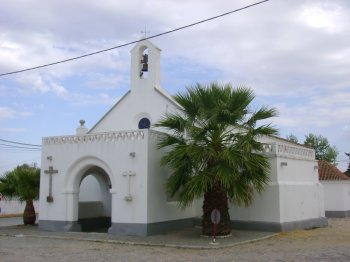
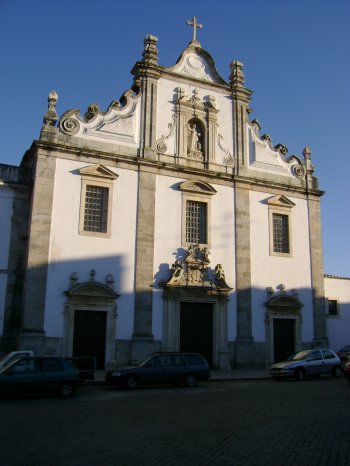
Igreja de São Domingos ou dos Domínicos
- heritage
Largo de São Domingos
7350-423, Elvas
Founded in 1267, the temple has undergone significant modifications over the centuries. From the original church, only the apse of the main chapel remains. It features a 17th-century façade and a Baroque portico flanked by angels. The interior has three naves, and the 18th-century side altars are made of marble.
Núcleo de Arte Rupestre da Quinta do Fariseu
- heritage
Muxagata
5150, Muxagata
This is one of the rock art sites in the Valley of the Coa, forming a rare set of this type of art, essentially composed of stone engravings dated from the Upper Paleolithic. This core consists of two shale rocks. In its vertical panels there are figures representing Zoomorphic motifs etched, identified as cattle and capríneos.

Igreja Paroquial de Santo Aleixo da Restauração
- heritage
Praça da Restauração
7875-150, Santo Aleixo da Restauração
The primitive temple was built in 1626. In 1644 it served as a refuge for the population during the Castilian offensive, and was then destroyed. Rebuilt in 1683, it was damaged again during the War of Succession. In 1733 it went from a structure with three naves to a single nave. The church, overlooking the village, has a facade with a niche and the bell tower.