Explore the best places
Results for browse now PROBLEMGO.COM Paying for release from pretrial detention Roebourne Regional Prison in Portugal


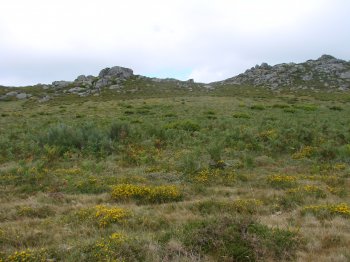
Mamoa 4 de Fraga da Moura
- heritage
EM513 - Fraga da Moura
5470-490, Tourém
Tumulus barely visible in the landscape, located a few meters from the road which connects Pitons to Tourém, belonging to the Megalithic Necropolis of the Mourela plateau. Presents some 12 meters in maximum diameter, a central depression accentuated and a "tumulus" almost shallow, traces of dolmen, including what appears to be a mainstay.
Igreja de Nossa Senhora da Assunção / Igreja Matriz de Lavre
- heritage
Largo da Igreja
7050-467, Lavre
It was built in the 13th century, having been destroyed by the earthquake of 1755. In the eighteenth century became the rise showing longitudinal plant centralizante composed by horizontal articulation of the nave, transept, projecting rectangular chancel, vestry and attachments. It is surrounded by botaréus of masonry, being the front, at an angle. The baptistery is from the 16th century.
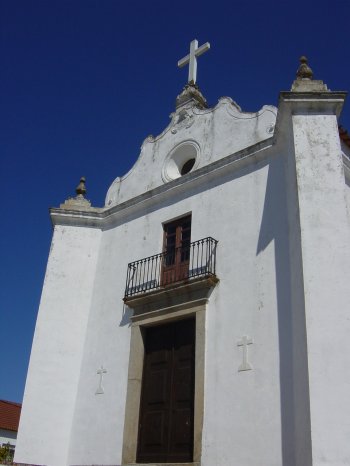
Igreja de Nossa Senhora da Conceição
- heritage
Rossio da Vila de Monforte
7450, Monforte
Church with buttresses topped by pinnacles and the entire top is battlemented. On the main façade, the portico, topped by an oculus, has a round arch, supported on pilasters and with a triangular pediment. Inside it has a single nave, covered by a barrel vault, decorated with tempera paintings. The walls are covered with "standard" tiles from the 17th century.
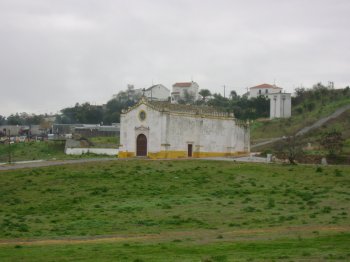
Igreja de Orada
- heritage
Largo da Igreja
7150-308, Orada
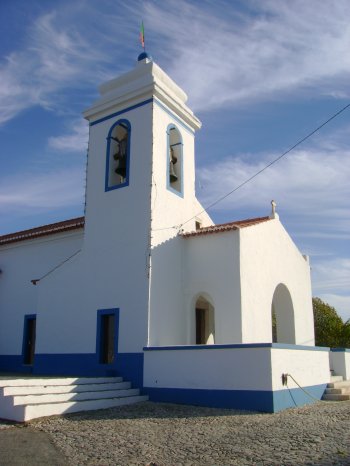
Church of white facade and with fine shot in blue, with three arches on the porch, which was founded by d. Nuno Álvares Pereira who have prayed before the battle of Atoleiros, from which it emerged victorious. Outside one can see a tile Panel built by poet borbense Azinhal Abelho.
Igreja de Santiago Maior
- heritage
Rua de Santiago
7200-175, Reguengos de Monsaraz
Its construction dates back to the 18th century, but there are references to this church from the 13th century. Was successively expanded to such an extent that the monument primitive disappeared, although traces remain of josefino period. In the 20th century its state of degradation was ruinous, but in 1987 began to be rebuilt and today is also a diversified cultural space.
Paiol da Fortaleza de Valença
- heritage
Largo do Bom Jesus - Campo de Marte
4930-685, Valença
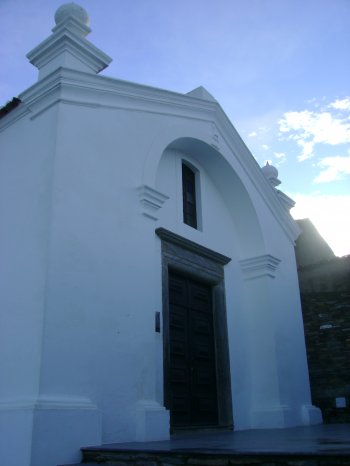
The building of the Armory is one of the most important architectural elements of the fortress of Valença and was built at the beginning of the 20th century. XVIII. is the only architectural testimony from a wide range of military buildings that once existed in the southern part of the Valencian fortification. The Magazine consists of two vaulted rooms, enshrined by large walls.
Igreja Paroquial de Santa Marinha
- heritage
Largo Santa Marinha
4400-012, Vila Nova de Gaia
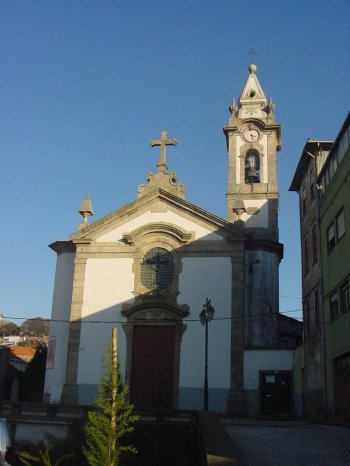
This is a church from the 1500s that was completely rebuilt during the 18th century. Planned by Nasoni, it features a sober construction with the portal ended by an outstanding arch. The façade is sided by a bell tower. The south tower has a belfry that was added on the second half of the 19th century. Worthy of notice are the lateral doors of the main chapel.
Palácio e Quinta do Ramalhão / Paço Real do Ramalhão
- heritage
EN249
2710, São Pedro de Sintra
Inside the building, it is worthy to mention the Main Room, the dining room from the ends of the 18th century and painted in frescoes by Pillement. The Queen D. Carlota Joaquina was incarcerated here after refusing to swear loyalty to the 1822 Constitution. Presently it has the São José College belonging to the Portuguese Dominican Sisters.
Paço de Melo
- heritage
Avenida Brigadeiro Beja Neves
6290-121, Gouveia
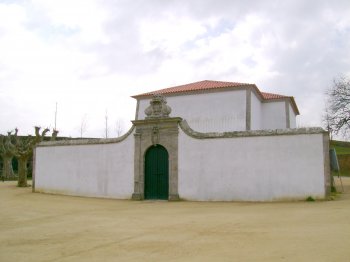
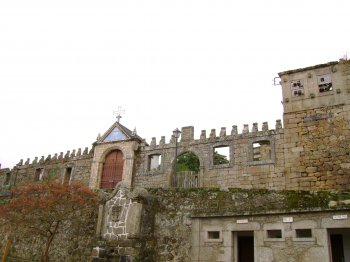
Set of ruins of a Baroque building dating from the 13th century, with an L-shaped plan. Reference should be made to the 16th-century crenelated fence, which forms the front of the former Palace, with various heraldic symbols, the tower with a granite spire and the palace structures. The interior is collapsed, in very bad condition.
Paço dos Távoras
- heritage
Praça do Município
5370-288, Mirandela
A 17th-century palace with three sections: a two-story central section and two single-story side sections. The stonework on the doors and windows is particularly noteworthy. Inside, a tile panel dating from 1956 depicts the city's coat of arms stands out. Currently, it houses the Mirandela Town Hall.