Explore the best places
Results for PROBLEMGO.COM cuánto cuesta sobornar a un agente de aduanas para que pase la mercancía in Portugal


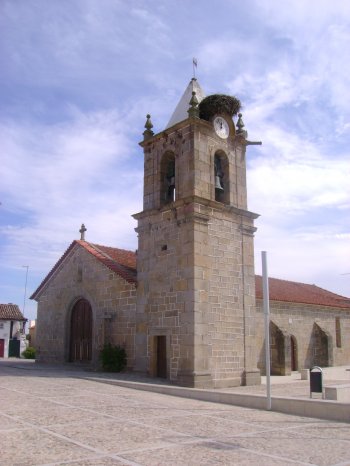
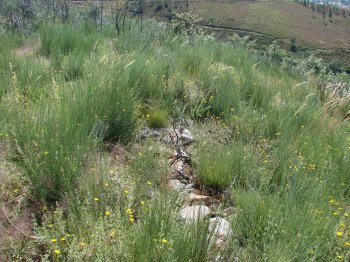
Castro de Valongo
- heritage
Ladrugães
5470-392, Reigoso
Small town located on the right bank of the ribeira de Valongo, which serves as a natural landmark to delimit the parishes of Reigoso and the Village bridge. The most obvious vestiges are the system of fortifications, comprising a moat and three lines of walls. The first line of wall encircles the upper stronghold, causing a broad platform where if there are some remains of buildings. The second, near the previous one, is well visible and enhanced by a third, in half-moon. West defense is complemented by a wide and deep moat excavated in outcrop.
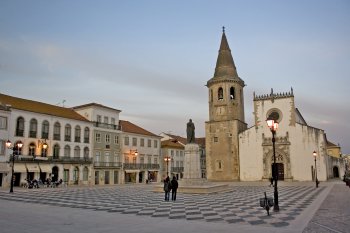
Centro Histórico de Tomar
- heritage
Rua Pé da Costa de Baixo
2300, Tomar
City closely linked to the Templars and the Order of Christ. When they arrived to Portugal, they spread castles across different domains, but Tomar was the center of the territory. After the castle, they built the "Charola" of Convento de Cristo, considered the most beautiful and well-preserved religious building of the Templars in Europe. Bathed by the River Nabão, Tomar has one of the historic centers in Portugal with the highest number of monuments, with emphasis on the churches of São João Baptista and Santa Maria dos Olivais and the Old Synagogue.
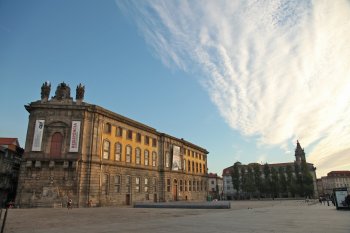
Cadeia e Tribunal da Relação do Porto / Centro Português de Fotografia
- heritage
Largo Amor de Perdição
4050-008, Porto
Contemporaneous of the emblematic and neighbour Clérigos Tower, this building of the XVIII century was, for many years, a prison. On its dungeons were men like the Duque da Terceira (a noble), Zé do Telhado (the portuguese version of Robin wood) e Camilo Castelo Branco (XIX century writer), who wrote there one of the most famous romances, “Amor de Perdição”. The main façade divides in three floors, having a central body slightly salient, on which the entrance portal is.
Casa do Seminário de Gralhas
- heritage
Rua Central, 51
5470-160, Montalegre
Granite Manor House located in the village of Rooks, at the foot of the Serra do Larouco. Dating from the 18TH century, more precisely of 1780, this House once belonged and hosted illustrious Barrosões, as the Priest João Álvares de Moura. Later it was transformed into agricultural House and, in 2002, it was classified as Municipal interest Property. He currently works as a unit of Rural tourism, with three double rooms and three suites, library, patio, Garden, Boardwalk, threshing floor, meeting room and an interesting Sundial in granite.
Capela de Santo António do Telheiro
- heritage
Largo de Santo António do Telheiro
4465, São Mamede de Infesta
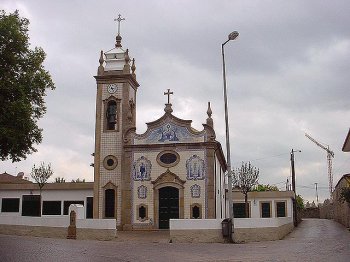
A neoclassicist chapel, dating back to the 18th century, with a longitudinal plan and the interior decorated with neoclassicist retables. In 1956 the main façade was covered by white and blue tiles. On the left side we can see Saint Anthony and read and inscription that says: "Fábrica do Carvalhinho" (Carvalhinho Factory) and below "Capela de Santo António do Telheiro" (Chapel of Saint Anthony of Telheiro). On the right side we can see an image of Our Lady of Fátima and an inscription that reads: "Restored in the year 1956".
Fábrica de Chá de Porto Formoso
- leisure
ER1-1
9625-421, Porto Formoso
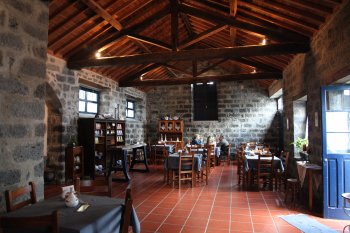
For a long time, São Miguel Island was the only place in Europe where tea was manufactured. Fábrica de Chá Porto Formoso was founded by Amâncio Machado Faria e Maia and operated between the 1920s and the 1980s. Recently, it has been undergoing a recovery process. Visitors can enjoy the estate's vast panoramic gardens, visit the museum space and the tea factory itself. Afterwards, they can relax and taste one of the factory's specialties in the tea room. It has a private park.
Museu Municipal de Vila Franca do Campo
- heritage
Rua Visconde do Botelho
9680-178, Vila Franca do Campo
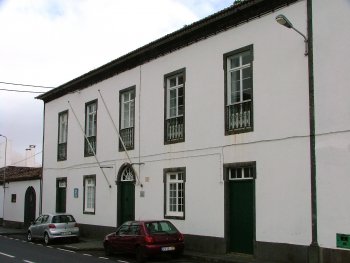
The result of a protocol signed between the City Council and the University of the Azores, this museum is organized with a central space, the Municipal Museum, and three museum centers integrated into the community: the Olaria museum center, the Forno de Loiça and the Fábrica da Luz museum center. Here you can see pottery objects, ceramics, learn about traditional arts and crafts and appreciate a collection of traditional vessels from the Azores. It also works as a research center in the areas of Archaeology, Ethnography and History.
Museu do Vinho do Porto
- heritage
Rua da Reboleira, 33-37
4050-492, Porto
Located at the Cais Novo Warehouses, where the wines of the Companhia Geral de Agricultura das Vinhas do Alto Douro used to be stored, this is a building that was constructed by the family Pinto da Cunha Saavedra in the 1700s. This space shows the privileged location of Oporto, as a commercial outpost, and relates mostly to the Port wine, the transportations, mainly along the Douro river, and the ways of life that were generated from those activities, namely with th coming of several foreign colonies. It has several programs for specific audiences.

A Casa do Ouvidor
- hotels
Estrada Regional, 22
9940-312, São Roque do Pico
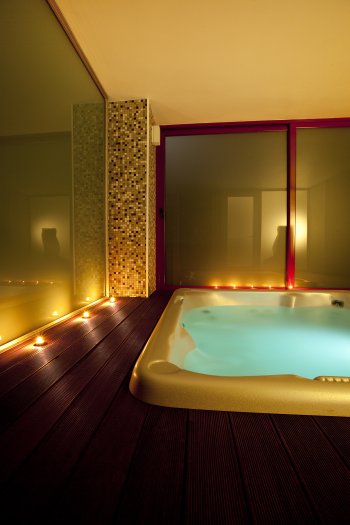
The Casa do Ouvidor is the result of the reconstruction of an 18th century house adapted for Rural tourism in Casa de Campo. Composed of three independent units of accommodation type T2, is equipped with everything needed for an enjoyable stay, providing moments of full rest. Have garden, pool and jacuzzi integrated in a landscape of exception. Wherever you are in Pico Island, all you have to do is take the Regional Road St. Roch-Mercy and 21.8 km arrives at the House of Ouvidor.
Igreja Matriz de Vilar Formoso
- heritage
Largo da Igreja
6355-264, Vilar Formoso
It is assumed that this church was built in the 13th century or 14TH CENTURY, by the Templars. Inserted in the center of the first urban core of this parish, the Igreja Matriz de Vilar Formoso retains elements of its original building. It consists of nave, chancel, vestry and Chapel located near. The chancel has Mudejar ceiling of "alfarge" style, painted; the main altarpiece is in gilt and Mannerist structure, although, in the attic, to be visible to transition to the national style, dressing room and painted side panels. The font is the primitive.