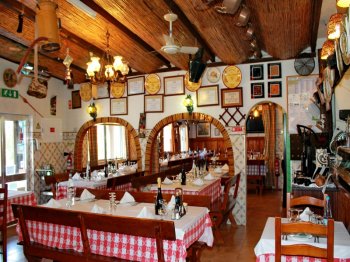
Explore the best places
Results for Vila Praia de Âncora in Portugal


Casa da Ti Lucinda
- hotels
Rua Cal de Gorão, 44
3130-527, Soure
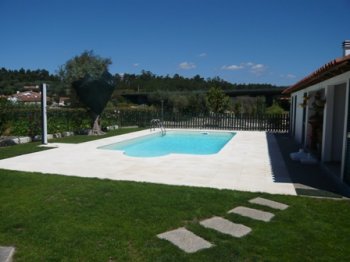
Located between the mountains and the sea, this small rural tourism unit is part of a small farm agriculture, has three rooms with double bed, living room, dining room, fireplace, kitchen, two bathrooms, attractive decor, classic and comfortable furnishings. It also has parking, thermodynamic solar heating, wood-burning oven, barbecue, garden and swimming pool. Here you will find everything you need for a few relaxing days, including the possibility of walking, cycling, fishing in rivers and Ourão Anços, participation in farm work and practice extreme sports in the Sierra de Sicó.
Edifício da Fortaleza de Arronches
- heritage
Largo Serpa Pinto
7340-009, Arronches
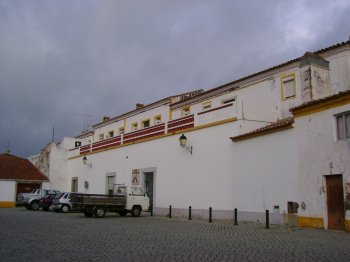
All that remains of the old fortress is the Torre da Cadeia, made of stone, quadrangular in shape, with granite corners, without battlements and small sections of wall. All that remains of the castle are two turrets and former military installations. This area is surrounded by the Bastion of the Castle, with the curtain and moat being visible, the Bastion of Porta de Elvas, the Bastion of Santo António, the Bastion of Espírito Santo, the remains of the Clérigos Bastion and the remains of the middle Bastion of Nossa Senhora da Luz. The fortress was built during the reign of …
Edifício do Governo Civil / Antiga Casa Pia
- heritage
Rua Augusto Rosa
4000-098, Porto
This building was built by the corregedor Francisco de Almada e Mendonça to serve as Casa Pia, the year was 1790. This had various uses such as: prison of recruits and military criminals, secretariats and offices belonging to the garrison at the port, where resided the Bachelors official Royal police guard and North region headquarters (installed on the north side of the building). Years later was converted into headquarters for the distribution of farm, pagadoria, military headquarters, electric telegraph station and civilian Government. In 1875 was demolished the Puerta del Sol and the building was extended to the West. Is …
Maria da Fonte - 150 Anos da Revolução
- heritage
Praça Engenheiro Armando Rodrigues
4830-520, Póvoa de Lanhoso
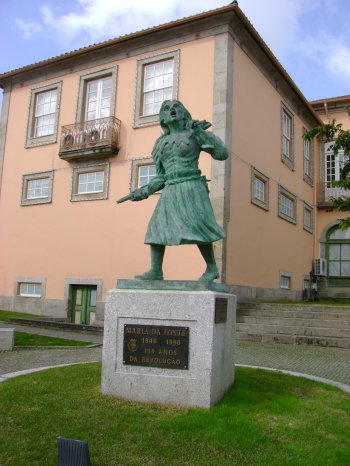
Maria da Fonte, or revolution of the Minho, is the name given to a popular revolt that occurred in the spring of 1846 against the cartista Government presided by António Bernardo da Costa Cabral, due to new military recruitment laws, fiscal alterations and the prohibition to carry out burials inside churches. The revolt began in Póvoa de Lanhoso and quickly spread from the North of the country. A woman of the people named Maria, a native of the parish of Fonte Arcada, has started this riot therefore became known by the nickname of Maria da Fonte. The Government of Cabral …
Muralhas da Praça de Almeida
- heritage
EN340
6350, Almeida
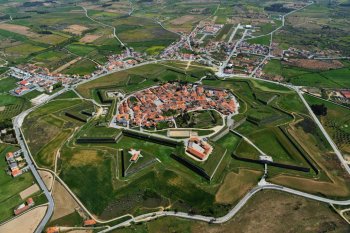
The Praça-Forte de Almeida, built during the 17th century, is the main ex-libris of the walled town. From an aerial view, it is possible to accurately identify a huge 12-pointed star surrounding its well-preserved walls, a National Monument since 1910. In Praça-Forte, several historical battles took place, given its proximity to the Spanish border, and here takes place recreations that usually attract a lot of public. The largest recreates the famous explosion of 1810, during the French invasions. Take a good look at the Double Doors of Santo António and São Francisco.
Sapeão Antigo/ Castro de Antigo de Sarraquinhos
- heritage
Antigo de Sarraquinhos
5470-462, Sarraquinhos
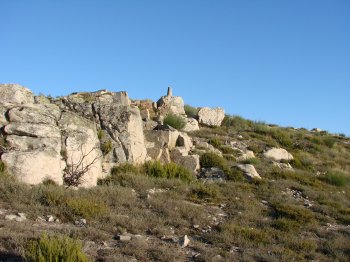
Small hillock located in the highest village of Serraquinhos old, existing in highest part a geodetic framework. He is believed to have been a village whose stone of construction was later reused to build the village's oldest homes, considering the closeness and the fact that the stone was already crafted. Is visible the walls surrounding the castro, in total overthrow, of which only the rocks more girls. All over the Hill are still fond stones. The West side, there is a wide platform, supported by the wall, as well as on this side there is the highest concentration of stone. …
Quinta do Guadiana
- food & drink
Sítio do Lavajinho - Castro Marim Golfe & Country Club
8950-190, Castro Marim
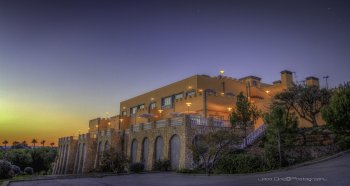
O Quinta do Guadiana localiza-se no primeiro piso do Clubhouse do Castro Marim Golfe & Country Club. Na ementa deste restaurante destacam-se vários pratos regionais com forte ligação ao mar e à serra. A fabulosa vista do Clubhouse abrange o Oceânico Atlântico a sul e o rio Guadiana a este, sempre com o relvado verde do campo de golfe presente. Neste restaurante também se organizam casamentos, batizados e serviços para grupos e festas especiais.
3 Pipos
- food & drink
Rua do Santo Amaro, 966
3460-479, Tondela
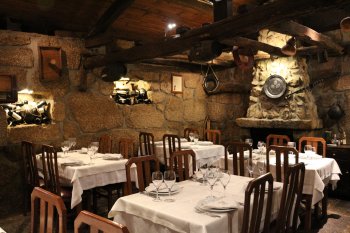
Here, you are welcomed with sympathy and open arms, a task shared by António Miranda and João Cavaleiro. Regardless of the choices, two guarantees: the half-portions are plentiful and everything that arrives from the kitchen (since 1992) has the hand of Maria de Jesus Miranda. Fried octopus with migas and house goat can be "simple" dishes of the day. Among the specialties are three codfish dishes: à Lagareiro, with cornbread à 3 Pipos and with cornbread à Beirã. In terms of meats, the highlight is the Rib Rice in Wine and Garlic, served in black clay from Molelos (a short …
A Bicicleta
- food & drink
Avenida José Malhoa, 1
1099-051, Lisboa
Situado no Hotel Novotel Lisboa, este é um restaurante com um design vintage moderno, acolhedor e cool, onde as bicicletas e as plantas aromáticas complementam o cenário. A decoração segue as novas tendências, com um espaço para conviver em diversos momentos, seja num jantar com amigos ou num copo com colegas, ao final do dia. O conceito de open space e capacidade para 60 pessoas, com mesas partilhadas, é outra das apostas, para envolver os clientes.

Adega do Albertino
- food & drink
Rua Júlio de Sousa, 7
2500-312, Caldas da Rainha
Who enters the restaurant Adega do Albertino realizes that is within an ancient wine cellar, a consequence of the own name of bench seats and of the divisions separated by arcades. Once seated, the difficulty in choosing begins at the entrances. Are the goodies that come from the hands of the Cook Maria de Fatima: DOH of cod with shrimp, octopus in tile, spare ribs with wine, honey and almonds, the mixed mirandesas and meat roast lamb in the oven. "Something I'm not sure what" is one of the desserts of the House, as well as PEAR drunk in bed …