Explore the best places
Results for Forte in Portugal


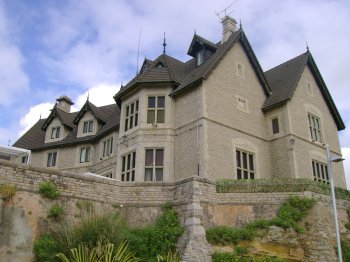
Palácio do Duque de Palmela
- heritage
Alameda Duquesa de Palmela
2750-335, Cascais
The palace, built on the site of the former Fort of Our Lady of the Conception, was acquired in 1868 by the Dukes of Palmela with the intention of constructing a summer residence there. The project is by the English architect Thomas Henry Wyatt. This building, of English revivalist architecture, is clad in stonework. On the main façade, above the door, the Coat of Arms of the Duchess of Palmela's family can be seen.
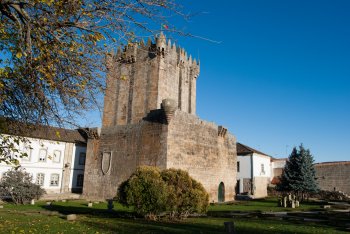
Castelo de Chaves
- heritage
Praça de Camões, 14
5400-517, Chaves
Built by Dom Dinis, this castle was of great strategic-military importance in the defense of northern Portugal. The two forts, both built during the Restoration Wars, form quadrilaterals reinforced at the angles by bulwarks. Currently, remains of military walls are preserved. From the construction of the Dom Dinis era, only the keep, which houses the Military History Nucleus, remains.
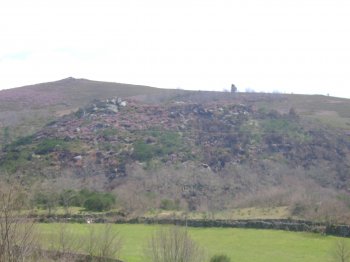
Castro de Gestosa
- heritage
Gestosa
5460-414, Gestosa
The Castro da Gestosa is deployed on a spur overlooking the village, near the road ER311. Is one of the most important forts of the County, is classified as a Property in the public interest, which stands out for its complex defensive system: has three lines of walls, still well preserved, braces, double moats and polygonal stones embedded. On the upper deck are traces of circular dwellings.
Cidadela de Cascais
- heritage
Cascais
2750, Cascais
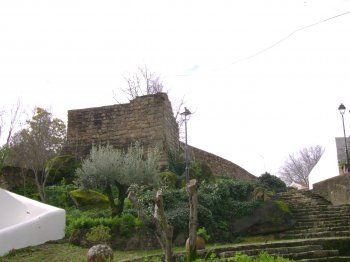
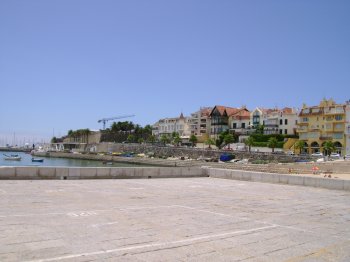
The set of the Citadel of Cascais includes the Forte de Nossa Senhora da Luz, the Torre de Santo António de Cascais and fortified everywhere between the tip of the Salmodo and Clube Naval de Cascais. Had the Defense function of this part of the coast, access point to the capital. Currently, it is here the summer residence of the President of the Republic, the Municipal Museum of Cascais, the Anti-aircraft Artillery instruction Center and the coast and the Naval Radio of Cascais.
Monte de São Bartolomeu
- heritage
Nazaré
2450, Nazaré
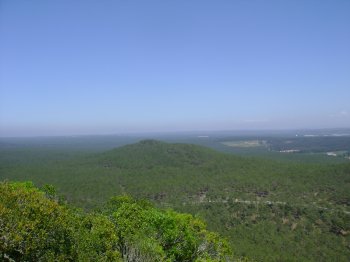
The spontaneous vegetation, manifested in an extensive pine forest, is one of the attractions of this protected site. However, the interest in the place does not end there. At its summit, the chapel of São Bartolomeu, or São Brás, is a place of pilgrimage. Moreover, the legend of the image of Our Lady of Nazaré, intimately linked to the site, is well known in these parts. From an archaeological point of view, the prehistoric hill fort located here is a particularly interesting element to be discovered amidst the landscape.
Castelo de Lamego
- heritage
Rua do Castelo
5100-128, Lamego
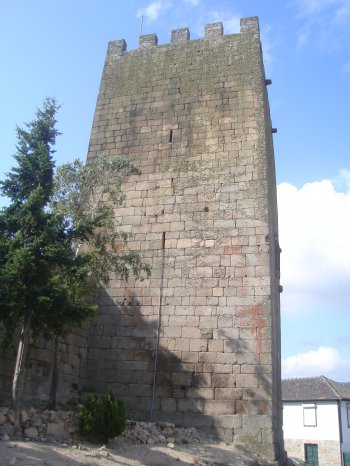
This castle was built on an ancient Lusitanian hill fort that the Romans fortified. The original castle's highlights include the citadel with its keep, the vaulted cistern, and two gates, the Porta dos Fogos and the Porta do Sol, which define the wall structure of the old town. The cistern is located near a section of the wall. During the 16th and 17th centuries, the tower served as the town hall. Noteworthy, in the Porta do Sol, is an 18th-century window dated 1642.
Castelo de Belmonte
- heritage
Largo do Castelo
6250-067, Belmonte
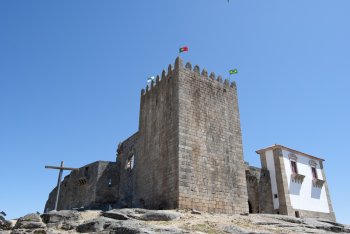
As we approach the entrance to the village, we come across its Castle, classified as a National Monument. Pedro Álvares Cabral, the most famous inhabitant of Belmonte, was born here. The fort was built in the 13th century, at the behest of D. Afonso III, and in 1466 it became the residence of the Cabral family. One of its most emblematic points is the Manueline-style window from the 16th century, from where you can enjoy a breathtaking view of the valleys and mountains that surround the village.
Castelo de Elvas
- heritage
Rua da Parada do Castelo
7350-082, Elvas
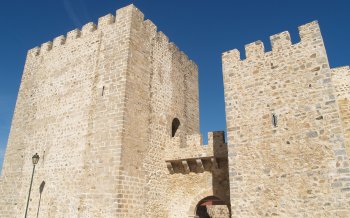
The parade ground is shaped like an irregular polygon. The citadel is entered through three main gates: the Porta da Esquina, the Porta de Olivença, and the Porta de S. Vicente. The keep was rebuilt in 1488. Above the entrance door are the coat of arms of King John, surmounted by a tile panel depicting the Holy Family. The original fortifications were reportedly built on a hill fort, later Romanized. After the reconquest of Elvas from the Moors, King Sancho II ordered the fortification to be rebuilt. It underwent modifications during the reigns of King Dinis, King John II, and …
Castelo de Castelo de Vide
- heritage
Rua Direita do Castelo
7320-151, Castelo de Vide
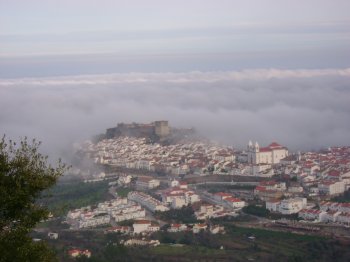
The medieval fortress, comprising the castle and the urban enclosure, was built during the reign of King Dinis and completed during the reign of Alfonso IV in 1327. In the 17th century, expansion work was carried out on the fortification surrounding the town up to the current garden boundary. The São Lourenço Fort was built in the 18th century, when the bastioned fortification was extended with the Loureiros Wall. The fortress was remarkably large, surrounding almost the entire town. Located on one of the highest hills in the Serra de São Mamede, it served as a watchtower on one of …
Castelo do Crato (vestígios) / Castelo da Azinheira
- heritage
Largo do Castelo, 1
7430-127, Crato
Four-pointed bastioned fortress with medieval-type walls and a redan. The ruins of the medieval fortification are visible in the central area, isolated walls or with structures attached to them for the construction of artillery platforms. As examples of ruins of modern fortification, there are four redan with a guardhouse and traces of chimneys and niches. The fort's door mantains the portcullises of the drawbridge, and there is a cistern right in the center of the fortification. Some sections of the wall and from the barbican are monumentally beautiful. The first fortress dates back to the reign of King Afonso Henriques, …