Explore the best places
Results for castelo in Portugal


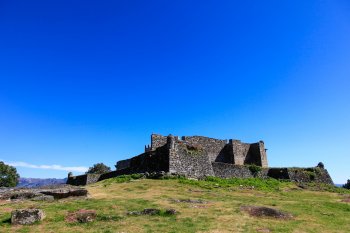
Castelo de Elvas
- heritage
Rua da Parada do Castelo
7350-082, Elvas
The parade ground is shaped like an irregular polygon. The citadel is entered through three main gates: the Porta da Esquina, the Porta de Olivença, and the Porta de S. Vicente. The keep was rebuilt in 1488. Above the entrance door are the coat of arms of King John, surmounted by a tile panel depicting the Holy Family. The original fortifications were reportedly built on a hill fort, later Romanized. After the reconquest of Elvas from the Moors, King Sancho II ordered the fortification to be rebuilt. It underwent modifications during the reigns of King Dinis, King John II, and …
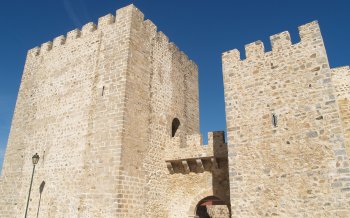
Castelo de Estremoz
- heritage
Largo de Dom Diniz
7100-555, Estremoz
A pentagonal castle with a wall reinforced by turreted buttresses. The walled enclosure of the ancient citadel rises around the 27-meter-high white marble keep. Beyond the medieval wall, the town boasts a vast expanse of Restoration War-era fortifications, with crenellated towers and two round-arched gates. Near one of the gates is a rectangular tower in the Roman-Gothic style with several windows. The royal palace, restored by King João V, is located on the outskirts of the castle.
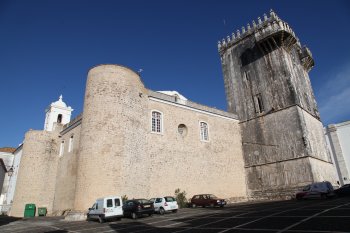
Castelo de Folgosinho
- heritage
Rua do Castelo
6290-081, Gouveia
Revival castle rebuilt in the 20th century, with a circular plan, where traces of medieval fortification remain. The primitive castle was probably built in the 12th century, during the reign of Ling Sancho I, on the ruins of a Lusitanian castro. In the first half of the 20th century, the current castle was built on the initiative of the Parish Council of Folgosinho.
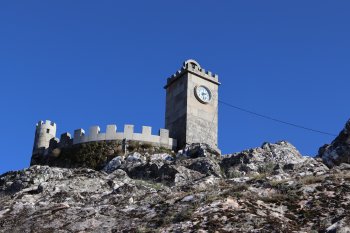
Castelo de Fontalva
- heritage
EN243-1
7350-431, Santa Eulália
The castle, as we know it today, is a modern renovation of fortifications that, according to archaeological studies, date back to the Castro culture. Of the original design, only the quadrangular wall remains, protected at the corners by turrets. During the reign of King João III, it was converted into a sunny, castellated residence.
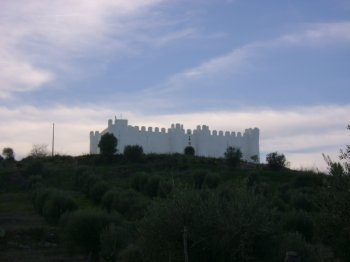
Castelo de Germanelo
- heritage
Rabaçal
3230, Rabaçal
Castle built by King Afonso Henriques in the 12th century. Together with the castles of Penela, Soure and Lousã, it was part of the Alfonsian network of fortifications to defend the lands of Coimbra.
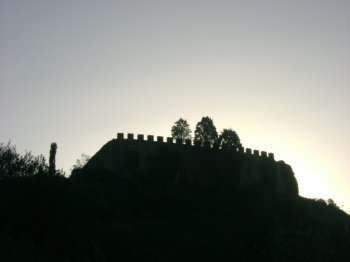
Castelo de Gouveia
- heritage
Gouveia
5350, Alfândega da Fé
Traces of two waists of walls that once surrounded the highest point of the village. Originated probably in the iron age, having been later returned in the high middle ages.
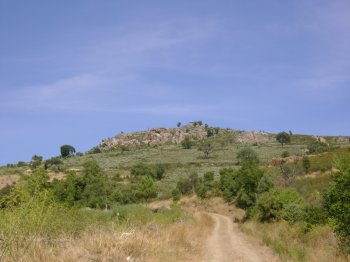
Castelo de Guimarães
- heritage
Rua Conde Dom Henrique
4800-412, Guimarães
In the 10th century, the Countess Mumadona had a monastery built on her estate. The fact that it was the target of intense Moorish attacks meant that a fortress was built to protect the monks and the Christian community. Thus was born the Castle of Guimarães. After the birth of Condado Portucalense, it became inhabited by Count Dom Henrique and Dona Teresa, who had major works carried out on this monument. Between the 13th and 15th century, several kings contributed to the improvement of the Castle, after which it was abandoned, finding itself very degraded until the 20th century, when …
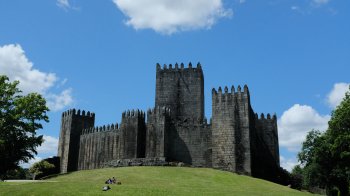
Castelo de Lamego
- heritage
Rua do Castelo
5100-128, Lamego
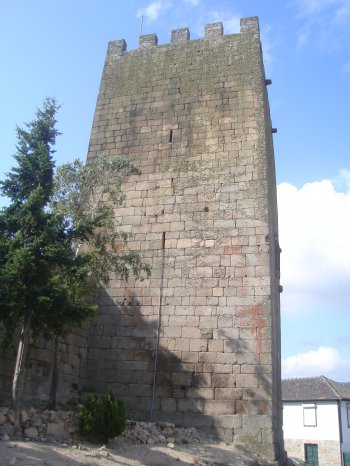
This castle was built on an ancient Lusitanian hill fort that the Romans fortified. The original castle's highlights include the citadel with its keep, the vaulted cistern, and two gates, the Porta dos Fogos and the Porta do Sol, which define the wall structure of the old town. The cistern is located near a section of the wall. During the 16th and 17th centuries, the tower served as the town hall. Noteworthy, in the Porta do Sol, is an 18th-century window dated 1642.
Castelo de Leiria
- heritage
Largo de São Pedro
2400-235, Leiria
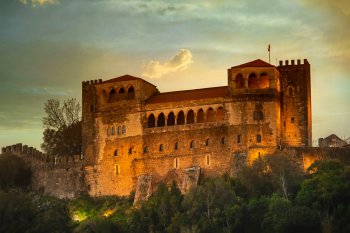
What remains of the castle, for the most part, dates back to the reconstruction carried out by Dom João I. At the top of the hill stands the superb keep that seems to be from the Dionysian foundation; of the royal palace there are occasional Gothic twin windows and pieces of arches from the galleries.
Castelo de Lindoso
- heritage
Lugar de Castelo
4980-451, Lindoso
Built during the reign of King Afonso III, it sits atop a rocky hillock next to the town. The castle, shaped like a quadrangular star, has a keep approximately 15 meters high. Several semi-spherical domes still remain at the corners of the wall, with slits for the use of firearms. It houses a museum inside.