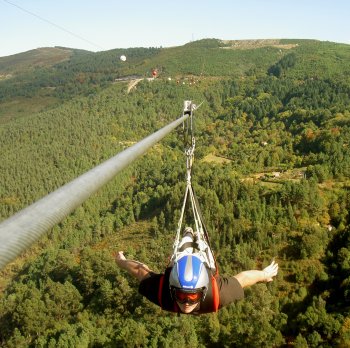
Explore the best places


Miradouro de Santa Bárbara
- country
- leisure
Alvite
4870, Ribeira de Pena
Viewpoint with great views of the surrounding mountains.
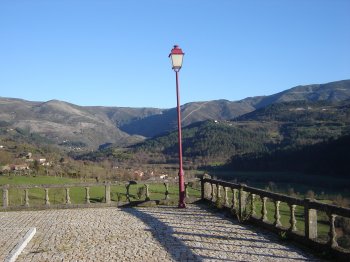
Miradouro de Cerva
- country
- leisure
EN313
4870-116, Ribeira de Pena
Viewpoint with great views of the surrounding area.
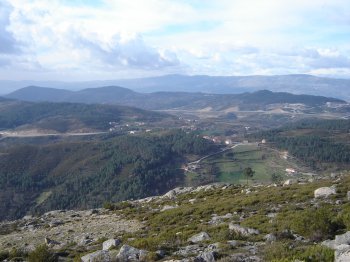
Miradouro de Cabriz
- country
- leisure
Cabriz
4870, Ribeira de Pena
A space where one can enjoy views of the surrounding mountains.
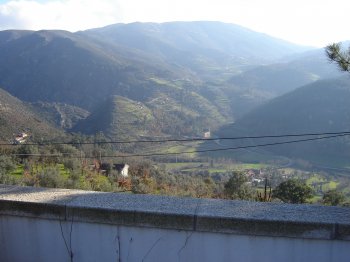
Praia do Lugar das Casas Novas
- beach
Praia do Lugar das Casas Novas
4870, Cerva
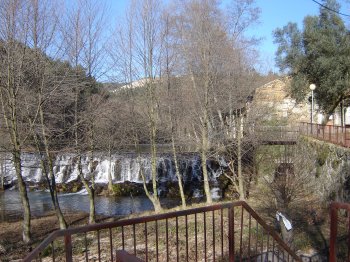
A beach located on the banks of the Louredo River. It has a bar, sanitary facilities with a changing room, a reflecting pool, and a weir.
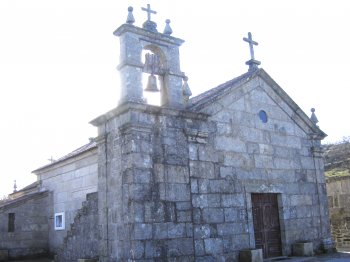
Igreja Matriz de Alvadia / Igreja de Santa Cruz
- heritage
Rua da Igreja
4870-011, Igreja
A church of Mannerist architecture with a nave and chancel. Inside, it features a high choir, holy water fonts, moldings flanking the portals, a baptistery with a semicircular arch on the Gospel side, a niche with a semicircular arch on the opposite side, with late Baroque carved side altarpieces and a revivalist carved main altarpiece.
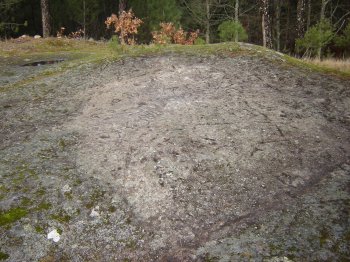
Estação de Arte Rupestre de Lamelas
- heritage
Lamelas
4870-106, Lamelas
The site consists of a large granite outcrop whose upper part is covered with rock carvings, specifically simple and complex geometric figures such as concentric circles, lines, "reticulations," and pecking. A semi-excavated, oval-shaped pit is also noteworthy at the eastern end of the carved block.
Parque Ambiental de Ribeira de Pena
- country
- leisure
Lugar do Bucheiro
4870, Ribeira de Pena
The Ribeira de Pena Environmental Park, located in Bucheiro, was inaugurated in 2007, following a strategy of preserving, promoting, and disseminating the municipality's natural and environmental resources. Its 18 hectares are home to diverse species of fauna and flora, and include wooded areas with native species (maritime pine, oak, birch, poplar, ash, chestnut...), as well as two interpretation centers and an environmental workshop. Visitors can also purchase aromatic and medicinal plants for a symbolic price. The characteristic flax cultivation has a dedicated space in the park, with a cultivation area open to visitors. There are also pedestrian and equestrian trails …
Roteiro Camiliano
- heritage
Ribeira de Pena
4870-159, Ribeira de Pena
A cultural itinerary encompassing locations visited by the writer Camilo Castelo Branco in Ribeira de Pena or mentioned by him in his literary works. There are seven: the Ponte de Cavês (mentioned in the short story "Como ela o amava" and the play "O Lobisomem"), the village of Friúme (where the writer lived between 1840 and 1842), the Parish Church of Salvador (where he married Joaquina Pereira de França at the age of 16 in 1841), the Chapel of Our Lady of Guia (mentioned in the work "Doze Casamentos Felizes"), the Chapel of Granja Velha (where the writer learned from …
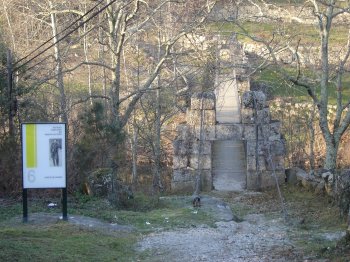
Ponte de Arame
- heritage
Rua da Veiga
4870-253, Santo Aleixo de Além-Tâmega
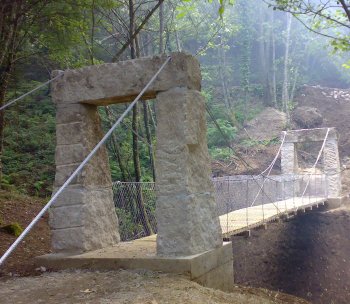
The construction of this bridge dates from 1913, with the goal of establishing communication between the parishes of Salvador and de Santo Aleixo de Além-Tâmega. The bridge is suspended by wires twisted about themselves, more than a hundred over almost 20 meters, which rely on granite pillars on each side of the bridge. The wooden walkway has 1.5 meters wide, and forms the basis of the side walls of the structure, also on wire rope. The story goes that the idea for this construction was priest Álvaro Pimenta, deprived of cod for their Christmas dinner in the rigor of winter, …
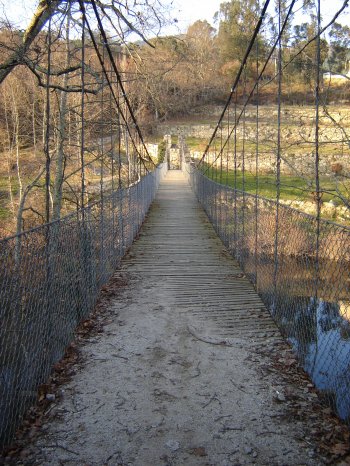
Pena Aventura Park
- leisure
Rua do Complexo Turístico de Lamelas, 2
4870-129, Ribeira de Pena
Pena Aventura Park is a space dedicated to recreational and adventure sports, covering an area of 16 hectares and, in addition to many activities, featuring a bar, panoramic restaurant, commercial area, bungalows, and parking. One of the values of the enterprise is the conservation of nature; therefore, it has designated smoking areas throughout the park, as well as ensuring the safety and well-being of everyone, with a team of professional monitors distributed across the various activities and areas of the park.