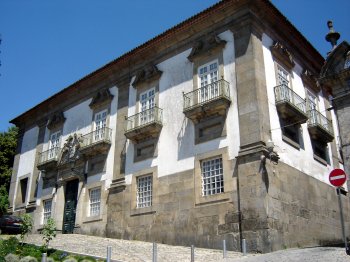
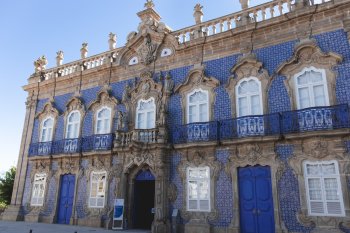
The Reriz Palace was built in the 18th century and is characterized by its grated facades and stonework. The main facade features four rectangular windows, dominated by broken pediments and protected by grated balconies. The manor's gardens are located in the inner courtyard.
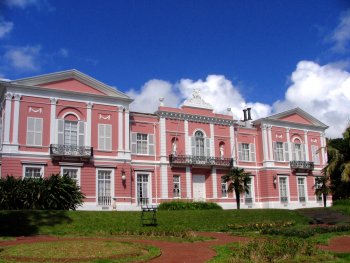
A building dating from the 19th century, currently the official residence of the Regional President of the Azores. Inside, highlights include some 18th and 19th-century furniture and a collection of tiles from old churches on the island.
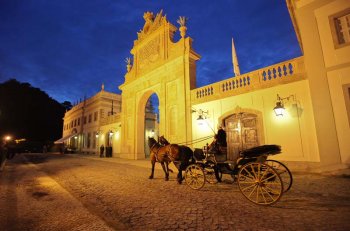
The building consists of two sections with sober and well-proportioned lines, already revealing a neoclassical taste. In 1802, the two lateral sections were linked by a large triumphal arch, commemorating the visit of D. João IV. Inside, the highlight is a room with mural paintings, of the Pillement type, and the Convention Room, with maritime and mythological scenes. It was transformed into a hotel, but maintains its original design.
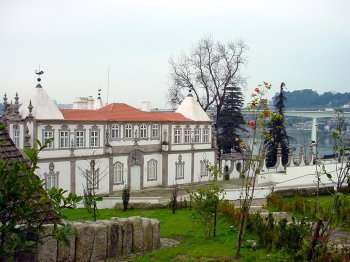
18th century palace built by family Rebelo de Andrade. After going through the hands of several owners, this property was acquired by the City Council in 1979. Since 2007 which is under restoration and is expected to be inaugurated here some municipal galleries, a restaurant and a bookstore.
Ex-libris of the Campanhã area and one of the Nicolau Nasoni’s important inheritances, the Freixo Palace was built in 1742. In this huge exemplar of the Portuguese Civil Baroque, the east front staircase and the Italian gardens stand out.
This is one of the most representative exemplars of the baroque taste, on the height of its exuberance. It was built in 1754 and the “rocaille” front as well as the staircase stand out.