Explore the best places
Results for go now MAKEMUR.com how much to bail my brother out in Portugal


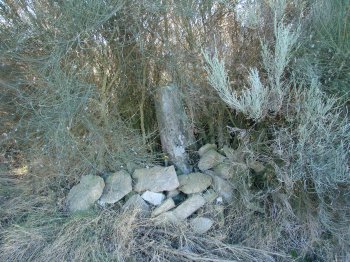
Mamoa de Tojais
- heritage
Pindo
5470-057, Cervos
About 100 yards West of the Via Romana, in the Pindus, near a bifurcation of paths and already in private land is what remains of megalithic monument. It is not possible to determine its dimensions, since it was nearly destroyed by agricultural work. However, retains a mainstay stuck about 0.90 metres high and 0.67 meters wide, which was later reused as a divisive landmark properties. On one side they seem to bring out two crosses recorded. A property wall, about 50 meters, lies what appears to be another mainstay, decorated with a Sun motif. Nearby this monument there's record of …
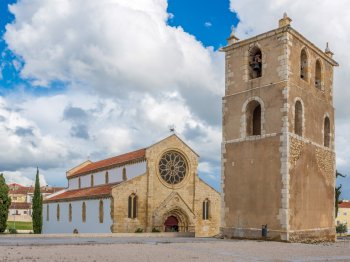
Igreja de Santa Maria dos Olivais
- heritage
Rua Aquiles de Mota Lima
2300-455, Tomar
Temple from the 13th century. It appears to have been part of a Convent of Benedicts, still in the period when the town was called Nabância. It was rebuilt by D. Gualdim Pais, in 1160, who made it the pantheon of the Templars in Portugal. Its structure presents transition elements from the Romanesque to the Gothic style, the latter being predominant. A large rose window stands out on the façade, surmounting the portico with four archivolts. Over the rose window you can see the mark of the Knights Templar, the Signum Salomonis. In the sacristy, with a 16th century vault, …
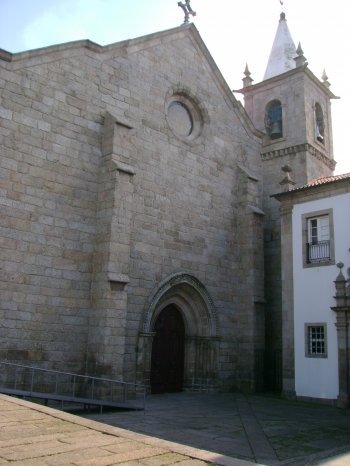
Igreja de São Francisco
- heritage
Rua Padre Gaspar Roriz, 124
4810-429, Guimarães
This Gothic church suffered several transformations, particularly on the 18th century. On the main chapel it is possible to stand out the most remarkable Joanine altarpiece from the city, the golden carved altarpieces, and pelmets in Rocaille style and glazed tiles panels showing scenes from Christ life. It is alo worthy to mention the sacristy with panelled ceiling, the two floors cloister, the Gothic chapter room from the 16th century, and the central fountain dating from the 18th century. The classification includes the part composed by the apse chapels and the apse, the cloister and the baroque building from Ordem …
Parque Arqueológico de Tresminas
- heritage
Lugar do Cruzeiro
5450-296, Tresminas
Considered one of the largest mining operations in the Roman world, the Tresminas mine began during the reign of Augustus (27 BC – 14 AD) and continued until the time of Septimius Severus. It was likely carried out using an open-pit system, creating the large craters that still bear witness to the human effort in the landscape today. A complex system of galleries was opened across the vein for the transport, disposal, and treatment of the minerals, which remains open to visitors. The Archaeological Park has viewpoints overlooking the mining pits, interpretive panels, signposted walking trails, and picnic areas. Visits …
Solar da Loureira
- heritage
Estrada de São Pedro
4920-065, Gondarém
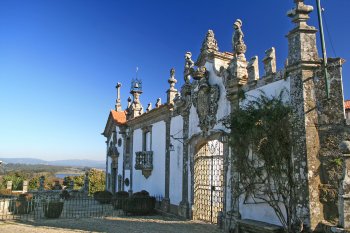
Stately residence dating from the 18TH century, an interesting architectural ensemble of Baroque style, typically Minho. This beautiful palatial residence, although privately owned, well worth a visit, at least to the outside. Through the iron gate you can see the pretty walled courtyard where stands out the upper gallery alpendrada. In the courtyard in front of the gate there is a fountain lined with tiles and the original Sundial. off the patio, front part to the majestic gate, deserves attention an interesting Baroque fountain, transferred from the Franciscan convent of São Paio of Mount for this site in 1899, and …
Sé Velha de Coimbra
- heritage
Largo da Sé Velha - Rua do Norte, 4
3000-383, Coimbra
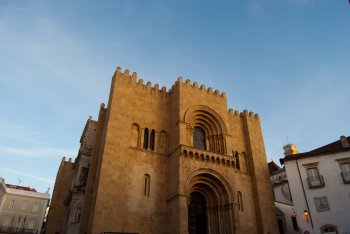
This is one of the most beautiful Portuguese Romanesque monuments, with an external appearance resembling a fortified church. The current construction began in 1162, during the reign of King Afonso Henriques. It served as the Episcopal See until 1772 and subsequently belonged to the Misericórdia (a charitable institution) until 1778. From 1785 to 1816 it was occupied by the Third Order of Saint Francis, and after that date it became the seat of the parish of São Cristóvão. The main façade features a magnificent portal, formed by arches supported by columns with decorated capitals. The 13th-century cloister was the first …
Convento de Cristo
- heritage
Igreja do Castelo Templário
2300-497, Tomar
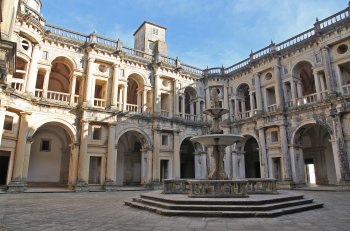
It initially belonged to the Order of the Temple and passed, in the reign of King Dinis, to the Order of Christ. It is one of the main monuments of national architecture, where all the aesthetic stages, from the 12th to the 18th century, are profusely documented. The Cloister of King João III stands out, the main Cloister of the Convent of Christ, considered the most monumental and beautiful work of the Renaissance, carried out by the architect Diogo de Torralva. Also noteworthy are the Cloister of Washings and the Cloister of King Henrique, which date back to the first …
Macieira de Alcoba
- country
- heritage
Macieira de Alcoba
3750-561, Águeda
Macieira de Alcoba is a typical village at about 18 km from the town of Águeda. Located on the high lands of the Caramulo mountain, between the Águeda river and the Alcofra brook, it includes the traditional Urgueira village (just a little more than 10 inhabitants), the highest villag in the parish. It is located on a rock, with just about 150 inhabitants that are mostly small farmers and shepherds. The 17th century mother church, the Urgueira communal oven and the chapel of Our Lady of Fátima satnd out, as well as the Macieira small dam, the Urgueira Park and …
Jardins da Casa da Ínsua
- country
- leisure
Rua Casa da Ínsua
3550, Penalva Do Castelo
Considered one of the prettiest gardens in Portugal, the Gardens of the Casa da Ínsua (House of Ínsua) belong to a manor, the House of Ínsua. Its construction was ordered, in the second half of the 18th century, by Luís de Albuquerque de Mello Pereira e Cáceres, governor and captain general of Mato Grosso, in Brazil. The gardens are remarkable for their extension, their originality and the variety of species. They stand out for the rare tall trees (California sequoias, English pine trees, Australian eucaliptus), some of them approximately 200 years old, and mostly for the wide variety of plants …
Castelo de Castelo de Vide
- heritage
Rua Direita do Castelo
7320-151, Castelo de Vide
The medieval fortress, comprising the castle and the urban enclosure, was built during the reign of King Dinis and completed during the reign of Alfonso IV in 1327. In the 17th century, expansion work was carried out on the fortification surrounding the town up to the current garden boundary. The São Lourenço Fort was built in the 18th century, when the bastioned fortification was extended with the Loureiros Wall. The fortress was remarkably large, surrounding almost the entire town. Located on one of the highest hills in the Serra de São Mamede, it served as a watchtower on one of …