Explore the best places
Results for come on in MAKEMUR.com Looking to pay a clerk to change the court date so I miss it Alabama in Portugal


Carya Tallaya – Casas de Campo
- hotels
Rua do Saco, 6
6320-551, Vale das Éguas
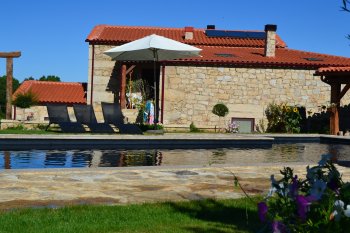
Accommodation unit Carya Tallaya-Villas offers 4 houses (three T2 and T1) so beautiful and seductive how surprising, by contrast with between traditional construction techniques from abroad (granite stone – typical houses of Beira Alta) and sophisticated decor, contemporary and harmonious interior, in a perfect fusion of rustic and modern. The houses are fully equipped, with a fireplace and central heating, kitchenette in self-catering equipped with all utensils and other equipment to cook and dine. The houses are prepared for a stocking of 14 persons (7 rooms with double bed). May be increased by the busload for 8 more people, extra …
Alvito
- country
- heritage
Alvito
7920, Alvito
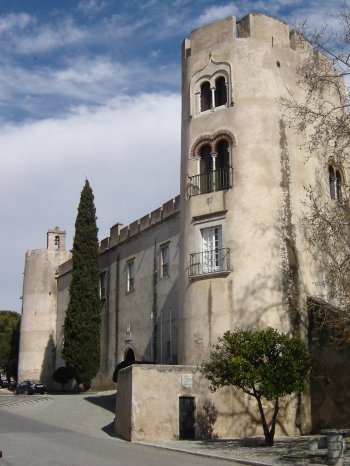
Located on high ground, close to the river and the Odivelas dam, the village of Alvito is one of the most beautiful and oldest in Alentejo. Remains from the Neolithic period have been found and several Roman artefacts were found. Suevi, Visigoths and Muslims also passed through these parts. The architectural heritage is extremely rich. The castle (dating from 1481), the Santa Luzia chapel and the main church are considered national monuments. Also noteworthy are the museum of sacred art, the library, the hermitage of Santa Luzia, the pillory and the Águas dos Peixes manor house. It has an equestrian …
Penaverde
- country
- heritage
Penaverde
3570, Pena Verde
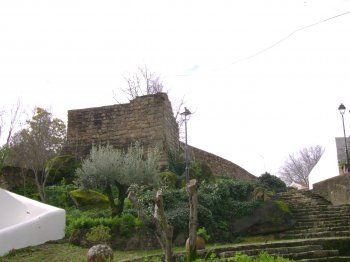
With its origins dating back to the neolithic (there is one cavern of that epoch at São Pedro dos Matos, with two rooms), the oldest parish in the ouncil of Aguiar da Beira has about on thousand inhabitants. It has strong gastronomical traditions (queijo da serra - Estrela mountain cheese -, sausages, cabbages soup and olive oil cake) and craftswork traditions too. Its inhabitants are mostly farmers and cattle raisers. A special note to the pillory (of the 15th century and classed as a public interest construction), the mother church, the castro (a celtic village) of Gralheira, the roman road …
INATEL do Luso
- hotels
Rua Doutor Costa Simões
3050-226, Luso
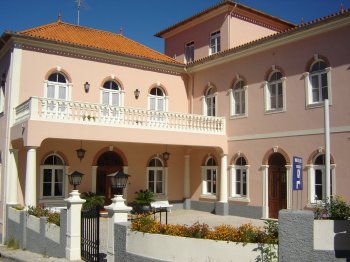
Located in the lush Forest of Buçaco, Inatel of Luso offers a relaxing environment with privileged contact with nature. Luso is a rustic Village linked to the monastery of 1981. Your projection dates back to the late 19th century, when imposed itself as a spa resort and tourism. The famous medicinal waters constitute, together with the Buçaco, one of the attractions of the area and an invitation to reflect, in a green paradise, where you can breathe fresh air at the top of his lungs and Rejuvenator. Stay at Luso is also to meet its people, discover a remarkable historical …
Quinta do Panascal
- leisure
EN222
5120-503, Valença do Douro
Quinta do Panascal's reputation dates back to the 18th century, when wines from the Távora River were considered among the best in Portugal. Fonseca purchased the Quinta in 1978, as the estate had been supplying its grapes to Fonseca for over 20 years. Quinta do Panascal wines have always been an important component in the Fonseca vintage blend. In 1985 the size of the property increased with the acquisition of Quinta do Val dos Muros. The property currently totals 76 hectares of which 44 are in production corresponding to 851 hl of port wine. All grapes are trodden in granite …
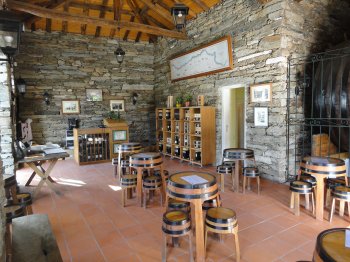
Mosteiro do Salvador de Paço de Sousa
- heritage
Largo do Mosteiro
4560-347, Paço de Sousa
The first references to the monastery date back to 994 in the will of Abbot Randulfo, fleeing a monastery further south during the incursions of Almanzor. Although the original church does not correspond to the current Romanesque temple, its architecture left its mark on the construction that would be erected in the 13th century, thus denoting a transitional style from Romanesque to Gothic. King Henry donated the monastery to the Ribadouro family, from which Egas Moniz came, who, in turn, bequeathed half of his fortune to the monastery to be buried there. The church contains the tomb of Egas Moniz, …
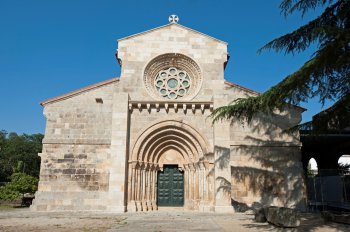
Praça da Batalha
- heritage
Praça da Batalha
4000-101, Porto
According to tradition, the name of the square due to a battle fought between the inhabitants of the port and the Saracens of Al-Mansur, in that the former were defeated and the town razed. This square was also the scene of other historical events. The architectural and monumental level include the old cinema Eagle Douro, the cinema Batalha, the coffee Gold key, the Hotel Empire and the Grande Hotel da Battle. Deserve, too, a watchful eye, the building of the s. João theatre and the old Central station post office, Telegraphs and telephones, coat and dated from the 18th century. …
Aldeia das Madanelas (Vestígios)
- country
- heritage
Salto
5470, Salto
The few dozens South of Chapel of SR. dos Aflitos, in a sheltered, between the ribeira chã de Lamas of Miro and Corga of Hanged remain visible traces of old buildings. Are still evident several houses of rectangular plant and foursquare, in ruins, some of them with more than half a meter tall. Part of the structures were based on granitic outcropping. Access was made by a road coming from North empedrado. The plague is one of the reasons for the abandonment of this site, it is said that part of the inhabitants died and the remaining founded the village …
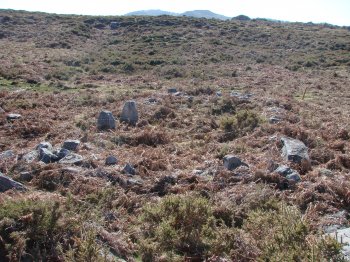
Jardins do Palácio Beau Séjour
- country
- leisure
Estrada de Benfica, 368
1500, Lisboa
The set of the house and garden is one of the most expressive of Portuguese art from the romantic and naturalist period. The gardens, recovered in 1992, English style from the XIX century, have an exotic and romantic atmosphere with a lake and a bandstand. It also has sculptures by Portuguese artists of that time such as Bordalo Pinheiro or Columbano. Dated from 1849, the farm is also called "Quinta do Beau-Séjour". Inside is worthy of notice the decoration at the dinning room made by the brothers of Bordalo Pinheiro, working under the painter Francisco Vilaça. Enjoy the luxurious stucco …
Castelo do Crato (vestígios) / Castelo da Azinheira
- heritage
Largo do Castelo, 1
7430-127, Crato
Four-pointed bastioned fortress with medieval-type walls and a redan. The ruins of the medieval fortification are visible in the central area, isolated walls or with structures attached to them for the construction of artillery platforms. As examples of ruins of modern fortification, there are four redan with a guardhouse and traces of chimneys and niches. The fort's door mantains the portcullises of the drawbridge, and there is a cistern right in the center of the fortification. Some sections of the wall and from the barbican are monumentally beautiful. The first fortress dates back to the reign of King Afonso Henriques, …