Explore the best places
Results for visit main site MAKEMUR.COM Looking to pay the DA to drop assault charges Monroe County Jail in Portugal


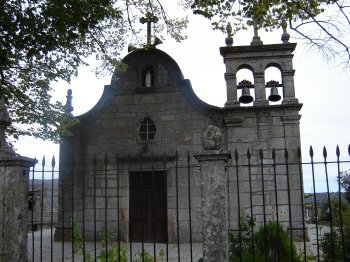
Igreja Matriz de Carapito / Igreja de Nossa Senhora da Purificação
- heritage
Rua da Igreja
3570-100, Carapito
This church, built in medieval times, underwent successive renovations. The facade is in gable clipped, with cone-shaped window and shot false pediment with a niche. In the lateral façades are traces of openings, Windows, doors or graves. Inside, the main altarpiece is a copy of transition, with neoclassical decorative elements but with baroque structure. The internal coverings show neoclassical decorative painting. There are also images of s. Pedro de Verone and some paintings in the side altars.
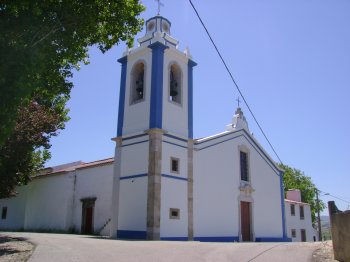
Igreja Matriz de Dois Portos / Igreja de São Pedro
- heritage
Rua da Paz
2565, Dois Portos
This temple was constructed on the 16th century; it possesses three naves divided by round arches and fifteen hundreds columns with Ionic capitals. The wooden roof has in the central roof mate, an important and rare oeuvre. The main chapel has an altarpiece dated from the 17th century and the walls are covered in white, rose and black marble. It stands out the four panels in board with paintings from Diogo de Torres, the carving and the imagery.
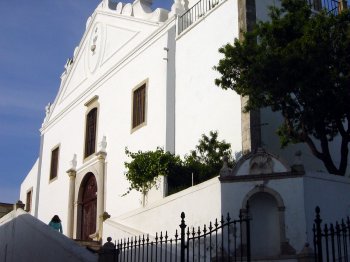
Igreja de São Sebastião
- heritage
Rua Conselheiro Joaquim Machado
8600-682, Lagos
This renaissance temple was constructed during the 14th and 16th centuries above a former chapel and it suffered damages with the 1755 earthquake. It has a simple façade dominated by an imposing bell ringer tower. The lateral door presents two curious sculpted human figures. On the main altar it stands out a monumental image with our Lady of Glory coming from Brasil and for a crucifix from the 16th century that tradition says it was in Alcácer – Quibir battle.
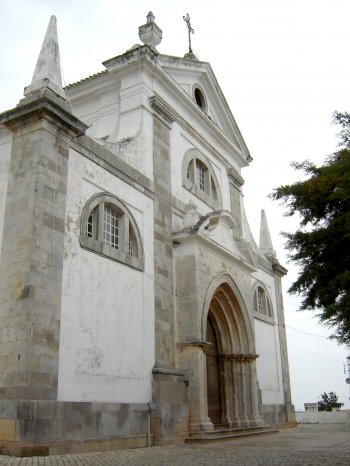
Igreja de Santa Maria do Castelo
- heritage
Calçada de Santa Maria
8800-606, Tavira
13th-century building, rebuilt after the 1755 earthquake. It maintains the Gothic structure and portal. In the main chapel is the tomb of the seven Knights of the Order of Santiago killed by the Moors in an ambush, which legend associates with the conquest of the city. From the collection of sacred art, comprising pieces of goldwork from the 16th and 18th centuries and vestments, a missal stand from the 16th / 17th centuries, from Japan (“nambam” art) deserves special mention.
Igreja de São João Baptista / Igreja Matriz do Cartaxo
- heritage
Largo de São João Baptista
2070-039, Cartaxo
Its patron saint is Saint John the Baptist, and it was built in the 14th century, being rebuilt three centuries later. The tower was demolished by an earthquake in 1909, and inside, it has a single nave, while the wooden ceiling unfolds in three planes. The walls are covered with tiles depicting the life of the patron saint, while the main altar has a gilded altarpiece. It possesses valuable pieces such as a silver chandelier or an image of Our Lady of the Rosary.
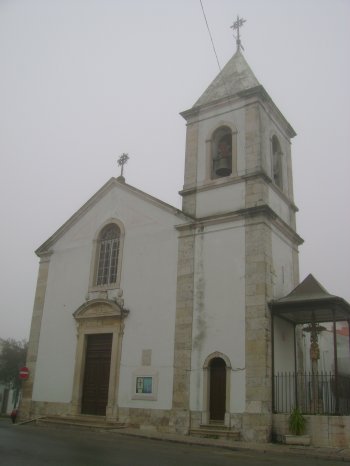
Igreja de São Martinho de Friastelas
- heritage
EN306
4990-630, Barral
This building is composed by one only nave and rectangular main chapel flanked by 2 chapels. The square bell tower presents two levels in which the superior one has only 2 walls with bell ringers crowned by pinnacles on the corners. On the south façade there is a doorway with arch, archivolts above the right foot and flat tympanum, two openings and windows. It preserves Romanic elements from the second half of the 13th century.
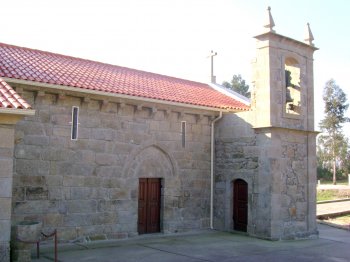
Pisão de Tabuadela
- heritage
Tabuadela
5470-441, Montalegre
It is a wooden device consisting of a hydraulic driving wheel, axle, cigarette packs and the mixer. Although the main purpose of the Piso be to grant a more compact texture to wool cloths, in most cases it is also used to strengthen blankets or quilts with some use and to dye fabric. The process of fulling industry consists in the wash, in pisoamento itself (the cloths are churned up and beaten by the packs, press the warp and weft) and finish (the cloths are put to dry in the Sun).
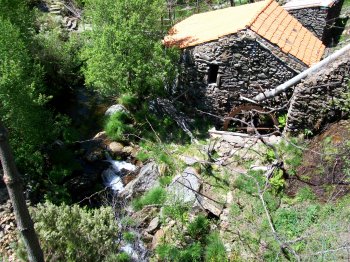
Lima Escape Camping & Glamping
- hotels
Parque de Campismo de Entre Ambos-os-Rios - Lugar da Igreja
4980-312, Ponte da Barca
The campsite Between Both-os-Rios, located in albufeira of Touvedo, is characterized by intense vegetation and afforestation, with lots of shadows, giving campers pleasant moments. Offers Bar, recreation room, among other services, in order to provide ideal conditions for the practice of camping. Its main points of interest are the Roman bridge over the spaghetti incident, the Museum Centre of Between Both-os-Rios, the village of Germil and the Hermitage Museum.
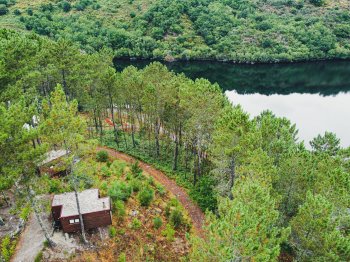
Santuário de Nossa Senhora da Saúde
- heritage
Rua da Amoreira
5060-405, São Lourenço de Ribapinhão
Pilgrimage sanctuary, next to the hot spring. It consists of a chapel, fountain, Casa dos Milagres, cross, bandstands and surrounded by a wooded park. Mannerist chapel with a longitudinal plan consisting of a single nave and chancel, inside with a high choir, built-in confessionals, pulpits, two side chapels with rococo altarpieces and a neoclassical main altarpiece. The cruise is from the 19th century, with a column with a smooth shaft, a square capital and a Latin cross with a sculptural group.
Solar dos Carvalhos
- heritage
Praça da República, 12
3640-222, Sernancelhe
Is a historic manor house built from the ruins of the House where he grew up Marquês de Pombal. A mid 18th century townhouse, situated behind the Chiesa Madre (mother church) of Sernancelhe. Was ordered build by Paulo de Carvalho, uncle of the Marquis of Pombal. Solar architecture is considered a copy which shows a barroquizante trait in some decorative elements. The main façade has crossed a coat of arms.