Explore the best places
Results for MAKEMUR.com subornar o juiz para reduzir a minha pena de prisão in Portugal


Miradouro de Nossa Senhora de Fátima
- country
- leisure
EN504
5120, Tabuaço
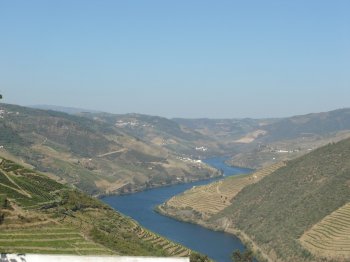
The Nossa Senhora de Fátima Viewpoint is a small garden space with granite benches, some shade trees and a small shrine to the Saint that gives it its name. Close to Valença do Douro, on one of the many curves of the EN504 overlooking the Douro, this viewpoint provides unique views over the terraces of the vineyards and a large expanse of the river's meandering path.
Parque Fonte das Avencas
- country
- leisure
Estrada Serra da Mira
2650-114, Amadora
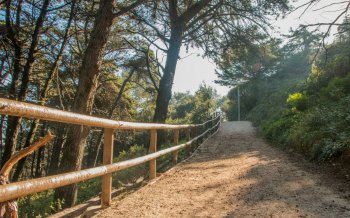
This park, located between Serra da Mira and A-da-Beja, in Mina de Água, covers 4.5 hectares. It has trails for walking or mountain biking, garden benches along the entire terrain and a flatter area for picnics, served by piped water tanks. It also has a children's playground. It is possible to practice outdoor sports and recreational activities.
Castelo da Furna
- heritage
Rua do Castelo Faião
4930-070, Boivão
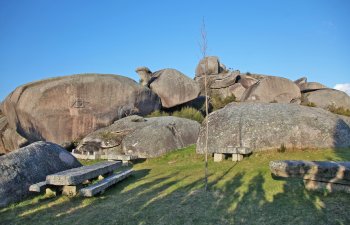
The Château de Fraião constituted a significant example of Romanesque fortress, but not adapted in the Gothic era. Thus, when from the beginning of the 13th century all the regional strategic interest shifted to the line of the river Minho-especially to Valença and Monsoon-was sidelined. Currently, only remains of the Castle a granitic suite, which provides magnificent views of the Minho Valley.
Castelo de Évoramonte
- heritage
Rua da Convenção, 6
7100-314, Estremoz
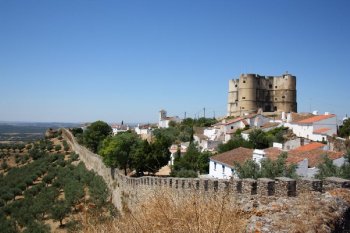
The castle sits atop a steep hill at the western edge of the Ossa mountain range. The original fortification still includes the wall and gates from the reign of King Dinis. Within the walls, the highlight is the Paço de Homnagem (Homage Palace), which, along with the keep, forms a vast, regular quadrilateral. The palace's design is inspired by Italian Renaissance palaces.
Convento de São Francisco / Pousada de Beja
- heritage
Largo Dom Nunes Álvares Pereira
7800-018, Beja
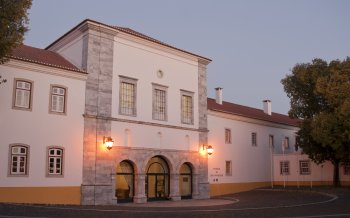
Located outside the city walls, next to the old road that connected Beja to Mértola, it was founded in the 13th century. It underwent profound changes, mainly in the 18th century, which practically gave it its current appearance. The Chapel of the Tombs, the Cistern, the paintings in the Chapter Room, and the Upper Choir are particularly noteworthy. It is currently part of the Pousadas de Portugal network.
Casa dos Freires de Andrade
- heritage
Rua de Dom Hugo, 15
4050-305, Porto
The Freires de Andrade house is placed between the end of the XVII century and the beginning of the XVIII century. It has two floors and it possesses the Coat of Arms from different families such as the Coutinhos, Pereiras, Andrades and Banderias. The house garden, Santa Clara wall and further to the south, Serra do Pilar can be seen through the back house.
Casa e Jardins da Família Barbot / Casa da Cultura de Gaia
- heritage
Avenida da República, 610
4430-189, Vila Nova de Gaia
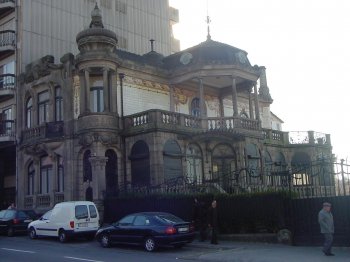
Dated from the beginning of the century, this art nouveau building (single exemplar of this style in Vila Nova de Gaia) presents an original architecture of carved granite, with a glazed tiles decor, railings, stuccos and glass. It has three floors (one of them a basement), being completed with a garden that includes a greenhouse, a small lake, grottos and a turret.
Capela dos Passos da Paixão de Cristo
- heritage
Largo Martins Sarmento, 57
4800-432, Guimarães
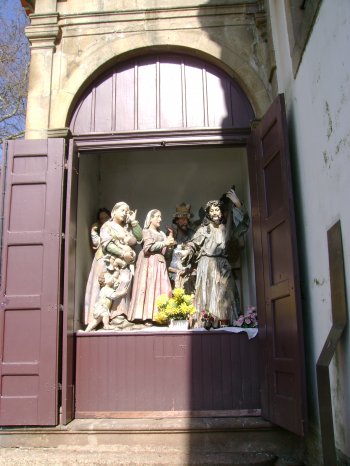
This set of steps, or stations of the religious life, were originally seven when they were built in 1727. However, they were later transferred or removed, leaving only five: Step from Largo do Carmo, Rua de Santa Maria step, Step Largo João Franco, Step of the Senhora da Guia and Step the fair field.
Casa Havaneza
- heritage
Rua Serpa Pinto, 23
2300-592, Tomar
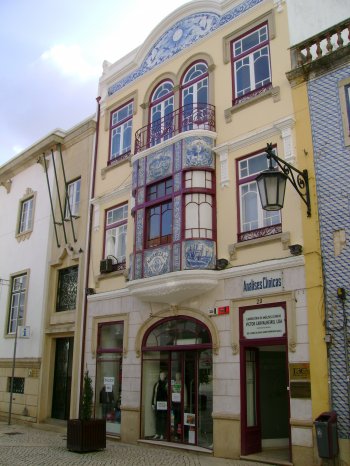
Building with three floors, Art Nouveau style and bourgeois character, with the ground floor destined to trade and the upper floors housing. Has Art Nouveau decorative elements in monochrome tiles (blue and white), depicting the city, representing the Mouchão wheel side and Casa Vieira de Guimarães and a center panel with the representation of the symbol of the order of Christ.
Antigas Portas de Entrada da Cidade
- heritage
Rue de La Costanielha
5210, Miranda do Douro
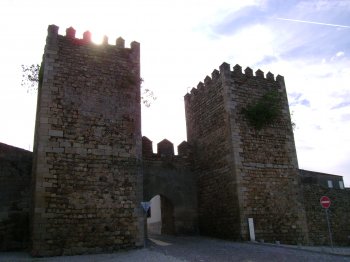
There were four gates of the city, some have already destroyed, but keeping the names of antiquity. It's still the portas de Santo António, located to the Northeast, today enters the city. The Wicket is a small Gothic door, situated to the East, checking in only the pawns. To the Southwest is the fence gate, in good condition and to the North are the doors of Nossa Senhora do Amparo.