Explore the best places
Results for MAKEMUR.COM d Strof vum Kand virum Urtel verkierze loossen in Portugal


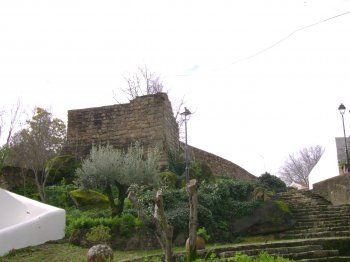
Castelo de Amieira do Tejo
- heritage
Praça Dom Nuno Álvares Pereira
6050-136, Amieira do Tejo
Castle ordered to be built by Álvaro Gonçalves Pereira in 1350, having undergone several modifications in the following centuries. This castle was part of a vast line of fortresses and watchtowers that protected the much attacked banks of the Tagus River. Its architectural design indicates a function aimed at the protection and refuge of populations. Made of dressed granite, it is an important symbol of Portuguese military architecture of the time. Located in a privileged location, on the banks of the Tagus River, it has a good panoramic view. It is shaped like a quadrilateral and is flanked by four …
Estátua da Rotunda do Marquês de Pombal
- heritage
Praça Marquês de Pombal
1250-096, Lisboa
Inaugurada em 1934, esta estátua ergue-se na mítica Praça do Marquês de Pombal, também conhecida por Rotunda do Marquês de Pombal. O Monumento a Sebastião José de Carvalho e Melo, Marquês de Pombal e ministro do Rei D. José teve origem nas comemorações evocativas do centenário da sua morte, em 1882. Os autores foram os arquitetos Adães Bermudes e António do Couto e os escultores Simões e Leopoldo de Almeida e Francisco Santos.

Igreja de Santa Maria dos Olivais
- heritage
Rua Aquiles de Mota Lima
2300-455, Tomar
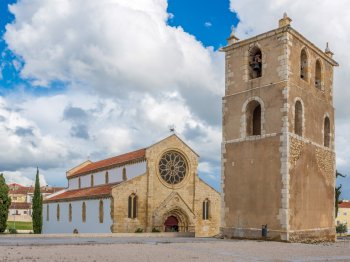
Temple from the 13th century. It appears to have been part of a Convent of Benedicts, still in the period when the town was called Nabância. It was rebuilt by D. Gualdim Pais, in 1160, who made it the pantheon of the Templars in Portugal. Its structure presents transition elements from the Romanesque to the Gothic style, the latter being predominant. A large rose window stands out on the façade, surmounting the portico with four archivolts. Over the rose window you can see the mark of the Knights Templar, the Signum Salomonis. In the sacristy, with a 16th century vault, …
Fora d'Oras
- food & drink
Rua da Casa Branca
9004-535, Funchal
Este restaurante oferece uma irresistível selecção de especialidades portuguesas, italianas e indianas. O restaurante Fora d'oras apresenta um menu à la carte, com especialidades como bife na pedra, massas, pizzas e muito mais. O restaurante Fora d´oras apresenta uma decoração moderna e design contemporâneo, tanto no interior como no terraço. O ambiente do restaurante é jovem e descontraído. e está aberto até à duas da madrugada. Dispõe de uma ampla e agradável esplanada.

Queijadas de Sintra
- leisure
Sintra
2710, Sintra
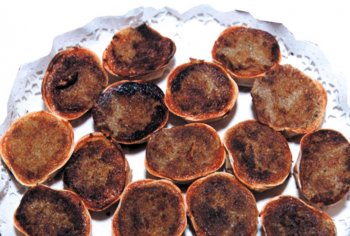
Segundo dados históricos, a origem das queijadas de Sintra remonta ao século XIII, durante o reinado de D. Sancho II, sendo um meio de pagamento de foros. O local exato terá sido Ranholas, na freguesia de São Pedro de Penaferrim. Com o desenvolvimento do caminho-de-ferro a sua confeção deixou de se concentrar nesta localidade, passando também a ser comercializadas em Lisboa, que ajudou na sua industrialização, pelas mãos de uma senhora chamada Maria Sapa, em meados do século XVIII.
Memorial da Ermida
- heritage
Lugar da Ermida
4560-173, Irivo
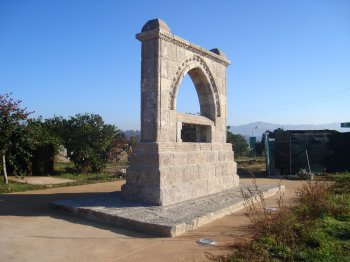
Corresponding to a typology of monument that only six copies in Portugal, the decor features used on this memorial are its construction in the mid-13TH century. Originally located along the road that came from the medieval port and crossed the parish of Paço de Sousa, was moved from its original position due to the transformation of the road network. It is thought that this type of construction is related to the placement of graves, the evocation of memory of someone or with the passage of funeral processions. Legend has it that this memorial, in conjunction with those of Sobrado (Castelo …
Praça da Batalha
- heritage
Praça da Batalha
4000-101, Porto
According to tradition, the name of the square due to a battle fought between the inhabitants of the port and the Saracens of Al-Mansur, in that the former were defeated and the town razed. This square was also the scene of other historical events. The architectural and monumental level include the old cinema Eagle Douro, the cinema Batalha, the coffee Gold key, the Hotel Empire and the Grande Hotel da Battle. Deserve, too, a watchful eye, the building of the s. João theatre and the old Central station post office, Telegraphs and telephones, coat and dated from the 18th century. …
Adega dos Frades
- food & drink
Rua D. Duarte I, 248 - Hotel Villa Batalha
2440-415, Batalha
O espaço da Adega dos Frades surge como se fosse uma extensão do Mosteiro da Batalha, a poucos metros de distância. Uma homenagem a uma das salas mais importantes do monumento, o claustro D. João I, como se fosse um local onde os frades trocassem as orações pelas refeições. A cozinha cuidada incorpora surpresas como a pasta de chícharo (uma leguminosa recentemente reabilitada pela região), a entremeada recheada de enchidos, o risotto de cogumelos selvagens ou o duo de cabrito e borrego com risotto de favas.
Castelo de Alter do Chão
- heritage
Largo Barreto Caldeira, 8
7440-022, Alter do Chão
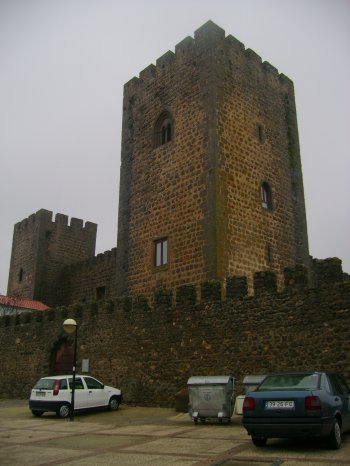
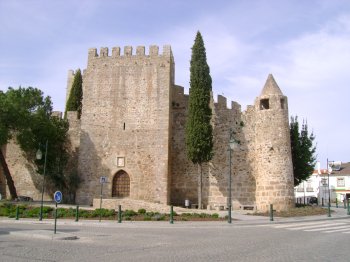
In the heart of the town, in a large square, stands this imposing medieval castle, with a quadrangular plan and protected by cylindrical cubes, crowned with battlements, Gothic portals and a tall square keep. This, around 44 meters high, has a hall with a barrel-vaulted ceiling. At the entrance to the fortress, an armored marble tombstone inscribes the record of the castle's foundation, in 1359, by King Pedro I. At that time it was constituted as a defensive articulation with Estremoz, Fronteira, Évora Monte, Avis, Alter Pedroso, Marvão and Portalegre. King João I, Master of Avis, made Nuno Álvares Pereira …
Castelo do Crato (vestígios) / Castelo da Azinheira
- heritage
Largo do Castelo, 1
7430-127, Crato
Four-pointed bastioned fortress with medieval-type walls and a redan. The ruins of the medieval fortification are visible in the central area, isolated walls or with structures attached to them for the construction of artillery platforms. As examples of ruins of modern fortification, there are four redan with a guardhouse and traces of chimneys and niches. The fort's door mantains the portcullises of the drawbridge, and there is a cistern right in the center of the fortification. Some sections of the wall and from the barbican are monumentally beautiful. The first fortress dates back to the reign of King Afonso Henriques, …