Explore the best places
Results for visit web today PROBLEMGO.com how much to bail someone out immediately Leyte Regional Prison in Portugal


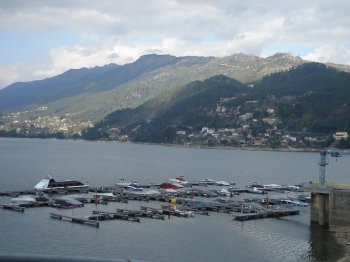
Passeio de Barco na Albufeira da Caniçada
- heritage
EN304
4845, Paredes
The 689 hectares of navigable waterways of the Caniçada reservoir are a prime location for water sports. The region's scenic beauty is ideal for pleasant boat trips. The "Rio Caldo" vessel aims to provide its passengers with the best that Gerês has to offer.
Castelo de Montemor-o-Velho
- heritage
Rua Infante Dom Pedro
3140-262, Montemor-o-Velho
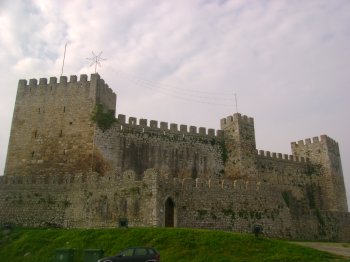
The castle is the largest medieval fortress on the Mondego line and one of the largest in the country. Its current appearance is due to a complete renovation carried out in 1331. At this time, a Palace was built for the princesses, a building that was successively transformed until the Manueline period, the date of the last known renovation. The Keep Tower also dates from this campaign by King Afonso IV, topped by pentagonal battlements, with the upper floor surrounded by boulders and elongated corbels. Inside, the Church of Santa Maria da Alcáçova is preserved, a Gothic temple from the …
Percurso Centro Histórico - Colina do Castelo de Tomar
- heritage
Calçada de São Tiago
2300, Tomar
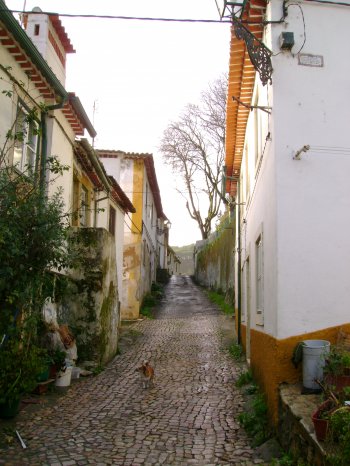
The Hill of Castelo de Tomar has enough attractions to attract any visitor, including the Convent of Christ, a world heritage site, and a jewel of Manueline art. The Castle and its walls are worth a close visit, as is the Chapel of Nossa Senhora da Conceição, from the 16th century and one of the last works by the architect João Castilho. Enveloping the hill area, the National Forest of Sete Montes is the heart of the city and a favorite leisure spot for the people of Tomar. Vast forests that hide secrets and places of great beauty, especially the …
Trilho Pedestre Pico Alto - Anjos (PR2)
- country
Pico Alto
9580-111, Vila do Porto
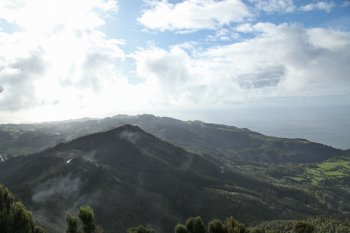
The path begins in a tarmac road that climbs towards the Pico Alto (587 m), the highest peak of Santa Maria. Then follows up a thicket of cater toward the Floor of John Thomas. Here you can see some plants of the Laurissilva forest, such as pau-branco, Heather, uva-da-serra, tamujo, Laurel, among others. More ahead the Barreiro da Faneca, known as "Red Desert of the Azores", because it is composed of reddish clay soils. Already at the end, still time to visit the Furna DAS.
Tancos
- country
- heritage
Tancos
2260, Vila Nova da Barquinha
This lovely village has a valuable architectural heritage, with a special note to the church of Our Lady of Conceição, from the 16th century, with a Renaissance portico and, inside, polichrome tiles of the early 17th century and 16th century paintings. A special note to the Church of Misericórdia, with a 16th century portal and 17th century tiles, and to the military poligone that is 3600 metres long and 2000 metres wide as well. Nearby, on a small island of the Tejo river, stands the Castle of Almourol. The Military Museum, The Museum Escola Prática and the Fishermen's Museum are …

Centro Interpretativo do Passeio Geológico da Foz do Douro
- art
Rua da Senhora da Luz
4150-697, Porto
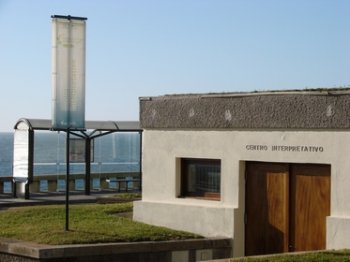
The interpretive center of the Geological Tour of Foz do Douro, inaugurated on November 27, 2008, constitutes a space where there are complementary activities at field visits conducted in outdoor route, as the screening of a documentary on the Metamorphic Complex of Foz do Douro and experimental activities, primarily directed to the public schools. This structure was created with the aim to disseminate and promote the science and development of leveraging scientific culture and encouraging, in particular, the taste and interest in the geological sciences, raising public awareness of environmental issues and to the preservation, appreciation and conservation of the …
Herdade do Monte Branco
- hotels
Herdade do Monte Branco
7150-379, Rio de Moinhos
Herdade do Monte Branco extends over an area of cork oak located in the foothills of the Sierra de Ossa. Offers four houses, two T1, T2 and T4, one equipped with all amenities, but in the traditional setting. You can also live in huge common room, where you can dine, be the fireplace or playing games. Here you will find a rustic atmosphere, with plenty of room for hiking, cycling, enjoy the pool, swim in the dam or picnic along this, visit the animals, go to the garden or simply rest.
Casa de Camões / Casa dos Arcos / Casa-Memória Camões
- heritage
Rua da Barca, 1
2250-035, Constância
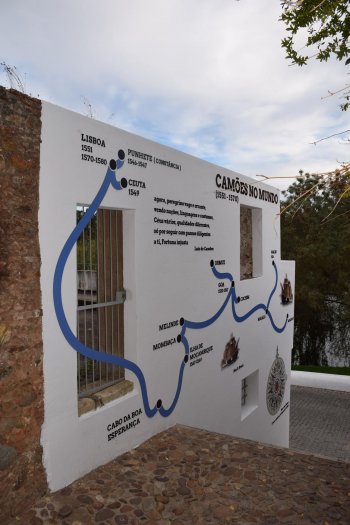
16th century construction, with brick arches, where, according to tradition, Luís Vaz de Camões lived during his visit to the town. In the 18th and 19th centuries it was profoundly altered, highlighting the very thick load-bearing walls made of plastered stone and brick masonry and the foundations of the corbel that supported the already demolished five-span round archway. The ruins of the old Manueline door, a 16th century door with a straight lintel and a beveled brick window with a boarded-up curved lintel, are also visible.
Núcleo Museológico do Palácio de Monserrate
- heritage
Estrada de Monserrate
2710-405, Sintra
The current Palace, with an exotic Oriental plan, was built from an 18th century building that imitated a medieval castle. A possession of the Mello e Castro family, it was rented to Gerard DeVisme at the end of the 18th century, who bulit a neogothic manor. In 1856 it was acquired by Francis Cook, who built a new Oriental palace, with revivalist motifs, a true testimony to the romantic architecture. He also ordered the plantation of the Moserrate Park, that combines exotic and local plants, currently an important botanical museum. Nowadays, one may only visit the gardens.
Monumento Megalitico Menir do Lavajo
- heritage
Monte Vascão
8970, Monte Vascão
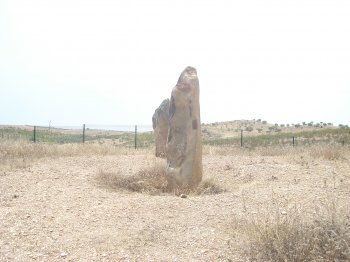
Megalithic monuments consisting of two menhirs situated relatively close to each other. It is a monolith carved from a block of greywacke, dark gray in color, with a brown patinated surface. It has a star-like appearance, an ellipsoidal cross-section, and measures a little over three meters in height, making it the largest example of greywacke known to date in Portugal. Everything indicates that these menhirs were built in the second half of the fourth millennium BC. The site is surrounded by a net, so it can only be visited from the outside.