Explore the best places


Solar dos Veiga Cabral / Centro de Arte Contemporânea Graça de Morais
- heritage
Rua Conselheiro Abílio Beça, 105
5300-011, Bragança
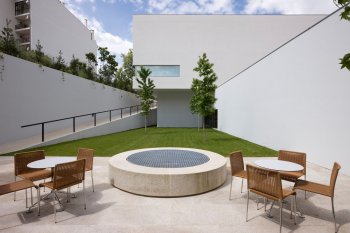
Building also called Solar dos Sá Vargas, which underwent several alterations in the 20th century, the balconies were restored, the main staircase of the building removed and the windows on the upper floor placed. In 1947, a Bank of Portugal branch was installed here and, in 2001, it was acquired by the Bragança City Council. Currently, the space is occupied by the Graça de Morais Contemporary Art Center.
Forte de São João Baptista / Forte da Berlenga
- heritage
Arquipélago das Berlengas
2520, Ilha da Berlenga
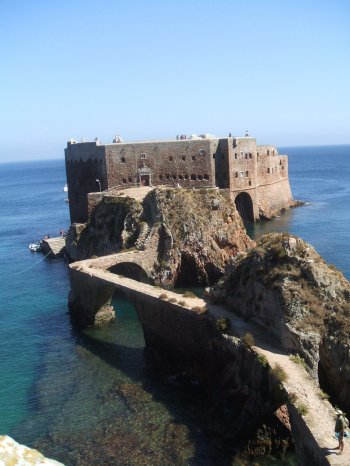
Large stone wall rosea in the shape of a polyhedron. Has canhoteiras and bunkers that denote great simplicity and rigour. Barracks and other dependencies are organized in a set of several volumes.
Domus Municipalis / Antigos Paços Municipais
- heritage
Rua da Cidadela, 112
5300-025, Bragança
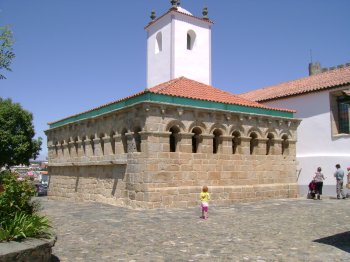
A National Monument since 1910, this peculiarly shaped building is the only example of Romanesque civil architecture in the entire Iberian Peninsula, which has a pentagonal shape. Located in the Cidadela area, it was built in the 13th century and, although it is not known exactly what motivated its creation, it is known that it served as a cistern and meeting point for the “good men”, who were responsible for the analysis of matters of interest and justice.
Solar dos Teixeiras / Fundação Os Nossos Livros
- heritage
Rua Trindade Coelho, 32
5300-061, Bragança
This property of noble architectural design from the 17th century has a "mezzanine" on the upper floor of the facade that faces the street. The openings on the main floor have aprons, where treated volumes in the shape of diamond points were carved. The building was acquired and remodeled by the Bragança City Council in the 90s of the 20th century, currently housing the Library Dr. Águedo de Oliveira/Fundação "Os Nosso Livros", whose collection is considered one of the most valuable in the north of the country.
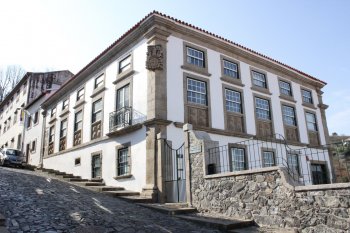
Museu Abade de Baçal
- heritage
Rua Abílio Beça, 27
5300-011, Bragança
Installed in the building of the former Bishop's Palace of Bragança, this museum includes collections of Sacred Art, Epigraphy, Archaeology, Jewellery, Ethnography, Furniture and Painting, in which paintings by José Malhoa, Abel Salazar and 70 drawings by Almada Negreiros stand out. It was created in 1915, initially as the Regional Museum of Works of Art, Archaeological Pieces and Numismatics, adopting its current name in 1935 as a tribute to the researcher, scholar and former director of the Museum.
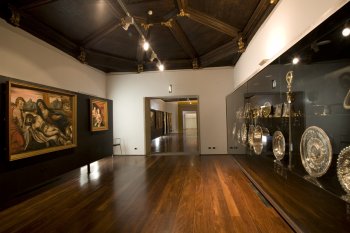
Convento e Igreja de São Francisco
- heritage
Rua de São Francisco, 59
5300-037, Bragança
Built in the 13th century to house the mendicant order of San Francisco, it underwent several renovations in the following centuries, with the Mannerist façade dating back to 1635. In the second half of the 19th century, in the convent area, it was built the Military Hospital and, later, the Duke of Bragança Asylum. Among the various 18th century altarpieces it has, the one in the Chapel of Nossa Senhora da Conceição stands out, in which some rocaille applications are notorious.
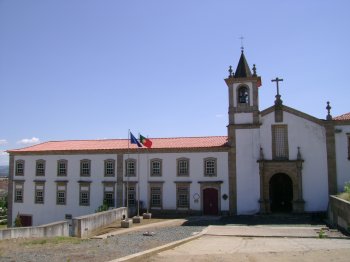
Cidadela de Bragança
- heritage
Cidadela
5300, Bragança
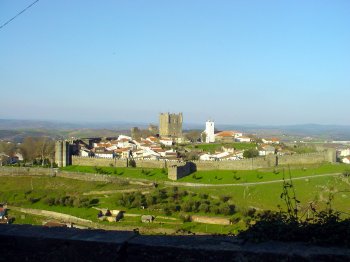
The Bragança's Citadel is worth a visit. Enter its fortified enclosure, looking at the doors, and discover the castle walls, the Keep, the Church of Santa Maria, the Domus Municipalis and the Pillory.
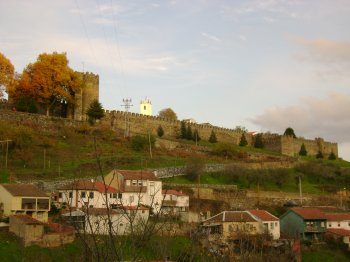
Castelo de Bragança
- heritage
Rua Dom João V, 62 - Cidadela
5300-025, Bragança
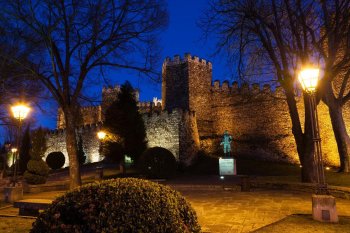
Built in the twelfth century, and classified as a National Monument since 1910, it is one of the best preserved castles in Portugal, with its distinguished Keep, considered one of the most beautiful military buildings in the country. Also, noteworthy is the elegant Citadel and the heart-shaped walls and its typical houses. On the north side of the walls, stands the "Princess Tower", where, according to legend, a young Moorish girl loved by a Christian lived as a prisoner.
Museu Militar de Bragança
- heritage
Rua da Cidadela
5300-025, Bragança
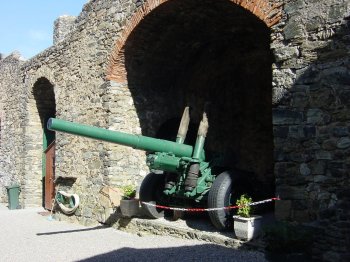
Set in the Castle Keep, it presents an important collection of great historical value that includes pieces of light weapons, from the 12th century to the First World War. Most of the original pieces were donated by inhabitants, who participated in the African Campaigns and in World War I. From the terrace of the Torre de Menagem it is possible to contemplate a beautiful panoramic view over several region mountains.
Miradouro da Cidadela
- heritage
Estrada do Turismo, 15
5300-271, Bragança
From this viewpoint you can get an amazing view over the castle of Bragança, with the houses around it.